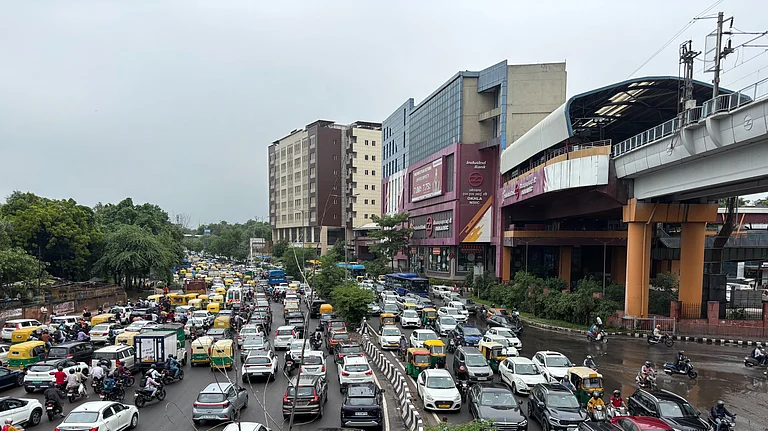
Delhi is preparing for a week of tight security as the AI Impact Summit 2026 takes place at Bharat Mandapam, Pragati Maidan, from February 16 to 20. With leaders, ministers, and representatives from more than 30 countries coming to the city, expect traffic changes, restrictions, and regulated transit in an area already experiencing high traffic volume.
AI Impact Summit 2026: Key Roads Restricted Across Central Delhi
Expect diversions across Janpath, Mathura Road and more as Delhi hosts global leaders for AI Summit 2026

Advertisement
Add to this the onset of CBSE board examinations from February 17 and the ongoing wedding season, and it is evident that the capital’s roads will require both patience and planning.
More than 10,000 police personnel have been deployed across key zones, including district units, specialised teams, traffic staff, and reserve forces, to manage security and traffic arrangements. Nearly 5,000 traffic personnel are stationed specifically to regulate vehicular flow. The city has been divided into multiple zones, each supervised by senior officers, with additional reinforcements brought in to support operations around the summit venue and hotels housing international delegates.
Roads Under Supervision
Traffic movement is expected to remain restricted or tightly regulated across central Delhi and adjoining areas. Key stretches likely to experience diversions include Mathura Road, Subramania Bharti Marg, Rajesh Pilot Marg, Tees January Marg, Akbar Road, Teen Murti Marg, Mother Teresa Crescent, Sardar Patel Marg, Janpath, Firoze Shah Road, Shanti Path, Satya Marg, Africa Avenue, APJ Abdul Kalam Road, Tilak Marg, Bhagwan Das Road, Sansad Marg, Baba Kharak Singh Marg, Aurobindo Marg, Tughlak Road, Panchsheel Marg and several others in the diplomatic and administrative heart of the capital.
Advertisement
Bhairon Marg and portions of Mathura Road, particularly between Subramania Bharti Marg and Dinesh Nandini Dalmia Chowk, fall within restricted zones during VIP route movements. While authorities maintain that no road will be completely shut for extended periods, commuters can expect temporary halts of up to 30 minutes when official convoys move to and from Bharat Mandapam.
A main north–south corridor has been kept open along Ring Road, connecting Ashram Chowk, Sarai Kale Khan, Raj Ghat, ISBT Kashmere Gate, Azadpur, Punjabi Bagh, Dhaula Kuan and AIIMS. This route is expected to serve as the most reliable cross-city passage during peak restrictions.
Exams And Commutes
The summit's timing coincides with the commencement of the CBSE board exams for Classes 10 and 12. Over 4.6 million students in India and other countries are taking these exams. In Delhi, educational institutions situated near high-security roadways have special traffic management. Police have been told to help students, and specific officers will work with schools to keep problems to a minimum.
Advertisement
Students have been advised to reach their examination centres by 10 am for the 10.30 am start, allowing buffer time for unforeseen delays. Emergency vehicles will be given uninterrupted passage, and ambulances have been stationed along sensitive routes.
During the summit, the Metro will run as usual and will be the most reliable way to get around. Attendees should take the Delhi Metro, using Pragati Maidan station to get to the event. Parking near Bharat Mandapam is limited. If you drive, please park at the Delhi Zoo, National Stadium, or Jawaharlal Nehru Stadium. Shuttles will take you from these locations to the venue.
Airport Route Plan
For those travelling to the Indira Gandhi International Airport, alternate corridors have been mapped out. From central and south Delhi, commuters can take AIIMS Chowk via Ring Road to Moti Bagh, then Rao Tula Ram Marg towards NH-48. Travellers from west Delhi are advised to use Ring Road, Najafgarh Road, Pankha Road and the Sector-22 Dwarka corridor, connecting to UER-II and the NH-48 service road. Those approaching from Gurugram may continue via NH-48 and Rao Gajraj Singh Marg, while Dwarka residents can use the newly operational UER-II tunnel for direct access to airport terminals.
Advertisement
Passengers heading to New Delhi, Old Delhi and Hazrat Nizamuddin railway stations are advised to rely on Ring Road corridors via Ashram Chowk, Raj Ghat and ISBT Kashmere Gate. Non-destination vehicles will be diverted to the Eastern and Western Peripheral Expressways to reduce inner-city congestion.
With heightened security, QR code-based accreditation at the venue, and real-time traffic monitoring in place, Delhi is attempting to balance global diplomacy with everyday life. For residents and visitors alike, the advice is simple: leave early, lean on the Metro, and allow the city a little extra breathing room this week.
Traffic Advisory
Traffic restrictions will remain in place across central Delhi from February 16 to 20 due to the AI Impact Summit at Bharat Mandapam.
Key roads likely to face regulation or temporary halts include Mathura Road, Janpath, Akbar Road, Shanti Path, Sardar Patel Marg, Tilak Marg and adjoining stretches.
Bhairon Marg and parts of Mathura Road (Subramania Bharti Marg to Dinesh Nandini Dalmia Chowk) may be restricted during VIP movement.
A main north–south corridor along Ring Road (Ashram Chowk–Raj Ghat–ISBT Kashmere Gate–Azadpur–Punjabi Bagh–Dhaula Kuan–AIIMS) will remain open.
Metro services will operate normally and are recommended for daily commuters and summit delegates.
Non-destination vehicles will be diverted to the Eastern and Western Peripheral Expressways.
Travellers to IGI Airport are advised to use NH-48, Rao Gajraj Singh Marg, UER-II and the Sector-22 Dwarka tunnel, depending on terminal.
Passengers heading to New Delhi, Old Delhi and Hazrat Nizamuddin railway stations should allow extra travel time and use Ring Road corridors.
Students appearing for CBSE board examinations are advised to reach centres by 10 am to avoid delays.
Commuters are encouraged to plan ahead, avoid roadside parking on regulated roads, and follow Delhi Traffic Police advisories for real-time updates.
Advertisement
(With inputs from various sources.)
FAQs
1. When is the AI Impact Summit 2026 being held in Delhi?
The summit is scheduled from February 16 to February 20, 2026, at Bharat Mandapam, Pragati Maidan.
2. Which roads are likely to face traffic restrictions?
Key stretches including Mathura Road, Janpath, Akbar Road, Shanti Path, Sardar Patel Marg and adjoining central Delhi roads may see diversions or temporary halts.
3. Will Delhi Metro services be affected during the summit?
No, Metro services will continue to operate normally and are recommended for commuters.
4. How can travellers reach IGI Airport during restrictions?
Passengers are advised to use NH-48, Rao Gajraj Singh Marg, UER-II and the Sector-22 Dwarka tunnel, depending on their terminal.
5. Will CBSE board exam students face travel disruptions?
Special traffic arrangements have been made, and students are advised to leave early and reach exam centres by 10 am.
Advertisement
Published At: