Stretching from the Atlantic coast of Senegal to the shores of Djibouti on the Red Sea, Africa is building one of the world's biggest environmental restoration projects. Known as the Great Green Wall, the initiative spans around 8,000 kilometres across the Sahel, a vast semi-arid region bordering the Sahara Desert.
Africa's 8,000-Km Great Green Wall Is Bringing Life Back To The Edge Of The Sahara
Discover Africa's 8,000-km Great Green Wall, the ambitious project restoring land, fighting desertification and creating green jobs across the Sahel

Advertisement
Despite its name, the Great Green Wall is not a single uninterrupted line of trees; it is a large-scale effort to restore degraded land through tree planting, wetland and grassland restoration, sustainable farming and better water management. The goal is to tackle desertification, improve food security, create jobs and help communities adapt to climate change.
What Is The Great Green Wall?
The Great Green Wall was launched by the African Union in 2007 in response to worsening land degradation across the Sahel. The region stretches across Africa, separating the Sahara Desert in the north from the greener savannas further south.
The original plan was to plant a continuous belt of trees roughly 8,000 kilometres long and about 15 kilometres wide. Over time, scientists realised that simply planting trees would not be enough. Different landscapes required different solutions.
Today, the project focuses on restoring forests, grasslands, wetlands, farmland and native vegetation based on local conditions. In many places, communities also harvest rainwater, improve soil quality and adopt more sustainable farming practices.
Advertisement
Why Does Africa Need The Great Green Wall?
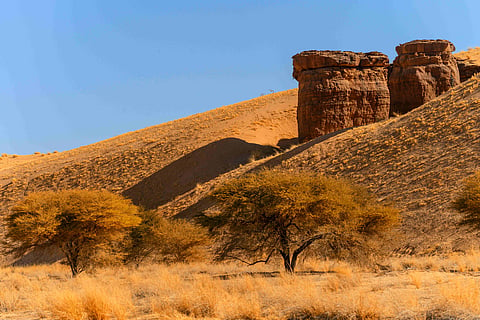
The Hadejia River winding through Nigeria's Sahel landscape Shutterstock
The Sahel has faced decades of drought, desertification and unpredictable rainfall. Millions of people in the region depend on farming and livestock, but shrinking fertile land and changing weather patterns have made it increasingly difficult to grow crops and earn a living.
By restoring healthy soils and increasing vegetation cover, the Great Green Wall aims to make farmland more productive and improve water retention. Healthier ecosystems also support wildlife and reduce soil erosion, while helping communities become more resilient to climate change.
It's More Than Just Planting Trees
Although it is often called a "wall of trees", the project is much broader than that.
In some areas, native trees are planted. In others, farmers protect naturally regenerating vegetation, restore grasslands or improve agricultural practices suited to local conditions. This flexible approach allows each region to restore its landscape in a way that works best for its climate and environment.
Advertisement
How Much Progress Has Been Made?
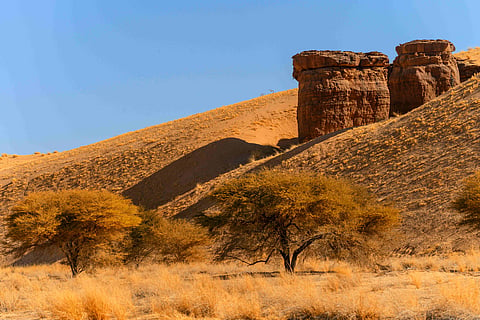
The Sahel's sprawling steppe landscape Shutterstock
The project is still underway, but several countries have already reported significant progress.
Senegal has planted around 12 million drought-resistant trees, while Ethiopia has restored nearly 15 million hectares of degraded land through large-scale restoration programmes. Nigeria and Niger have together restored more than 10 million hectares, and Burkina Faso has rehabilitated around 3 million hectares using local land restoration practices.
Overall, around 30 million hectares of degraded land have already been restored across the Sahel.
By 2030, the Great Green Wall aims to:
Restore 100 million hectares of degraded land, roughly the size of Egypt.
Remove 250 million tonnes of carbon dioxide from the atmosphere.
Create 10 million green jobs across Africa.
Improve food security and livelihoods for millions of people living in the Sahel.
More than 20 African countries are taking part in the initiative, supported by international organisations, development banks and environmental groups.
While 30 million hectares are restored, the project is roughly 20 years into its timeline. Reaching the 100-million-hectare goal by 2030 requires scaling up the restoration rate significantly, which experts warn is statistically unlikely under current conditions.
Advertisement
Why The Project Matters
The Great Green Wall is now considered one of the world's largest ecosystem restoration projects. Beyond helping Africa tackle desertification, it also offers an example of how restoring nature can improve livelihoods, strengthen food security and support climate action at the same time.
If successful, the initiative could become a model for restoring degraded dryland regions in other parts of the world. More importantly, it shows that environmental restoration is not only about planting trees—it is about rebuilding landscapes and creating a more secure future for the people who depend on them.
(With inputs from various sources)
FAQs
Q1. What is Africa's Great Green Wall?
The Great Green Wall is an African Union-led initiative launched in 2007 to restore degraded land across the Sahel by planting trees, restoring ecosystems and promoting sustainable farming.
Q2. How long is the Great Green Wall?
The initiative stretches approximately 8,000 kilometres across the Sahel, from Senegal on the Atlantic coast to Djibouti on the Red Sea.
Advertisement
Q3. Is the Great Green Wall just a line of trees?
No. While it began as a tree-planting project, it has evolved into a broader landscape restoration programme that includes forests, grasslands, wetlands, farmland restoration and water conservation.
Q4. What are the goals of the Great Green Wall by 2030?
The project aims to restore 100 million hectares of degraded land, capture 250 million tonnes of carbon dioxide, create 10 million green jobs and improve food security across the Sahel.
Q5. How much progress has the Great Green Wall made?
Around 30 million hectares of degraded land have already been restored, with countries including Senegal, Ethiopia, Nigeria, Niger and Burkina Faso making significant progress.
Published At: