

Perched more than 3,000 metres above sea level in the trans-Himalayan landscape of Ladakh, the sā Ladakh Art Biennale is set to place art at the centre of conversations around ecology, climate and fragile mountain environments. Billed as the world’s highest contemporary art biennale, the exhibition will unfold at an altitude of nearly 3,600 metres, bringing together artists, thinkers and local communities in one of the planet’s most ecologically sensitive regions. Here is what to know.
Art Beyond Gallery Walls
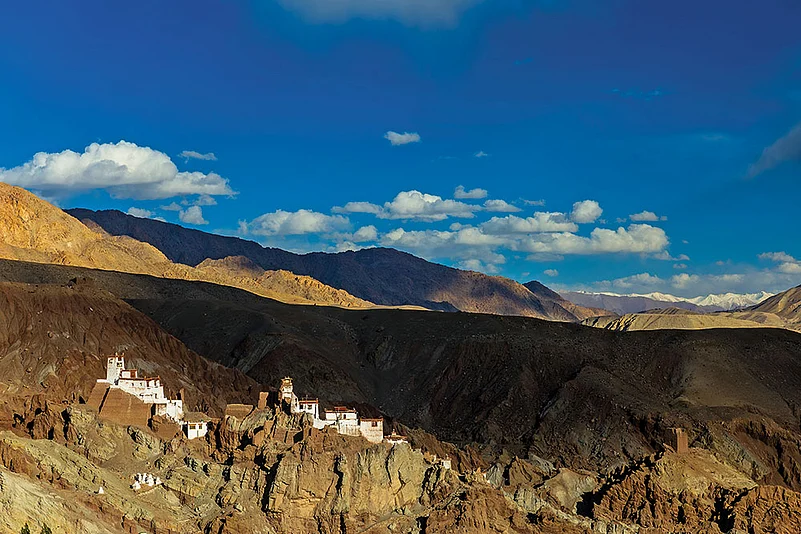
The third edition of the sā Ladakh Art Biennale, to be held from August 1 to 10, 2026, will unfold across different parts of the Leh–Kargil corridor. Instead of closed exhibition halls, many of the works will be placed outdoors — along mountain routes, within local communities and in the middle of Ladakh’s stark terrain.
Artists are expected to present projects that reflect on climate change, local traditions and life in the high-altitude desert.
The event will feature works by Ladakhi as well as international artists, many of whom are engaging with themes of environmental change, indigenous knowledge and community resilience. Organisers describe the biennale as a regenerative art platform, one that seeks not only to exhibit art but also to encourage dialogue around sustainable futures in the Himalayas.

Highlights And Participants
Around 24 artists are expected to take part in the 2026 edition of the sā Ladakh Art Biennale. The line-up includes Ladakhi artists such as Tundup Dorjay, Chemat Dorjey and Stanzin Samphel, along with international participants including Anna Jermolaewa and Jitish Kallat.
Rubin Museum of Himalayan Art has joined the biennale as a partner organisation. As part of the collaboration, Nepalese artist Amrit Karki will present a newly commissioned work developed after a month-long residency in Ladakh.
Several installations are expected to respond directly to the Himalayan environment, with artists working with materials such as stone, soil and wind. Many of the projects centre on concerns around melting glaciers, shifting weather patterns and the changing ecology of the region.
About The Biennale
The biennale was founded in 2023. Its title, “sā”, comes from the Ladakhi word for “soil”, reflecting the festival’s connection to land, memory and local knowledge. Titled Signals from Another Star, this year’s edition of the sā Ladakh Art Biennale turns its focus towards questions of regeneration, climate, memory and lived experience. The theme draws from the realities of Ladakh itself, where shrinking glaciers and growing tourism continue to reshape both the landscape and daily life. Through the exhibition, artists and organisers are attempting to open conversations around environmental change and what sustainability could mean for fragile mountain regions.
The Information
Dates: August 1–10, 2026
Theme: Signals from Another Star
Curators: Vishal K Dar and Tsering Motup
Locations: The biennale will take place across eight sites along the Leh–Kargil corridor, including Kargil, Mulbekh, Heniskot, Lamayuru, Nurla, Likir, Basgo, and Leh.
(With inputs from various sources)
FAQs
What is the Sā Ladakh Art Biennale?
The Sā Ladakh Art Biennale is a contemporary art event staged across Ladakh’s high-altitude landscapes, bringing together artists working on themes linked to ecology, culture and climate.
Where does it take place?
The 2026 edition is spread across the Leh–Kargil corridor in Ladakh, with sites including towns and villages such as Leh and Kargil.
When is the next edition?
It runs from August 1 to August 10, 2026.
Who is it for?
The biennale is open to artists, researchers and visitors interested in contemporary art practices that engage with environmental and cultural questions in Himalayan regions.
Why is it considered different from typical art exhibitions?
Instead of being confined to galleries, artworks are installed outdoors across Ladakh’s terrain, making the landscape an active part of the exhibition experience.