India’s railway map is about to get a little more ambitious. Prime Minister Narendra Modi is heading to West Bengal and Assam on January 17 and 18 for a packed two-day visit that blends infrastructure announcements with cultural showcases—right from flagging off the country’s first Vande Bharat sleeper train to celebrating Bodo heritage with over 10,000 performers in Guwahati. With both states headed to elections later this year, the trip is as much about momentum as it is about mobility.
Boosting Eastern Connectivity
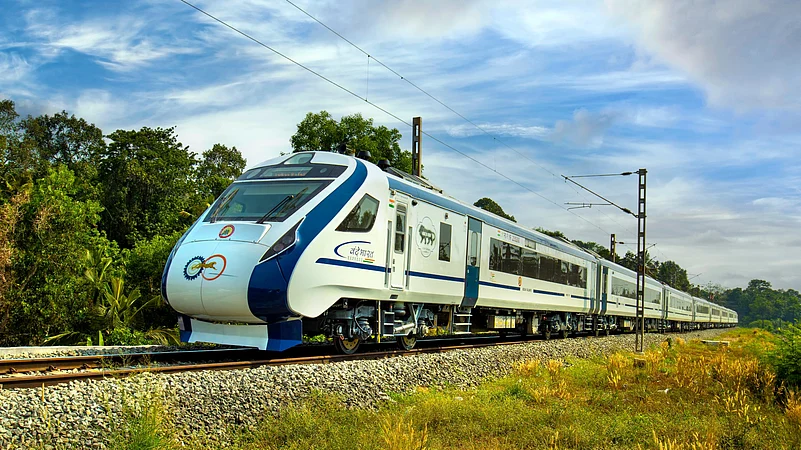

The visit begins on January 17 in West Bengal’s Malda, where the PM will flag off India’s first Vande Bharat sleeper train linking Howrah with Guwahati (Kamakhya). The train is expected to make overnight travel between the two major cities faster and more comfortable, marking a significant upgrade in long-distance rail travel. Soon after, Modi will dedicate and lay foundation stones for a cluster of rail and road projects worth over INR 3,250 crore, including upgrades to New Jalpaiguri’s freight facilities, a new Balurghat–Hili rail line, and modernisation of locomotive and Vande Bharat maintenance hubs. Electrification of the New Coochbehar–Bamanhat and New Coochbehar–Boxirhat lines will also be formally commissioned, enabling cleaner and more reliable operations on the busy corridor.
The railway push doesn’t stop there. In a virtual ceremony, the PM will flag off four new Amrit Bharat Express trains connecting New Jalpaiguri with Nagercoil and Tiruchirappalli, and Alipurduar with Bengaluru and Mumbai (Panvel). Positioned as affordable, long-haul services, these trains are designed for students, migrant workers, traders, and budget travellers seeking reliable connectivity across states. Two other long-distance trains running between Radhikapur–Bengaluru and Balurghat–Bengaluru will also begin operations with new LHB coaches, offering smoother, safer rides—especially appealing for the region’s youth and IT workforce headed towards southern opportunity hubs.
On the roadways side, the Dhupguri–Falakata section of NH-31D will be expanded to four lanes, promising quicker transit through North Bengal and better freight movement towards Assam and the Northeast. Together, these transport projects underline New Delhi’s continuous focus on strengthening East and Northeast India as economic growth engines.
Cultural Heritage On Stage
By evening, the tone shifts from engineering to culture as Modi heads to Guwahati to attend “Bagurumba Dwhou 2026”, a large-format Bodo cultural programme at Sarusajai Stadium. Bagurumba—often recognised by its fluid, nature-inspired choreography—will be performed by over 10,000 artists representing 23 districts of Assam. It is being billed as a historic cultural showcase, highlighting the community’s deep ties with nature, reflected in dance movements that mimic blooming flowers, butterflies, and rivers. For Assam, it’s a moment of cultural assertion on a national stage; for visitors, it’s a rare viewing of a tradition normally seen in smaller community gatherings.
Conserving While Building
The next morning, the PM will shift focus to Nagaon district to perform bhoomi pujan for the Kaziranga elevated corridor project—one of the most ambitious highway developments in the Northeast. Priced at over INR 6,950 crore, the 86-km stretch along NH-715 is designed to speed up connectivity to Upper Assam while protecting the fragile ecosystem of Kaziranga National Park. A particularly striking feature is the 35-km elevated wildlife corridor, planned to allow unhindered movement for animals, including rhinos and elephants, that often cross the highway, especially during flooding. With additional bypasses at Jakhalabandha and Bokakhat, the project aims to reduce congestion, cut travel time, and lower accident rates, all while reducing human–wildlife conflict.
Before wrapping up, Modi will also flag off two more Amrit Bharat Express trains connecting Guwahati (Kamakhya) to Rohtak, and Dibrugarh to Lucknow (Gomti Nagar), strengthening direct links between the Northeast and North India.
With rail lines electrifying, sleeper trains debuting, wildlife corridors rising, and indigenous cultures taking centre stage, the two-day tour reads like a snapshot of India’s fast-changing travel and mobility landscape, one where efficient infrastructure and environmental consciousness are learning to run parallel, quite literally.
(With inputs from PTI)
FAQs
1. What is special about the new Vande Bharat Sleeper?
It’s India’s first sleeper-configured Vande Bharat, designed for faster, overnight travel between Howrah and Guwahati (Kamakhya).
2. Which major rail services were launched?
Four Amrit Bharat Express trains and two LHB-equipped services to Bengaluru were flagged off, improving long-distance connectivity.
3. What road projects were announced?
The PM laid the foundation for the Dhupguri–Falakata NH-31D four-lane upgrade in Bengal and the 86-km Kaziranga elevated corridor in Assam.
4. How does the Kaziranga corridor support conservation?
It includes a 35-km elevated wildlife stretch to allow unhindered animal movement, reducing roadkill and human-wildlife conflict.
5. Why is the Bagurumba Dwhou 2026 event significant?
It showcased over 10,000 Bodo dancers, celebrating cultural heritage and marking one of the community’s largest performances on a national stage.