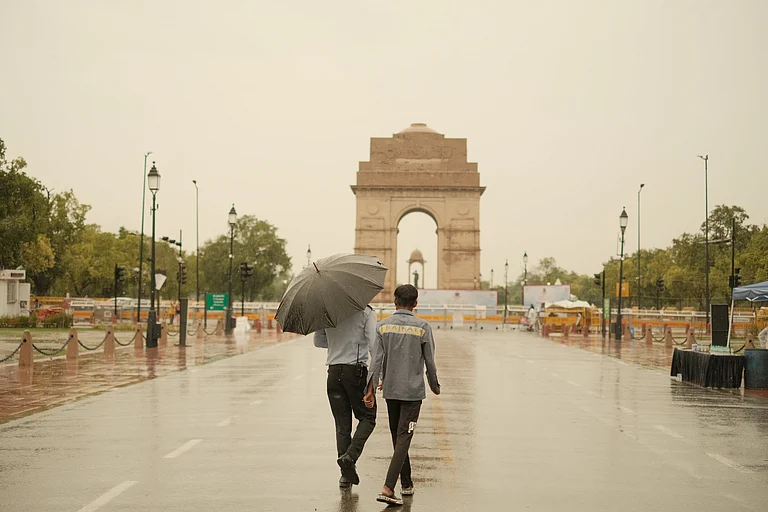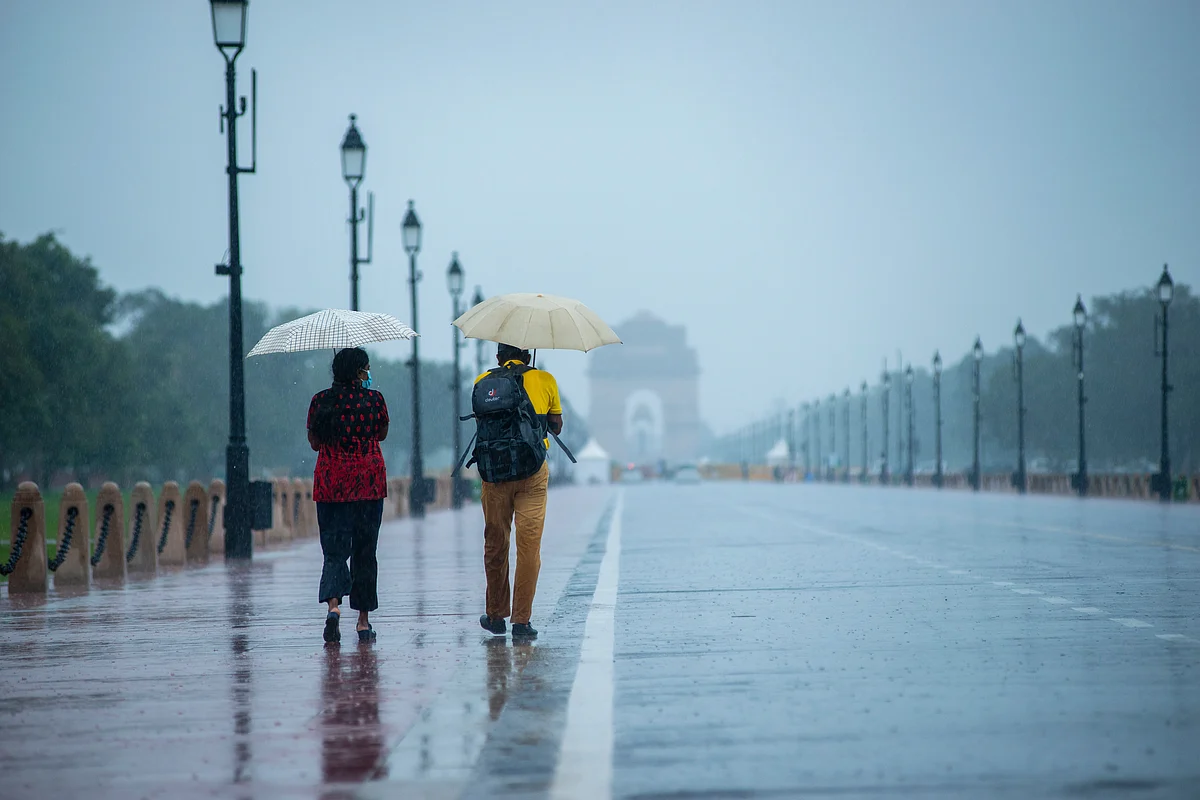
Delhi woke up to an unusual March morning on Saturday, March 21, 2026, with fog and low cloud cover lingering after days of rain. Visibility stayed low in several areas, and the cool air made it feel more like winter than late March. The recent spell of rain and storms disrupted the city’s usual transition toward summer, bringing in cooler, moisture-laden air that kept temperatures down and conditions hazy.
The India Meteorological Department (IMD) said this haze is not smog but is caused by weather conditions. High humidity, light winds, and stable air prevented moisture and particles from dispersing. Overnight cooling helped moisture condense, leading to fog and mist near the ground.
A Rare March Chill Settles Over The Capital
On Saturday morning, the Safdarjung Observatory recorded 14°C at 7:20 AM, with humidity at 100 percent. The morning began under dense fog and thick cloud cover, with moisture saturating the air and limiting visibility across several parts of the city. These conditions are highly unusual for March, when humidity levels are typically much lower.
The daytime temperature on Friday, March 20, stayed well below normal, rising only to 21.7°C. This marked Delhi’s coldest March day in six years, with 21.2°C last recorded on March 8, 2020. The drop in temperature was directly linked to continuous rainfall and cloud cover, both of which prevented the usual daytime warming.
According to reports, Palam recorded a maximum temperature of 21.2°C, which is 10.4 degrees below normal, while Lodhi Road saw 21.0°C, 9.0 degrees below normal. Ridge recorded 21.1°C, 10.7 degrees below normal, and Ayanagar reported 21.5°C, 10.5 degrees below normal.
Rain Transforms Weather Patterns Across North India
The rain in Delhi was part of a larger weather system affecting North India. Several districts in Uttar Pradesh reported strong winds, heavy rain, and even snowfall. This was a sharp contrast to the record-breaking heat earlier in the month.
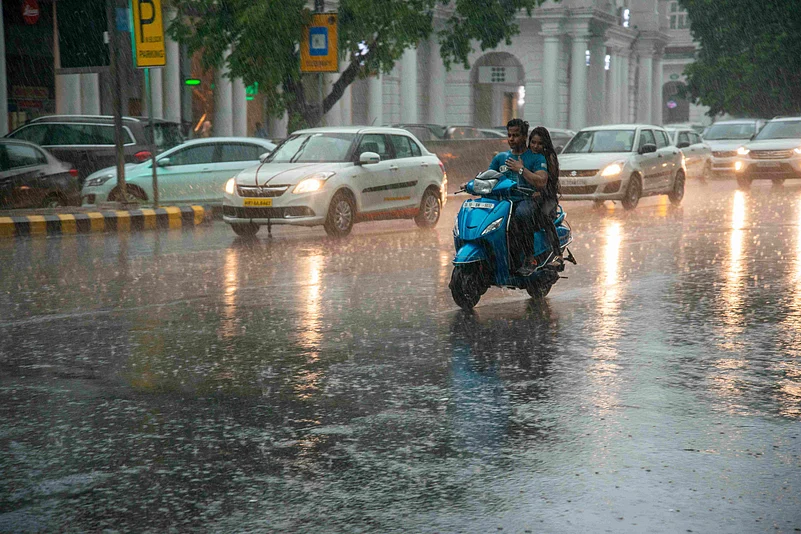
In Delhi, sustained rainfall of 16.2 mm has made this the wettest March since 2023, when 50.4 mm was recorded. The sudden influx of rain and moisture has temporarily shifted the region’s weather pattern from dry spring conditions to more monsoon-like activity.

Why The Sudden Shift
Meteorologists have attributed this sudden change to multiple interacting systems. A key factor is an active western disturbance stretching from northern Pakistan to Madhya Pradesh, which brought widespread rainfall and increased atmospheric moisture.
Additionally, cyclonic circulations over Haryana and southern Uttar Pradesh intensified the moisture inflow into Delhi. Light winds and stable atmospheric conditions trapped this moisture near the ground, while upper-level westerly winds transported dust from the Thar Desert and Balochistan, adding to the haze.
Despite the visible haze, authorities have clarified that the phenomenon is weather-driven rather than pollution-driven. High humidity levels enable PM2.5 particles to absorb water, a process known as hygroscopic growth, which causes them to swell and become more visible in the air.
Humidity above 70 percent allowed particles in the air to absorb moisture and grow, making the haze more visible. The mix of moisture, dust, and local emissions created dense aerosols, but without a major rise in pollution levels. Similar conditions were seen earlier in March.
Delhi’s Cleanest Air In Months
Recent rainfall has improved air quality in Delhi. The Air Quality Index (AQI) dropped to 93, placing it in the ‘Satisfactory’ category for the first time in 161 days, as rain helped clear pollutants from the air. The last time air quality was this good was on October 9, 2025. The rain acted as a natural cleanser, washing away particles and bringing a rare spell of cleaner air for residents.
What Lies Ahead
Weather alerts, including the earlier “Orange Alert,” have now eased, and the IMD says conditions are gradually stabilising. However, moisture in the air is still keeping temperatures lower than usual for this time of year.
In the coming days, daytime temperatures are likely to rise to around 28–30°C, while mornings may stay cooler due to lingering humidity and cloud cover. This phase is expected to be temporary before the typical summer heat sets in.
(With inputs from various sources)
FAQs
1. Why did Delhi experience fog in March 2026?
The fog was caused by high humidity, light winds and stable atmospheric conditions that trapped moisture near the ground, leading to mist and haze.
2. Was the haze in Delhi due to pollution?
No, the IMD clarified that the haze was weather-related, caused by moisture and atmospheric conditions rather than a spike in pollution.
3. How cold was Delhi during this weather event?
Delhi recorded a daytime temperature of around 21.7°C, making it the coldest March day in six years.
4. How did rain improve Delhi’s air quality?
Rain helped wash away pollutants from the air, reducing particulate matter and improving the AQI to the ‘Satisfactory’ category.
5. What caused the sudden weather change in Delhi?
The shift was due to an active western disturbance, cyclonic circulation and increased moisture inflow across North India.