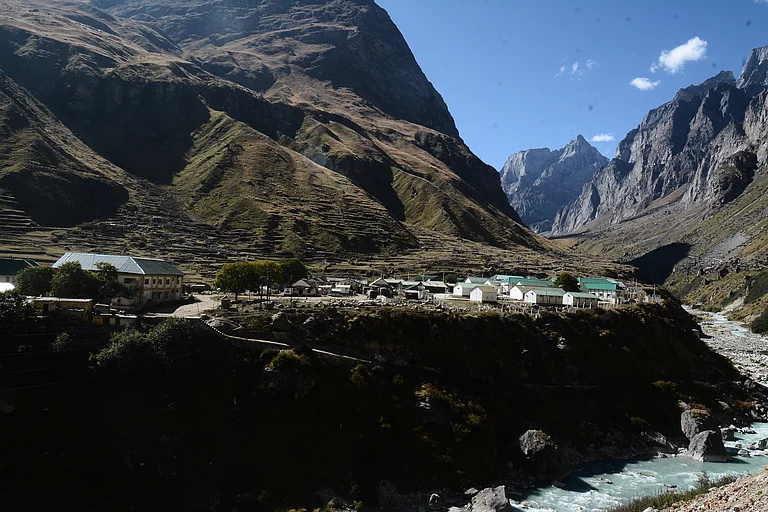


Air quality in Dehradun has slipped into the ‘poor’ category, ringing alarm bells in a city long considered one of north India’s cleaner, calmer refuges. According to data from the pollution monitoring centre at Doon University, the city’s real-time Air Quality Index (AQI) stood at 267 on Wednesday, while the daily average touched 291.
“The AQI shows some improvement during the day due to air movement, but at night it crosses 300,” said Professor Vijay Sridhar, head of the pollution monitoring centre at Doon University, adding that while Dehradun’s air is not yet at Delhi’s level, it can no longer be described as satisfactory. Experts have linked the deterioration to rising vehicular traffic, garbage burning and forest fires, warning of increased health risks for children and the elderly, including breathing difficulties and throat irritation. Concerns have also been raised over smart LED displays across the city, several of which are reportedly showing outdated air quality data, leaving residents confused about real-time conditions.
Earlier this year, warning signs were already emerging across the Himalayas. For decades, the region served as India’s guaranteed summer escape—a place where May meant misty dawns, cool evenings and pine-scented breezes slicing through the heat. In 2024, that familiar script cracked. Extreme heat, once largely confined to the plains, climbed steadily into the mountains. States like Uttarakhand and the Union Territory of Ladakh recorded unprecedented spikes in summer temperatures, marking a turning point for regions long considered naturally protected from such extremes.
A study by Climate Compatible Futures and Climate Trends confirmed what residents had been sensing for years. Uttarakhand went from zero heatwave days in 2023 to 25 in 2024. Ladakh’s average summer temperature rose by 9.1 per cent, while Uttarakhand saw an even sharper increase of 11.2 per cent—the steepest among all Himalayan states. The report warned that the mountains are now slipping into the same climate stress category as India’s northern and central plains.
And the impact goes beyond hotter summers. Researchers point to an emerging ‘heat–power trap,’ where rising temperatures drive up demand for cooling, increasing fossil fuel consumption, worsening emissions and further heating the region. Between April and June 2024 alone, heatwaves added nearly nine per cent to India’s peak power demand, generating an estimated 327 million tonnes of carbon dioxide in just three months.
Why India’s Hill Stations Are Getting Hotter


For people who grew up in Uttarakhand or Himachal Pradesh, the shift is unmistakable. “When I was a kid, summers in the hills were actually pleasant… we barely even used fans,” recalls Sujoy Roy, a security specialist and researcher from Uttarakhand. Today, temperatures in cities like Dehradun, Rishikesh and Haldwani regularly push past 33–35 degrees. Summers stretch longer, nights stay warm well past midnight, and homes that once relied on mountain breezes now run fans all day, sometimes multiple air-conditioners.
The report tracks the national trajectory behind these local memories. India’s annual average temperature in 2024 rose 0.65 degrees above the 1991–2020 baseline. Heatwaves are becoming longer, harsher and far more widespread, reaching states that rarely appeared on heat alert maps a decade ago. Water sources in the hills, once dependable, are shrinking. Snowfall has become erratic, forest fires more common, and the rhythm of seasons increasingly unpredictable.
In Uttarakhand’s hilly villages, fixed water-supply timings have become a routine inconvenience, sometimes without assurance of actual supply. Mountain springs, once a guarantee, are drying faster under prolonged heat. Villagers who once navigated clearly defined winter–summer cycles now speak of climate that “no longer behaves like the mountains.”
How Rising Heat Is Disrupting Daily Life In The Mountains

Heat is also reshaping the everyday. Afternoons once meant long walks, outdoor games and trips to streams and rivers. Now, the hours between noon and four resemble a self-imposed curfew. Parents advise children to remain indoors, and schools report a rise in heat-related health issues during peak summer. Teachers say more students are falling sick — vertigo, dehydration, headaches, even fainting spells are no longer rare in regions known for crisp, cool air.
Night-time offers little relief. In homes that never imagined the need for artificial cooling, warm bedrooms now make it harder to sleep, especially for the elderly. Conditions like asthma and breathing difficulties are reportedly becoming more common during the hottest weeks of June and July.
The impact trickles into food systems too. Traditional crops such as mandua (finger millet), jangora, rajma, and potatoes — once perfectly adapted to the mountain climate — are struggling under rising temperatures and erratic rainfall. Some farmers have already given up on crops that no longer grow reliably. Even home gardens, once a source of joy and self-sufficiency, require constant effort just to keep plants alive through a harsher sun.
Tourism Pressure Mounts As Himalayan Towns Heat Up
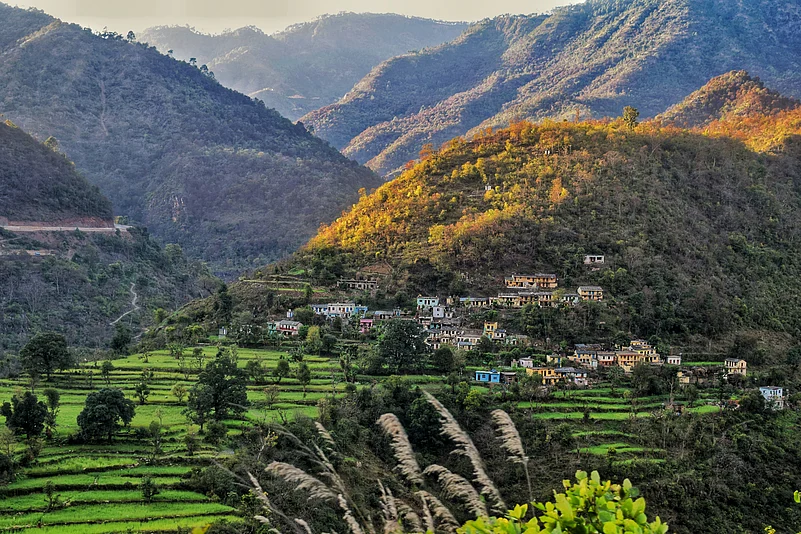
Tourism, the lifeline for many Himalayan districts, adds another layer of stress. Cooler summers once drew manageable seasonal crowds. Today, the surge is constant, more traffic, more waste, and greater pressure on water, electricity and local infrastructure. For the people who call these mountains home, the adjustments are continuous. Daily schedules now depend not just on the heat, but also on tourist rush hours, water availability and how strained the local grid might be.
It’s a microcosm of a larger national dilemma. Even as India has expanded renewable energy from 84 GW in 2015 to 209 GW in 2024, fossil-fuel capacity has grown too, locking the country into a carbon-heavy response pattern. The study argues that without significant investment in battery storage, stronger grids and weather-responsive power systems, the country risks slowing down its clean-energy transition just when it needs momentum the most.
Experts say India has now entered a moment where multiple pressures are piling onto each other. Heatwaves and power shortages, once seen as separate challenges, are increasingly intertwined, each worsening the other. Those on the margins are expected to feel the strain most acutely: rural households, low-income families, and communities living across the fragile Himalayan belt.
What Dehradun’s Air Quality Decline Signals For India’s Mountains
For residents like Roy, the emotional impact is just as heavy as the environmental one. “Sometimes it feels like the hills are slowly turning into the plains,” he says. The places of his childhood, cool, peaceful, predictably seasonal—are shifting into something unfamiliar.
The Himalayas have long been India’s natural shield against extreme heat. In 2024, that shield showed its first deep cracks. What happens next will depend on how quickly the country adapts, whether through smarter grids, cleaner energy, or better heat planning.
The mountains are warming. The question now is whether we can keep pace before the change becomes irreversible.
FAQs
1. What’s causing the sudden rise in temperatures across the Himalayas?
A combination of global warming, shrinking snow cover, and changing weather patterns is pushing extreme heat into traditionally cool regions.
2. How much did temperatures increase in 2024?
Uttarakhand saw an 11.2% jump in average summer temperatures, while Ladakh recorded a 9.1% rise — the steepest in the Himalayan belt.
3. Why is the heat–power trap a concern for mountain states?
Higher temperatures boost cooling demand, increasing fossil-fuel use, which then worsens emissions and further heats the region.
4. How is daily life changing for residents?
Longer summers, warmer nights, water shortages, health issues in schools, and declining crop resilience are becoming common.
5. What can help reduce the impact of rising heat?
Stronger grids, energy storage, heat-resilient planning, and a faster shift to clean energy are key to slowing long-term damage.
(With inputs from PTI)