

Snow-dusted mountains, and a winter sun cutting through the mist was the backdrop for the 17th annual convention of the Adventure Tour Operators Association of India (ATOAI), held in Srinagar, Jammu & Kashmir. For December 17 to 20, industry leaders, policymakers, destination managers and adventure operators gathered in the Valley not only to deliberate on the future of adventure tourism in India, but also to make a quiet yet confident statement: Kashmir is ready to lead that future.
Held at the Sher-i-Kashmir International Conference Centre (SKICC) overlooking Dal Lake, the convention revolved around the theme “Indian Adventure Tourism: Safe, Sustainable and Resilient.” It was a theme that resonated strongly in a region where geography offers immense adventure potential, but where climate change, safety standards and long-term sustainability are no longer abstract concerns.


The convention also unveiled Haanglu as the official mascot of the 17th ATOAI Convention. Inspired by the endangered Hangul or Kashmir red deer, Haanglu represents the region’s wilderness and the values of alertness, resilience and responsibility. Conceived as an adventure safety mascot, it symbolically guides travellers across Kashmir’s mountains, rivers and valleys. Haanglu reinforces the message of safe exploration while urging respect for nature and protection of the fragile Himalayan ecosystem.
Government Signals Confidence In Adventure Tourism In Jammu & Kashmir
Inaugurating the convention, Jammu & Kashmir Chief Minister Omar Abdullah described the event as an affirmation of confidence in the region. He underlined that Jammu & Kashmir is naturally positioned as one of India’s most compelling adventure destinations, with opportunities ranging from skiing and mountaineering to trekking, rafting and paragliding.
However, Abdullah was candid about the challenges ahead. Climate change, he said, “poses a direct threat to adventure tourism, particularly winter sports.” Receding glaciers and shrinking snowfall windows could fundamentally alter the way destinations such as Gulmarg are marketed. He noted that without snow, skiing loses its credibility, and without glaciers, high-altitude adventure activities become unsustainable. For this reason, he stressed, innovation such as artificial snow-making and careful destination planning will be crucial.

Safety, Abdullah emphasised, must remain non-negotiable. As adventure tourism grows, he said, it is vital that operators adhere to strict standards, use proper equipment and ensure trained personnel, so that adventure remains exhilarating rather than risky.

During the opening ceremony, the Chief Minister also launched the Jammu & Kashmir Adventure Tourism Roadmap and inaugurated a tourism exhibition showcasing regional offerings.

His participation in a hot air balloon flight over Srinagar that day became one of the convention’s most symbolic moments, signalling the government’s willingness to back diverse adventure experiences.
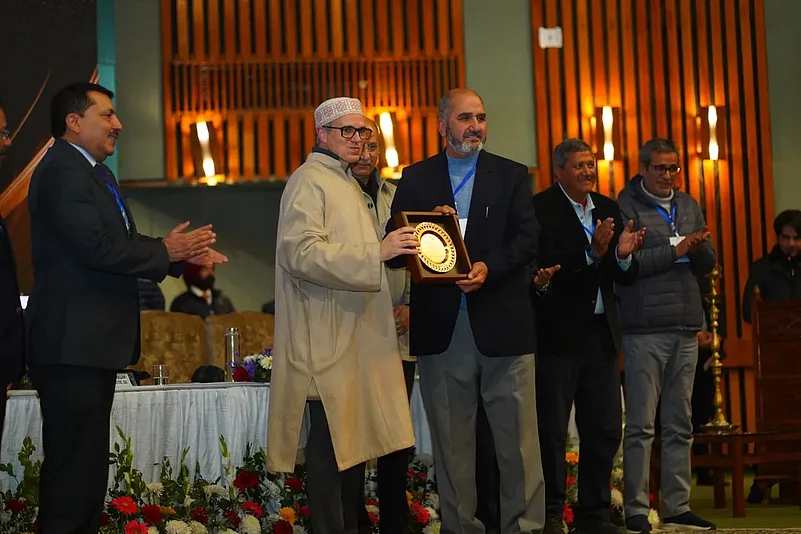
During the first day of the convention, the ATOAI 17th Convention Awards were also presented by the Chief Minister to distinguished ATOAI members, celebrating excellence in Indian adventure tourism. Special recognition awards were additionally conferred upon local stakeholders, including government officials from Jammu and Kashmir, acknowledging their contributions to strengthening the region’s adventure tourism ecosystem.
Why Safety And Sustainability Are Central To India’s Adventure Tourism Policy
Reinforcing the policy perspective, Shri. Suman Billa, Additional Secretary and Director General, Ministry of Tourism, highlighted adventure tourism as a powerful tool for inclusive development. He pointed out that adventure tourism creates employment in remote and border regions, offering young people opportunities close to home and reducing the need for migration.

Billa stressed that the future of the sector rests on three pillars: safety, sustainability and resilience. Safety, she noted, builds trust, and trust ultimately determines a destination’s competitiveness. He called for uniform safety standards, certified guides, proper risk assessment and clearly defined emergency response systems across adventure destinations. Sustainability, according to Billa, must go beyond environmental rhetoric. He advocated for structured Himalayan trails, graded trekking routes and community-managed campsites that balance visitor access with conservation. Local communities, he said, should be treated as partners in tourism development rather than passive beneficiaries. Only then can adventure tourism grow without eroding the very landscapes and cultures it depends upon.
ATOAI On Industry Responsibility And Adventure Tourism Standards
From the industry’s perspective, ATOAI President Ajeet Bajaj set the tone with a strong focus on accountability. He spoke about what he termed the “seven sigmas” of adventure tourism, encompassing trained guides, clear guidelines, informed guests, group risk awareness, understanding of geography, effective communication and high-quality gear. Together, these elements, he argued, form the foundation of responsible adventure operations.

Bajaj reiterated that growth should not come at the cost of quality. Licensing, professional training and adherence to safety protocols, he said, are essential if India wishes to be taken seriously as a global adventure destination. Looking ahead, he outlined plans for two large-scale Himalayan adventure trails — one in the western Himalayas and another in the eastern region — envisioned as long-distance routes that promote slow, sustainable exploration while dispersing tourism benefits across multiple communities.

In a symbolic gesture, Bajaj presented the Chief Minister with a stone from the summit of Mount Everest, underscoring ATOAI’s long-standing association with high-altitude adventure and its commitment to expanding such experiences in Jammu & Kashmir.
Key Discussions On Adventure Tourism At The 17th ATOAI Convention
The convention featured a packed programme of panel discussions and workshops. Sessions explored emerging trends in adventure travel, risk management, climate adaptation and destination development. The convention’s expert sessions brought together experience from across the adventure tourism spectrum. Ajeet Bajaj spoke about the framework for adventure tourism, outlining how trained guides, clear operating guidelines, informed guests, group risk awareness, understanding of terrain, effective communication and reliable equipment together form the backbone of safe and professional operations. Brig. Ashok Abbey focused on the operational realities of running adventure programmes, touching upon planning, leadership and decision-making in dynamic outdoor environments.
Prateek Gupta addressed safety from an industry standpoint, highlighting the importance of standard operating procedures, risk awareness and preparedness as adventure activities expand to newer destinations. Adding a more experiential dimension, Maninder Singh Kohli shared perspectives drawn from years in the mountains, reinforcing the deep personal connection that often draws travellers and practitioners alike to high-altitude landscapes.
The senior Kashmir panel, moderated by Rauf Tramboo, examined the region’s emerging opportunities and challenges, with emphasis on skills development and collaboration between local stakeholders and national industry bodies.

This was complemented by the FAITH leadership panel, moderated by Aashish Gupta, which brought together representatives from national tourism associations to discuss coordinated efforts to strengthen Jammu & Kashmir’s tourism ecosystem.
Vaibhav Kala, Sr. Vice President, ATOAI, spoke about strengthening public–private partnerships and ensuring that local operators are integrated into national and international adventure tourism networks. There was a clear consensus across panels that policy support, industry discipline and community involvement must move in tandem.
Paras Loomba, 17th ATOAI convention chairperson, described Kashmir as the historical heart of Indian adventure tourism. Reviving this legacy, he said, is not merely about increasing tourist numbers, but about rediscovering the spirit of exploration while remaining mindful of ecological and social responsibility.
Akanksha Garg, chairperson of the ATOAI Women's Collective highlighted the importance of dialogue and knowledge-sharing platforms such as the convention. She noted that bringing operators, policymakers and local stakeholders into the same room is essential for addressing safety gaps, standardising practices and building long-term resilience in the sector.
Showcasing Kashmir’s Adventure Tourism Potential
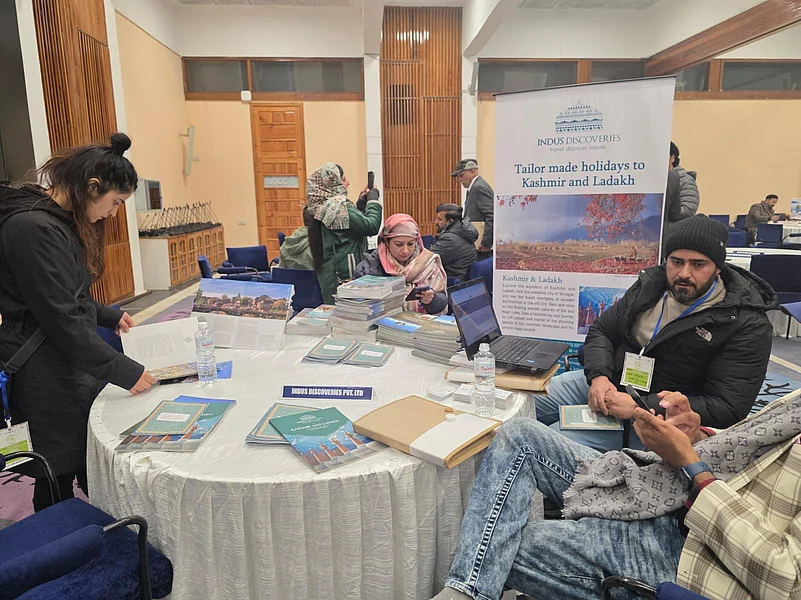
The convention also created space for structured business engagement through its B2B marketplace and exhibition. With 20 sellers registered and interest from around 56 buyers, the platform enabled focused one-on-one interactions between adventure operators, destinations and service providers. Positioned alongside the exhibition and craft showcase, the marketplace facilitated direct connections between Jammu & Kashmir–based operators and national buyers, reinforcing the convention’s intent to translate dialogue into tangible business opportunities.
Beyond conference halls, the convention offered delegates a firsthand experience of Kashmir’s adventure potential. Early morning hot air balloon rides revealed sweeping views of Srinagar and Dal Lake, while traditional shikara cruises showcased the region’s cultural rhythms. A craft trail introduced participants to local artisans, reinforcing the link between tourism and livelihoods.
A familiarisation trip to destinations such as Gulmarg, Sonmarg and Pahalgam allowed delegates to assess on-ground infrastructure for skiing, trekking and river-based activities. These immersive experiences reinforced a recurring theme of the convention: adventure tourism is most powerful when it connects visitors meaningfully with landscapes and communities.
A Measured Optimism
As the convention drew to a close, there was a sense of measured optimism. Awards recognised excellence within the adventure tourism sector, while policy announcements and industry commitments pointed towards a more structured future. Notably, ATOAI announced incentives to encourage participation from Jammu & Kashmir-based operators, signalling an intent to strengthen local representation within the national adventure tourism framework.
The 17th ATOAI convention did not attempt to gloss over the challenges facing adventure tourism in the Himalayas. Instead, it acknowledged them openly, from climate vulnerability to safety concerns. while making a compelling case for why Kashmir remains central to India’s adventure narrative. In doing so, it positioned the region not just as a destination to rediscover, but as a landscape where the future of responsible adventure tourism is actively being shaped.