

In 2014, I found myself at the height of my thrill-seeking phase, chasing one adrenaline rush after another—from skydiving to bungee jumping.
The first time I dipped my face underwater to snorkel and saw the vibrant corals and fishes, the world above disappeared. I knew I had to explore this world further.
A few months later, in an unexpected twist, a Tinder date turned out to be an experienced scuba diver—proof that sometimes even an algorithm gets it right. He introduced me to Sipadan, one of the world’s top diving sites, and it immediately became a dream destination. That dream, however, came with a catch: only advanced scuba divers were permitted to dive there.
The irony? I couldn’t even swim then. I suddenly remembered my childhood when my mother had insisted I learn the skill but I never did. The regret was instant. Over the next few years, what began as a fleeting curiosity turned into a decade-long pursuit. I took my first swimming lessons and earned my scuba certification in 2018. The next step was advanced training, but COVID had other plans. Between work, routine, and two failed attempts at securing diving permits, the dream kept getting postponed.
In 2024, everything finally aligned, and I booked that flight.


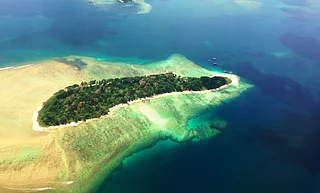
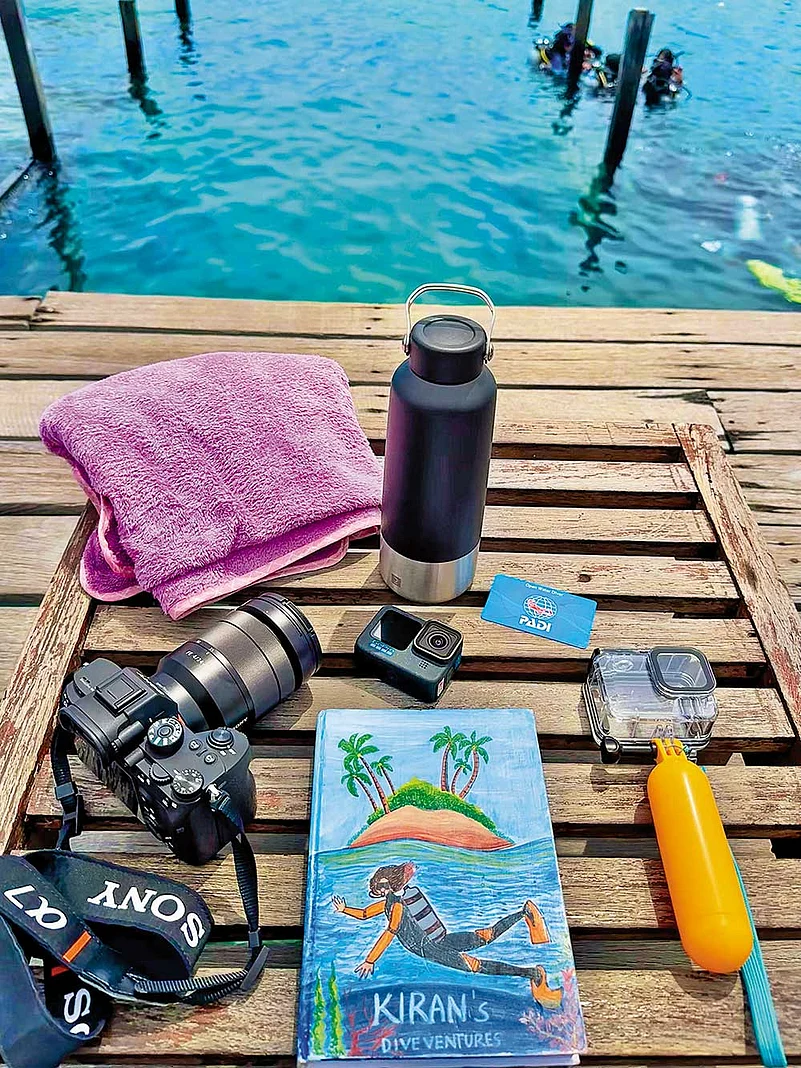
Reaching Sipadan was no easy task. Two flights, two immigrations, a 110-km cab ride, and one boat transfer later, I arrived at Mabul Island, home to Scuba Junkie, the dive resort that would be my base for the next few days. Sipadan was still another boat ride away. With none of my friends into hardcore diving, this was a journey I had to make alone.
Every dive in Sipadan brought something extraordinary—from a tornado of jackfish to sharks, turtles and rays gliding through the blue
At the resort, I met people from all over the world: solo travellers, seasoned divers, and first-timers, all chasing the same dream. Between dives and meals, we bonded over the ocean, a quiet connection that needed no words.
The next morning, I had my first dive. As I stood on the deck, adjusting my gear, my heart raced. I was nervous, as I always am before the jump. It had been nearly three years since my last dive, so I began with a refresher on the house reef, which was far from smooth. Considered to be one of the best locations in the world for muck diving, Mabul is indeed one of the richest destinations for exotic small marine life. Artificial reefs, including sunken boats, have also been created to support marine life, drawing an incredible variety of species to these dive sites. I spotted diverse sea animals, including critters, shrimps, eels, nudibranchs, pipefish, and plenty of turtles, making me forget all about my rocky start.
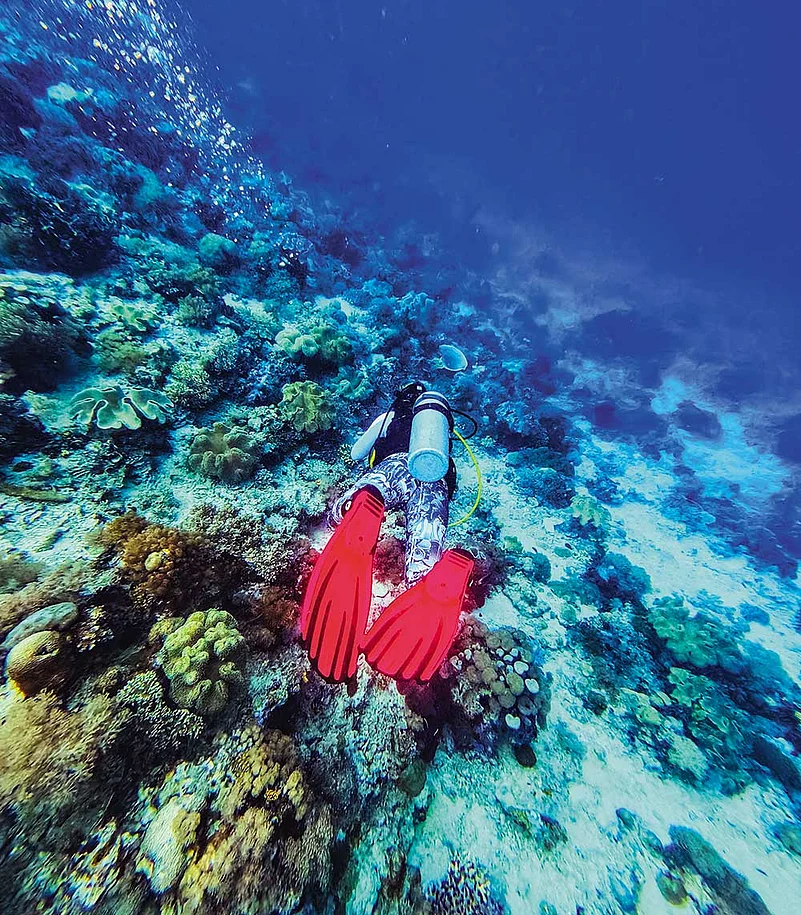
On day two, I explored the Si Amil Islands, known for their rich marine life, soft corals, and fewer crowds. All around me, the seabed was scattered with hundreds of chocolate chip starfish. It felt as if I were floating over a masterpiece created by the sea itself. Our dive breaks here felt almost unreal—think a secluded island, untouched and silent, with nothing but white sand, turquoise water, and a few dive buddies enjoying a little picnic and sharing snacks between the dives.
Finally, the day I had waited a decade for arrived: my dive at Sipadan. The excitement was real. I didn’t even need an alarm to wake up at 4:30 a.m. I was wide awake, adrenaline already kicking in. As the island came into view from the boat, my heart skipped a beat. I couldn’t take my eyes off it. Stepping onto Sipadan felt surreal; I was completely in awe. As I jumped into the water and waited for my dive buddies to join, curiosity got the better of me. I dipped my head below the surface and froze. Below me was a world I could hardly believe—endless shades of blue, vibrant coral gardens, and fish gleaming in the sunlight. I looked at my dive instructor, wide eyed, and gestured in disbelief. He smiled through his mask and said, “The best is yet to come.” He was right.
Over the next few days, I completed twelve dives in and around Sipadan. Every dive brought something extraordinary—from a tornado of jackfish to barracudas flashing by and sharks, turtles, and rays gliding through the blue. The corals were so alive they felt like art in motion, as if I were inside an aquarium. Every dive was different, and each surfaced memory felt like a reward for a ten-year wait. There is something about diving that teaches you patience—how to move slowly, breathe deliberately, and surrender control.
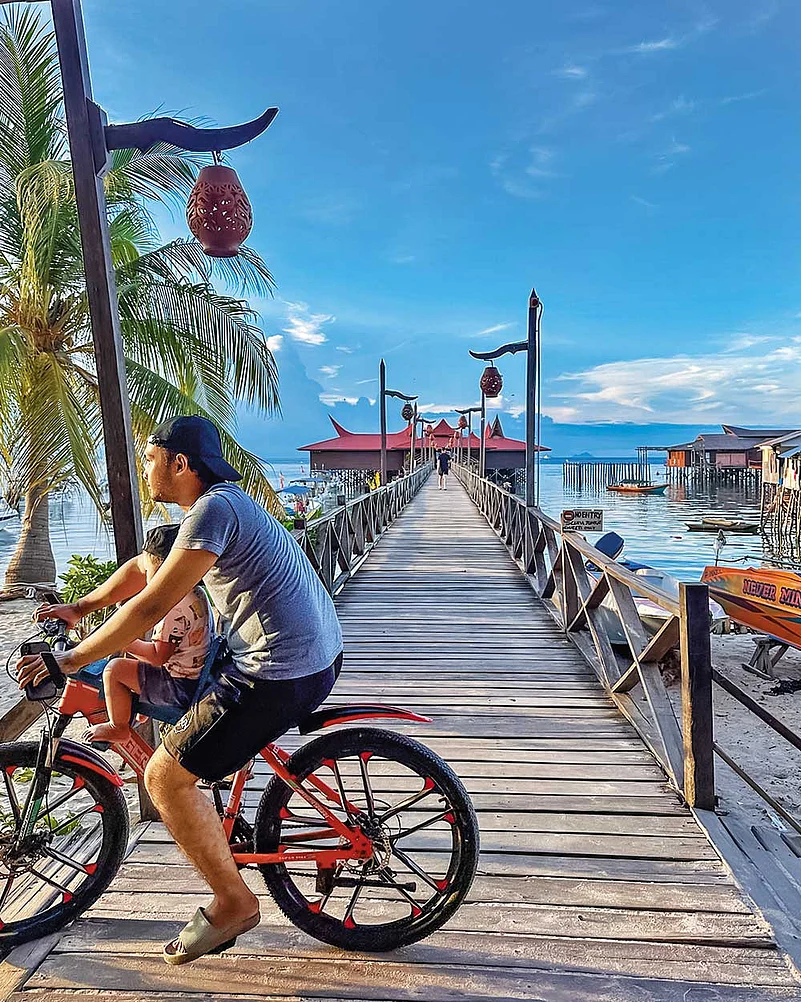
Underwater, you realise how small you are and how much beauty exists in silence. For me, Sipadan was not just about ticking off a dream dive site. It was about learning to wait, to trust the process, and to find calm even when plans are delayed by years. As I wandered around the village, tiny enough to cover in a few minutes, I realised the locals had an intimate connection with the sea.
The Sea Gypsies of Borneo
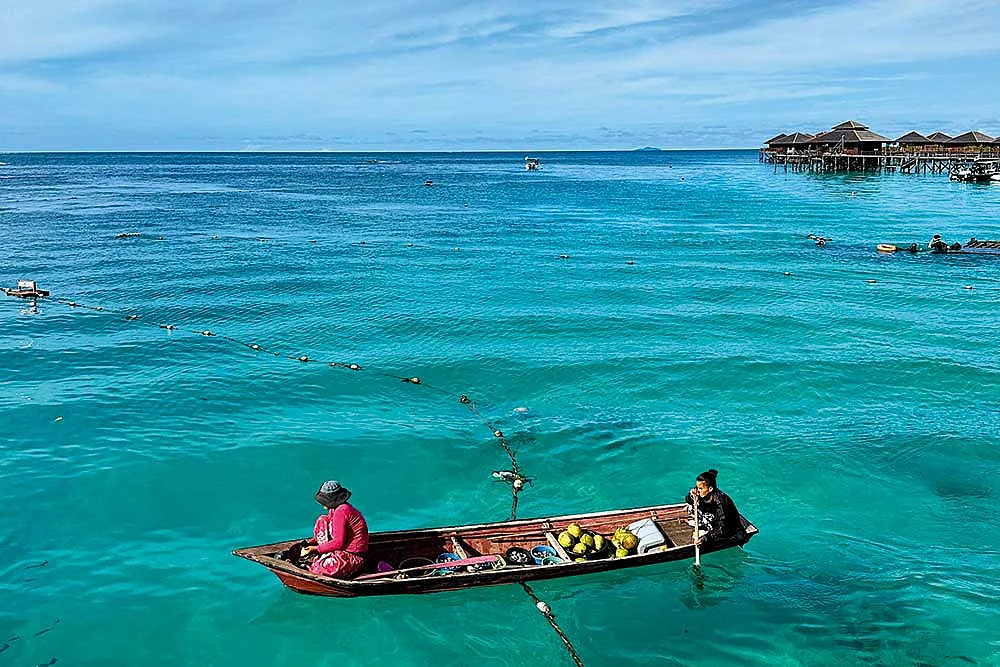
The islands around Sipadan are home to the Bajau Laut, often called "Sea Gypsies" or "Sea Nomads." For centuries, they have lived on boats or in stilt houses scattered across the waters of Malaysia, the Philippines, and Indonesia. The sea is their home, livelihood, and identity.
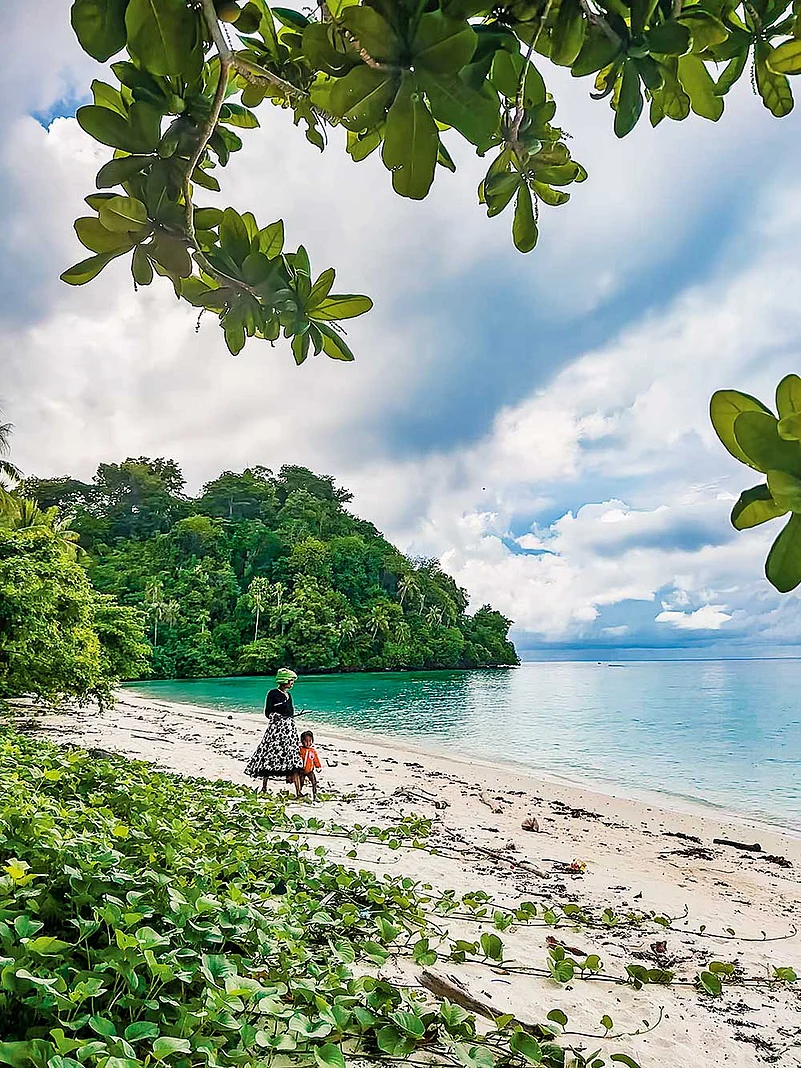
Many Bajau spend a significant portion of their lives at sea, and as a result, they often experience landsickness when they stay ashore for too long. Children as young as five are skilled freedivers. Some can dive over 60 m on a single breath, gliding underwater with effortless grace as they hunt and forage. Scientists have even discovered a genetic adaptation that enables them to have larger spleens, allowing them to store more oxygen in their blood.
For the Bajau Laut, the ocean is not just a way of life; it is life itself. As a teenager who grew up watching travel shows, I once watched a documentary about this tribe, never imagining that one day I’d be diving in their waters and witnessing the underwater magic I had once only seen on screen.
They say every sunset in Borneo is a masterpiece, and they are right. Every evening, as I sat on the deck watching the sky turn into shades of gold and pink and watched the Bajau Laut pass by with coconut water, fish, and a few supplies, I felt a calm that I hadn’t felt in a long time. The kind that stays with you.
Borneo is one of those rare places that is beautiful in every way: on land, above the water, and deep below it.
Sipadan wasn’t just about diving; it was about chasing a dream long enough to see it transform from a picture on a screen to a memory etched in my heart forever. Some dreams take time, and this one was worth every single year, every bruise, and every bit of effort. It was proof that patience and passion can take you to the most extraordinary places.
The Information | Sipadan, Malaysia
Borneo is the third-largest island in the world shared between Malaysia, Indonesia and Brunei. Sipadan is located off the eastern coast of Malaysian Borneo.
Getting There: The easiest way to reach Sipadan from India is by flying to Kuala Lumpur, followed by a three-hour domestic flight to Tawau. From Tawau, it’s about a 110-km drive by cab to Semporna, a small coastal fishing town. From there, a 45-minute boat ride takes you to Mabul Island.
Stay: Because Sipadan is a protected marine park, overnight stays are not permitted. Most divers stay on nearby Mabul or Kapalai.
Tips: Only advanced certified divers are allowed to dive at Sipadan, while non-divers can enjoy snorkelling. A daily permit is required for both diving and snorkelling, and since permits are limited, it’s best to book well in advance.
Best Time to Visit: From March to October, which is the dry season, with the peak tourist season being July.
Author Bio
Kiran Jain is a traveller, adventurer, and hobbyist photographer whose passion for exploring the world and capturing its beauty began in childhood. She loves photographing landscapes, wildlife, underwater worlds, and candid moments. A licensed scuba diver and polyglot, Kiran brings curiosity and a spirit of discovery to everything she does.
Looking for more such exciting and meaningful stories? Grab our latest issue on Amazon