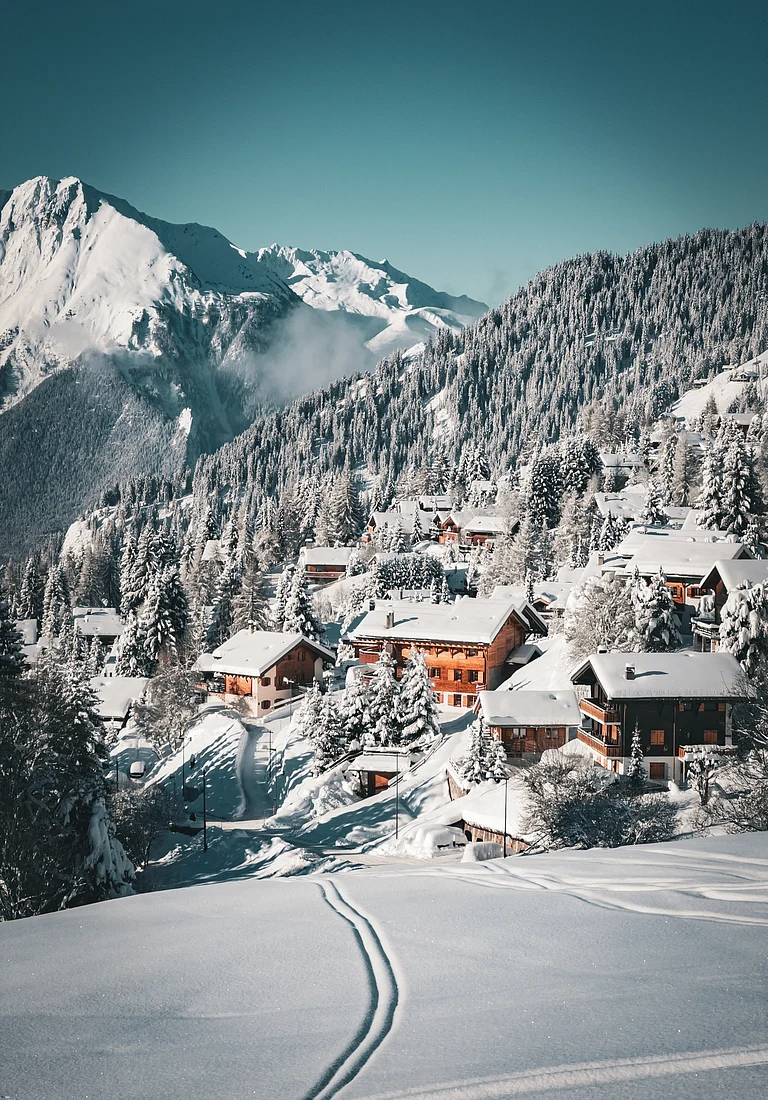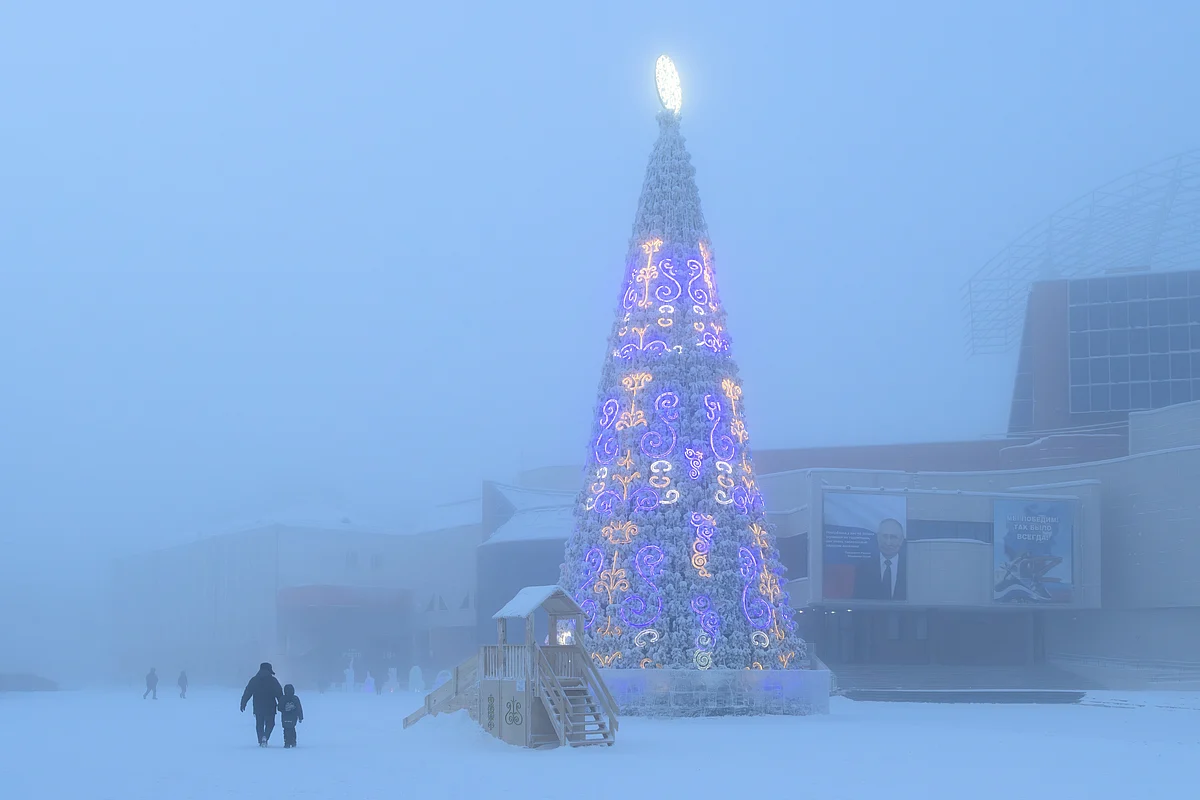
Living in the world’s coldest city, where the temperature can sink as low as −64°C, frostbite is not a distant risk but a daily calculation. Earlier this week, the mercury in Yakutsk, eastern Siberia, plummeted to a punishing −45 degrees Celsius. Schools reportedly remained closed on Monday, with children attending lessons online instead.
At The Edge Of Endurance
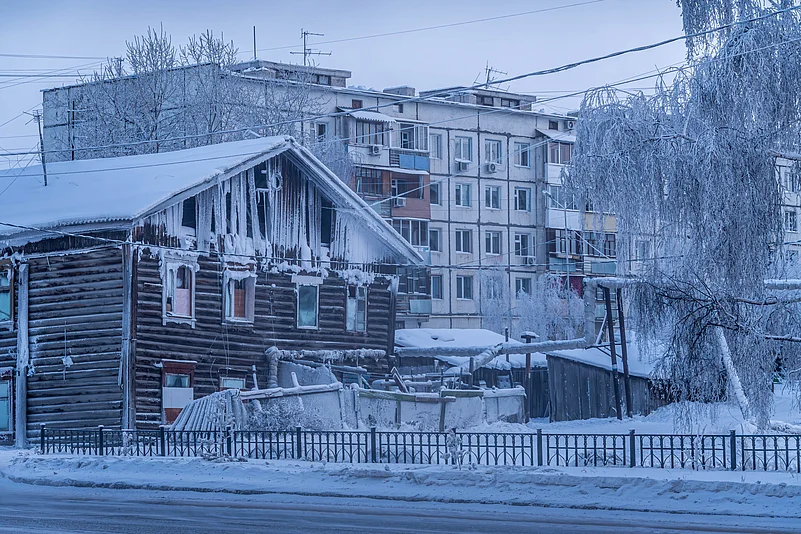
Yakutsk, situated on the Lena River roughly 280 miles south of the Arctic Circle, is the world’s coldest major city. It routinely endures some of the lowest winter temperatures on Earth. Temperatures here have fallen as low as −64.4°C. As if such extremes were not enough, winter brings fewer than four hours of daylight, while visibility can shrink to less than five metres as ice fog hangs heavily in the air, reducing the city in Russia to a monochrome haze of breath, snow and shadow. Built on continuous permafrost, the ground beneath the city remains permanently frozen.
Life In The Freeze
Yet Yakutsk sustains a population of more than 300,000 people, who have learned not merely to endure the cold but to live within it. Surviving Yakutsk’s brutal winters depends on a web of careful adaptations. Specialised infrastructure — buildings on piles, frozen open-air markets — is matched by a distinctive cultural life shaped by the climate.
Buildings are engineered for life on permafrost and fitted with powerful heating systems. Time spent outdoors is carefully calculated, punctuated by frequent warm-up breaks. Thermoses filled with hot drinks are carried as essentials, bus stops are heated, and cars are often left running to prevent engines from freezing. Indoor spaces become vital social hubs, helping residents endure not only the cold but the long darkness of winter days.
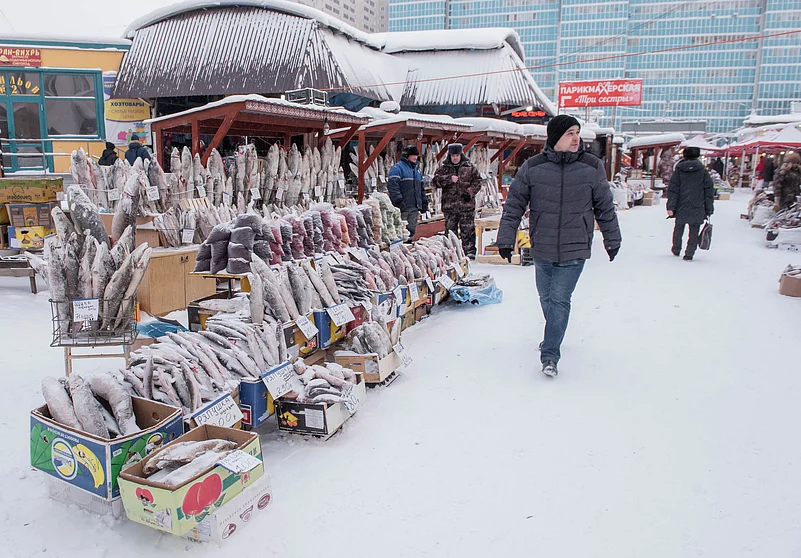

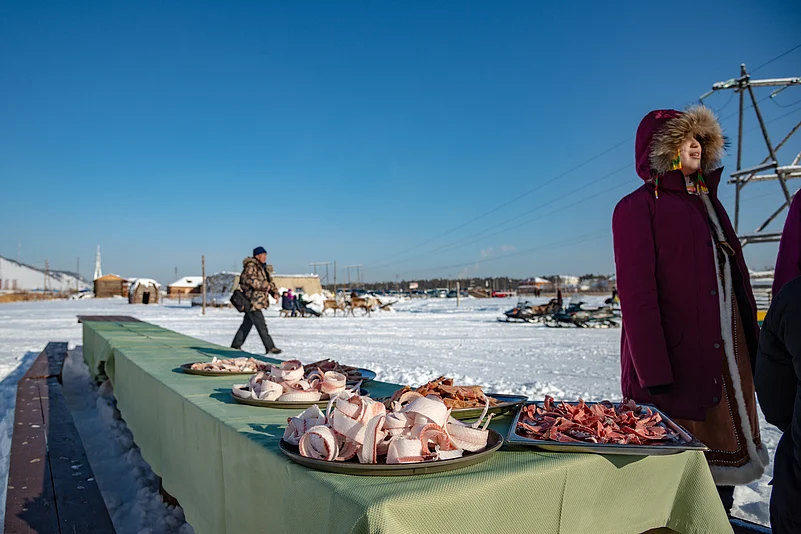
In winter, even the fish laid out at market stalls remain rock-hard, frozen solid where they lie, while milk is sold by the kilogram rather than the litre. Even in the deepest cold, residents continue with their daily routines, negotiating frozen vehicles, brittle streets and air so sharp it seems to crackle. Little grows in the harsh climate, and the local diet reflects this reality: residents consume large quantities of frozen, raw meat — horse, reindeer and fish.
Locals in Yakutsk dress in layered furs and padded fabrics, faces wrapped until only the eyes remain exposed. Daily life is shaped as much by endurance as by tradition, from cold-preserved foods to Mas-wrestling, the region’s national sport, in which opponents strain against one another while gripping a short wooden stick — a discipline so deeply rooted here that Yakutsk has hosted world championship events.
When summer arrives, brief and luminous, the city celebrates with festivals such as Ysyakh, marking warmth as both rarity and reward. To prevent heat from thawing the soil, buildings are raised on stilts: an architectural concession to a landscape that never truly softens.
Visitor Information
To visit Yakutsk, the most practical route is by air, flying into Yakutsk International Airport from major Russian hubs such as Moscow. Flights can be limited and costly, and travellers should consider current geopolitical factors that may affect travel.
Visitors must pack for extreme temperatures, with insulated furs, heavy boots, and layered clothing essential for winter, when temperatures can plummet to −50°C, while summer can reach 39°C.
Cash is recommended, as foreign cards may not always work. Local transport, including heated buses, helps navigate the city, and attractions range from diamond mines and museums to river cruises along the Lena during navigable seasons. Preparation and flexibility are key in this subarctic environment.
FAQs
How do I get to Yakutsk?
The easiest way is to fly into Yakutsk International Airport (YKS) from major Russian cities like Moscow. Flights are limited and can be expensive.
What should I pack?
Extreme winter clothing is essential — insulated furs or coats, heavy boots, hats, gloves, and multiple layers. Even short walks outdoors in winter require careful preparation.
What transport is available?
Heated buses, taxis, and occasional river cruises on the Lena (in summer) are the main options.
How extreme is the weather?
Winter can drop below −50°C; summer can reach 39°C. Short daylight in winter and extreme cold require careful timing outdoors.