It’s a Herculean task to have a fun time in Dubai during summer months. However, if you absolutely must, the proposition is not an altogether impossible one. In my time in Dubai for nearly a week, the city of the future indeed presented such an optimal infrastructure that, if you're not looking to go out and touch grass, much fun could be had.
How To Explore Dubai In The Summer Without Breaking A Sweat
Exploring Dubai in peak summer doesn’t have to be a challenge. With world-class indoor attractions, unique restaurants, and futuristic museums, the city makes sure visitors stay cool while still experiencing its best

Advertisement
Arrival & Evening Out

A view inside House of Hype Supplied
I arrived in the late afternoon, and the first thing I wanted was to test if Dubai could live up to its promise of keeping me entertained without ever having to face the desert heat for too long. I was lodged at the Business Bay area, quite close to the major modern landmarks in Dubai. The perfect trial ground turned out to be House of Hype, a new attraction within Dubai Mall. A brainchild of America, the House of Hype, right across Chinatown, is a simulated escape from reality that resembles a huge arcade of the cyber universe. When you step in, you walk into a kaleidoscope of themed worlds. The space is divided into various thematic “districts” and each district has its own aura which is incredibly unique from the other one: a neon city buzzing with lights, a melting neighbourhood where the walls seemed to bend and ooze, even spaces where you could create content as if you’d stumbled into a film set. A heavy dose of what has come to be known as “bisexual lighting” could be found; a palette dominated by pink, purple, and blue lighting. It was sparsely crowded and the air-conditioning was icy and the novelty of moving through more than a dozen worlds, full of photo-booths, animated music video maker, technological forests, and so on, made the couple of hours there fly by. The space also has impromptu acts by staff dressed fancily bringing a burlesque appeal to the site. I came out with photos, and some strange exposure to the future of the digital world, beside which was the conviction that this city has perfected the art of making you forget what’s going on outside.
Advertisement

A shot of Jun's new menu Behlah Barbhaya/Jun's
Later that night, dinner was my first brush with Dubai’s Michelin-recognised scene. Jun’s, on Sheikh Mohammed bin Rashid Boulevard, sits just a short drive away and looks straight up at Burj Khalifa, which glitters in the night sky. I had heard about Chef Kelvin Cheung and his idea of “third-culture cuisine”—an experimental smorgasbord of influences drawn from his heritage and travels—and that’s exactly how the dishes came across. A plate of scallops paired with corn seemed simple but carried layers of taste that made it memorable. Among some memorable ones were desi Pani-Puri but with a twist of lobster, Macanese sauce, tamarind and agua inside it; Fish Tikki Chaat which was a 12 day aged hammour with shisho, chutney and whey. The scene was lively, the ambience dark-lit, and the feel altogether not overwhelming, and after a long flight and an evening of neon immersion, it felt like the right balance to close out the first day.
Advertisement
Day Two Adventures

Inside 21 Grams Supplied
The next morning, I eased into the day slowly, choosing 21 Grams for breakfast. Tucked away in Umm Suqeim, it is not a massive space in a mall, but it radiates a certain charm with its rooftop terrace. From there, I always had the sail-shaped Burj Al Arab right in my field of vision—a strange notion of being at the sea. When joined by the manager, I was corrected in my idea that the name ‘21 Grams’ must owe a debt to the director Alejandro González Iñárritu whose film by the same name came out in 2003, but indeed I was both corrected and educated. “21 grams is simply believed to be the weight of a human soul,” I was told. The menu focuses on Balkan comfort food, which was not something I expected to find in Dubai. I followed up my morning Affogato with the Classic Balkan Breakfast off the menu which entailed scrambled eggs in tomato, pepper and onion relish added to beef chorizo sausages and white cow cheese. To put it mildly, the food was hearty; it was the sense of being slightly removed from the bustle that made me linger longer than I intended, making it a morning of leisurely breakfast.
Advertisement

A shot of people at IMG Worlds of Adventure Supplied
By mid-afternoon, I was ready for something less contemplative and more adrenaline-charged. IMG Worlds of Adventure was the answer. Taken to be the largest indoor theme park in the world, it stands at 1.5 million square feet. The space is divided into zones: Marvel, Cartoon Network, Lost Valley, and a few others. You could easily spend a whole day here but fresh out of a hearty breakfast, I restricted myself to the solace of the visual pleasure of rollercoasters and rides giving their practical perusal a slip. The indoor setting was crucial—while outside the sun was merciless, here you could wander between a Hulk-themed ride and a Cartoon Network show in complete comfort. It is not subtle entertainment, but then Dubai rarely aims for subtle.

Classic Chai and Bun Maska from Khadak Supplied
Evenings are for dining, and for Indians travelling to Dubai, a table at Khadak is a must. It is a relatively new Indian restaurant that has already earned a Michelin Bib Gourmand. Unlike the ornate Indian restaurants that often dominate Dubai, Khadak feels like a re-interpretation of India’s streets. Indeed, the name ‘Khadak’ simply means ‘road’. In the menu, you may find a riot of dishes ranging from Narsing Dahi Bhalla, Karari Kale Chaat to Radi Cafe Kheema Pao, Tursh-e-Paneer, Purani Dilli Seekh and other Indian origin spread but with a unique twist of a more modern and global taste palette. It struck me that Dubai’s dining scene thrives on this kind of reinvention, especially from the Indian subcontinent.
Advertisement
Into The Future

A view of the Museum of the Future RASHED AL TAMIMI
The next day, I lay in my room blinking at the sunlight peering through the curtains on the dressing table, half in a mind for a slow morning. Breakfast was at the hotel, namely, Taj Dubai. I was later told that the buffet breakfast was one of the most sought-after. Once energised enough to brave the killer sun outside, it was the hour slotted for a visit to the iconic Museum of the Future. From the outside, its torus-shaped form dominates the highway; though the Burj is one of the most emblematic sights in Dubai, the Museum of the Future gives it a run for its money. Its façade, cut through and imprinted with elegant Arabic calligraphy, lends colour to the longstanding tradition of Islamicate art. Once inside, I realised that the museum moves away radically from what is traditionally understood as a "museum". Indeed, living up to its name, it is the museum of the future, in that, visitors are taken away from the earthly bearing on a space ship that appears to be out of Kubrick's "Space Odyssey"; here, the lines between science, technology and imagination come to overlap harmoniously. From the OSS Hope, a simulated space station orbiting Earth, to the HEAL Institute, where a mixed-reality Amazon rainforest and the “Vault of Life” DNA library highlight biodiversity and climate concerns, the experience is, if not altogether fulfilling, surely strange and resplendent. The sensory sanctuary Al Waha encourages mindfulness away from digital distractions, while Tomorrow Today showcases innovations in health, food, water, energy, and mobility that aim to tackle global challenges. For younger visitors, Future Heroes offers interactive missions designed to spark creativity and problem-solving skills. Together, these experiences transform the museum into a living laboratory of ideas, immersing guests in futuristic possibilities rather than static exhibits.
Advertisement

A view inside Huton hutongdubai/instagram
Once out of the thrall of the museum, lunch was at Hutong, in the Dubai International Financial Centre. Hutong has roots in Hong Kong and London, and its Dubai outpost lives up to the reputation for fiery Northern Chinese cuisine. The interiors, with their red lanterns and ornate furniture giving it a Chinatown aura, made a sharp contrast to the futuristic minimalism I had just left behind. A plate of their famous red-lantern crispy soft-shell crab was enough to confirm why it is included in the Michelin Guide.

A shot of a Toco Toucan in The Green Planet Author
From Hutong, what with it being my last day, I ensured that it was packed. Soon, I made my way to The Green Planet, an indoor biodome in City Walk that replicates a tropical rainforest. When one visits this chimeric simulated rainforest in the midst of the desert sweltering under 50 degrees, one realises many things. For instance, how Dubai has made peace with their weather and made provisions of a life around it; and, what can not be achieved when money is put through the right channels; and lastly and importantly, how strange it is to witness animals in the desert that are otherwise nearly a permanence in rainforest. With more than 3,000 plants and animals, the four-storey glass structure of The Green Planet allows you to wander among free-flying birds, see sloths hanging languidly, and even observe an artificial thunderstorm that maintains the ecosystem’s climate. For someone like me who wanted a pause from steel-and-glass Dubai, the sensation of being cocooned in dense greenery was both startling and grounding. Here, I brushed with the most exotic of creatures ranging from Toco Toucan to Goura, and Lophura, and Lamprotornis, to Cape Starling, and much more; it was a variety so diverse that observing some of them would have otherwise taken me a couple of separate trips.
Advertisement
Retail & Recreation
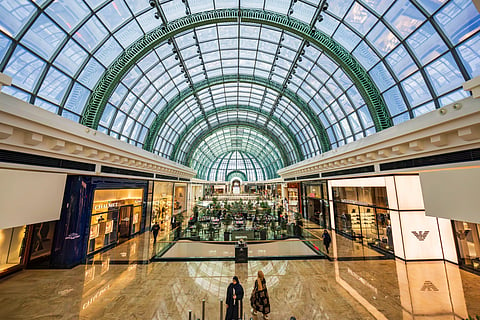
Inside the Mall of the Emirates Supplied
Once out of the simulated rainforest, the set was setting and it was dark, and it was about time I went for some summarising shopping. I turned towards the much talked about Mall of the Emirates for that purpose. The mall, extensive and overwhelming, is not just a retail space; it is also home to Ski Dubai, an indoor ski slope where people zipped around in ski jackets while outside the mercury was pushing 40 degrees. I didn’t ski myself, but wandering through the mall, dipping into stores, and simply people-watching made for a surprisingly satisfying few hours. Towards the night, while still in the mall, I headed to The Lighthouse, a spot that is as popular for breakfast as it is for all-day dining, and grabbed a fulfilling burger with a coke that did just the trick.
Final Morning

Inside Brix Cafe brixcafe.ae/instagram
On my last morning, I wanted something by the water before heading to the airport, and Brix Cafe that stands at Jumeirah Fishing Harbour provided just that. The place serves specialty coffees, freshly baked pastries and an all-day breakfast menu. One look at the menu and I knew Steak and Egg with Affogato on the side will more than sustain me through the long flight back to India.
Advertisement
So, while visiting Dubai in summer is not the most obvious choice, the city ensures you do not miss out on a full range of experiences. The city’s infrastructure connects these points seamlessly—rides are short, the metro covers the busiest areas, and taxis are plentiful. If you plan carefully, you can leave Dubai in August with the sense that you had a full and varied trip, without ever needing to “touch grass.”
Published At: