"Munj (moong beans) is boiled with rice, then buttered and eaten. They called it kishri, and they ate it for breakfast every day. This is what Moroccan scholar and explorer Ibn Battuta, who travelled to the Indian subcontinent in the 14th century, wrote in his chronicles after getting a taste of khichdi. Almost a hundred years later, in 1469, Afanasy Nikitin, a Russian merchant and one of the first Europeans to travel to India, wrote in his travelogue about how horses "were fed pulses and khichri, an Indian dish of rice, with sugar and ghee." Later, during the 1600s, French traveller Jean-Baptiste Tavernier came to India six times and noticed khichdi being prepared with green lentils, rice, and ghee and referred to it as "a peasant's evening meal." During his crusade in India between 305 and 303 BC, the Greek king Seleucus also noted that rice with pulses was prevalent among the people of the Indian subcontinent.
Khichdi The Journey Of India's Favourite Comfort Food
The word 'khichdi' has its roots in the Sanskrit word 'khiccha', a dish cooked with rice and legumes. It is primarily made from rice and lentils, with many other regional variations.

Going by these accounts spread across hundreds of years, it could be safe to claim that the humble dish of khichdi has been around India for centuries.
Origins
The word has its roots in the Sanskrit word "khiccha", a dish cooked with rice and legumes. It is primarily made from rice and lentils, with several regional variations available across India&mdashthink bajra khichdi and moong khichdi. The first solid food that infants eat in Hindu culture is a mushy khichdi.
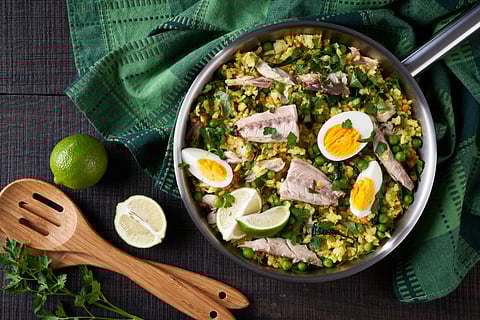
The inspiration behind the Anglo-Indian dish 'kedgeree' is khichdi. Kedgeree is a cherished and popular British dish consisting of cooked, flaked fish (traditionally smoked haddock), boiled rice, parsley, hard-boiled eggs, curry powder, butter or cream, and occasionally sultanas (a seedless grape variety).
A Scottish recipe for kedgeree is found in a 1790 book by Stephena Malcolm and uses cayenne pepper. Food historians claim that the British colonial officials and their relatives brought the khichdi back to their homes because it suited their bland palette.
An Epic Dish
It's in the Indian epic Mahabharata, events related to which probably fall between the 9th and 8th centuries BCE, where the earliest reference to khichdi can be found. During their exile, Draupadi is said to have fed the Pandavas khichdi. Additionally, a grain of rice from it swallowed by Lord Krishna made a starving and enraged Rishi Durvasha lose his hunger when he and his followers dropped in unexpectedly for lunch.
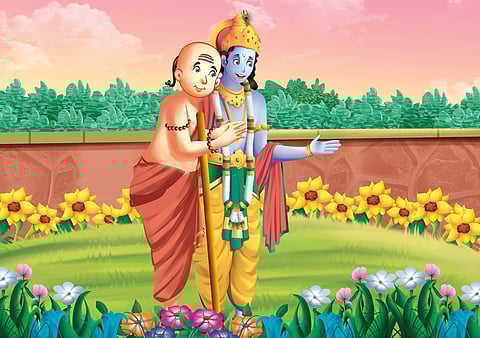
Khichdi also finds a mention in Sudama's story. A friend of Lord Krishna, Sudama, went to meet him in Dwarka. He was carrying two potlis (bundles), each holding khichdi and roasted gram, respectively. The former is snatched by a monkey, but Sudama somehow manages to take a part of the other to Dwarka, where Krishna eats some of the gram and bestows blessings on his friend.
The Mughals
Khichdi rose to prominence during the Mughal empire. Akbar, a frugal eater, was very fond of khichdi. The story about Birbal using the dish to make Akbar accept an oversight in judgement is known to everyone. A little-known fact about Akbar's courtier Abul Fazl and his connection to khichdi is intriguing. Fazl used to get 30 maunds of khichdi cooked daily anybody passing by his house could relish it. Going by the amounts, a maund was 40 seers or approximately 40 kg, and 30 maunds equal 1,200 kg of khichdi daily
Emperor Jahangir's comfort dish was the Gujarati version of the khichdi known as lazizan, as penned by the late food historian T.K. Acharya. Aurangzeb was also quite fond of the dish, especially during Ramzan, and Bahadur Shah Zafar relished in devouring moong dal khichdi so much that the dal came to be known as 'Badshah Pasand'.
Nasir-ud-din Shah, the nawab of Oudh from 1827 to 1837, was known to like a royal khichdi made by his chef, entirely from pistachios and almonds, which were cut to resemble the grains of lentils and rice.
The British royalty
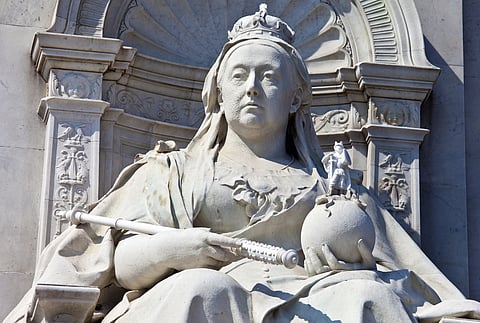
Khichdi made its way to Queen Victoria too. She tasted it when her Urdu tutor, Munshi Abdul Karim, offered her some. But she fancied masoor ki dal mixed with rice as an accompaniment. This is how the dal came to be known as "Malika Masoor".
Today, every region in India has its own take on the classic dish. Whether it is the Bengali khichuri, Kannadiga bisi bele bhaat, Tamil pongal, Haryanvi khichri (made with bajra), the Parsi bharuchi vaghareli khichdi (made using marinated and fried Bombay duck), and the Odiya adahengu khechidi, the dish is India's very own version of culinary comfort.