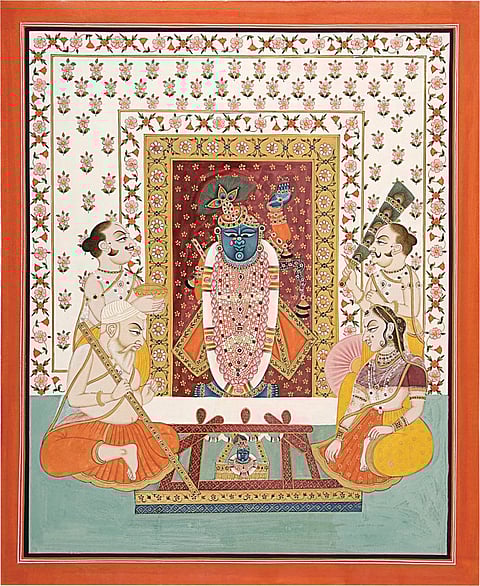
Some artists in Nathdwara near Udaipur would take large cloths, perhaps eight feet in length, and paint them with scenes depicting Shrinathji (Krishna in the form of a child). These wouldnt be ordinary depictions, but, among other things, intricately detailed and colourful scenes of the gods worship. The paintings would be hung behind the idols in the 17th century Shrinathji temple of Nathdwara. Over the centuries, these became known as pichvai (literally, something at the back).
Pooja Singhal, an art enthusiast, designer and revivalist who started the Pichvai Tradition & Beyond initiative for the sustenance and revival of this endangered art form, perfectly understands its nuancesit has both depth and width. Depth is in the historical layers and references width comes from just the sheer number of things you can paint. Indeed, no two pichvai works are the same.
The Revival of Pichvai Art
Pooja Singhal the founder of Pichvai Tradition & Beyond, is on a mission to revive Pichvai art and her latest exhibition in Mumbai showcases 400 odd such works

Pooja has always been fascinated with the art form. Her family is from Udaipur and has been its patrons for decades. Growing up, she would see many artists come home to display their collections to her mother. Her visiting family friends and relatives would yearn to buy a painting or two as well. And, yet, there wasnt enough awarenessMany had seen pichvai art. But most hadnt heard of it, she says.
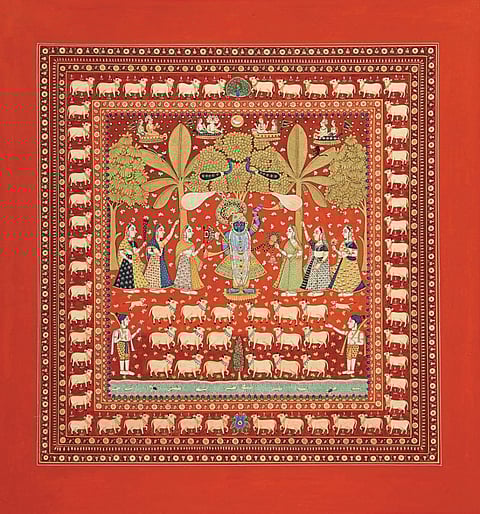
She also realised that the newer art pieces were not like the older ones, which were known for their brilliant craftsmanship and usage of the finest natural materials and tools. These days, its the bastardised versions. Even the form or expression of Krishna has been distorted, she says. There were many factors that led to its declineinability to adapt, lack of skill among newer artists, poor patronage and expensive natural materials.
Thankfully, Pooja chose to do something about it. She set up Pichvai Tradition & beyond, as well as the Saraswati Singhal Foundation to support it. Over the years, shes formed an atelier of 40 to 50 artists and commissioned hundreds of new paintings. These efforts, she says, are to bring back the original. But then, if you revive something just as it was, it may not sustain because it wouldnt be relevant today.
Revival and sustenance go hand-in- hand. So, for instance, she chose to present the newer pieces with straightened borders (in place of the garish floral borders used earlier).
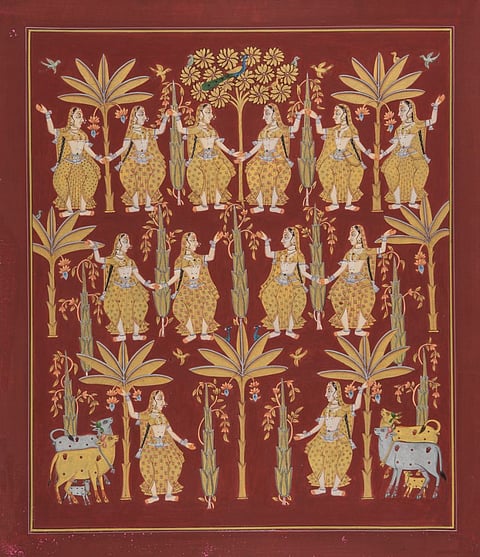
Poojas efforts have led to multiple exhibitions including one each at the Kochi-MuzirisBiennale and the India Art Fair in Delhi. However, it is her latest, currently on-going exhibition however, that stands out the most400 works are exhibited in Mumbai, divided across many thematic sections such as shringars (or adornment/decoration), utsavs (or festivals) including chappan bhog (where 56 different food items are offered to Shrinathji) and Deccan pichvais (which have a dominant gold-and- black colour scheme.
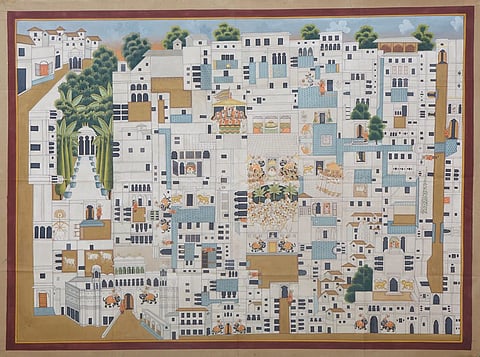
Among the works on display, some highlights includea pichvai that showcases a map of the Nathdwara temple, but with both 3D and 2D elements. A collection of work that fuses Pichvais with Mughal design elements is added too. Another collection includes the sketches artists made prior to the final cloth paintings. Finally, Pooja has brought miniature art and pichvai traditions together to create a unique body of work. This way, its safe to say her intervention has given a dying tradition a new lease of life.
All it took was some smart business decisions, and, most importantly, an allurement towards the art form. She does not wish to stop therethe idea is to take this to more metro cities and spread awareness across the country. To take it international. We hope to do more of permanent exhibitions. Later on, we should also have some interesting collaborations. Indeed, the possibilities are endless.
Pichvai Tradition & Beyond at a glance
When April 7 to April 15, 2018
Time 11am to 8pm
Where Famous Studios, Studio 1 &amp 9, 20 Dr. E. Moses Road, Mahalaxmi, Mumbai
More informationpichvaitraditionandbeyond.in