In the middle of the stillness in Firozpur in Punjab sits a railway station that comes alive only twice a year. Hussainiwala Railway Station located in a India-Pakistan border village, feels more like a pause in the landscape than a stop on a timetable, a place where history, borders, and brief crossings meet for just a moment.
Hussainiwala: Where Trains Visit Only Twice A Year And Time Stands Still
Nestled near the India–Pakistan border in Firozpur, Hussainiwala Railway Station comes alive only twice a year. For the rest of the time, its empty platform and silent tracks echo history and the memory of freedom fighters

Advertisement
Brief Encounters
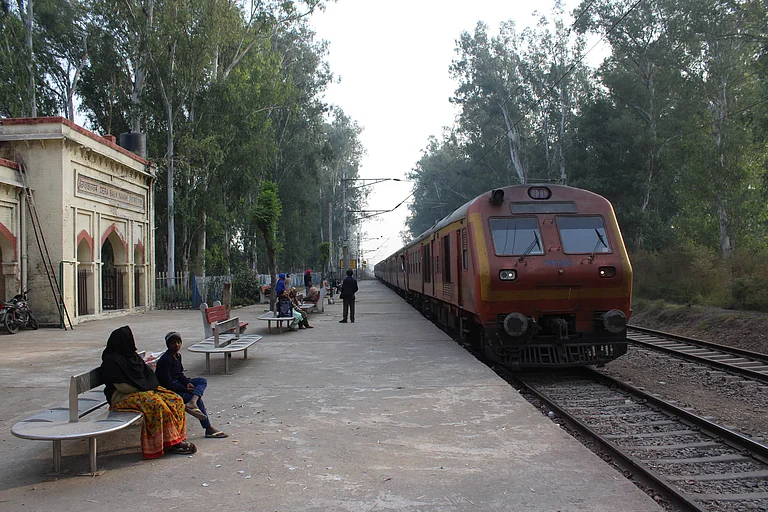
Hussainiwala Railway Station in Punjab has a history that stretches back to 1885, but most of the year it sits quiet, its platforms empty and tracks still. Twice a year, though, it comes alive. On March 23, for Shaheedi Diwas, and April 13, for Baisakhi, special trains bring visitors to the Hussainiwala National Martyrs Memorial. The station fills briefly with people moving slowly along the platform, photographing the memorial, buying tea from small stalls, and then empties again, returning to its long silence.
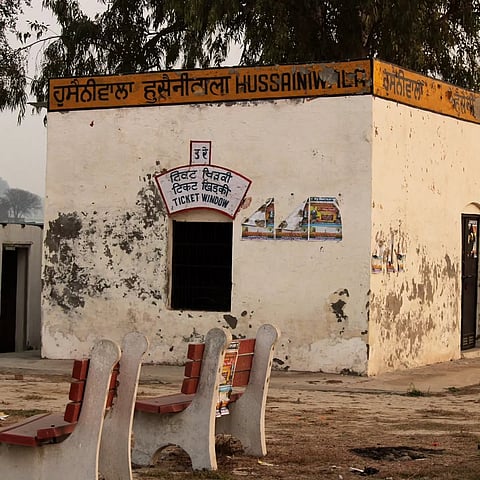
The line fell out of use after the 1971 Indo-Pak war awadh_dillagi/Instagram
Hussainiwala Railway Station is almost always quiet, a platform that sees trains only for a short, ten-kilometre journey from Firozpur Cantt. These trips happen exclusively during the annual commemorative events. For the rest of the year, the tracks are still, the station empty, giving it an unusual sense of calm for a place built to move people. Its rarity of use has earned it nicknames like “ghost station,” hinting at the strange rhythm of life here.
Advertisement
A Station Steeped In History
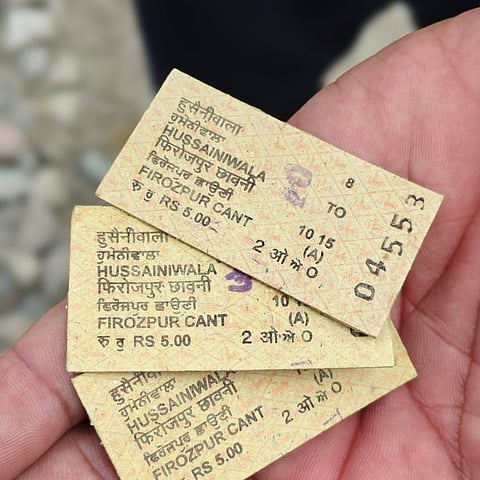
Hussainiwala was once part of a major rail link bhupinder_sidhu_13/Instagram
Before 1947, Hussainiwala was part of a major rail link acting as a gateway to Kasur, Lahore, and Peshawar. Established in 1885, it connected Ferozepur to major cities in Pakistan. The line crossed the Sutlej River via the Empress Bridge towards Kasur, which connected to Lahore and eventually Peshawar. Known as the "gateway to Lahore," it was used by British troops, merchants, and for the Punjab Mail to connect Ferozepur with Mumbai.
The line fell out of use after the 1971 Indo-Pak war, when the Kaiser-e-Hind bridge over the Sutlej was destroyed. Today, the station serves as a key point for visitors paying respects at the Hussainiwala National Martyrs Memorial, where Bhagat Singh, Sukhdev, and Rajguru were cremated. Its proximity to the Hussainiwala Border also makes it a stop for those attending the Beating Retreat Ceremony.
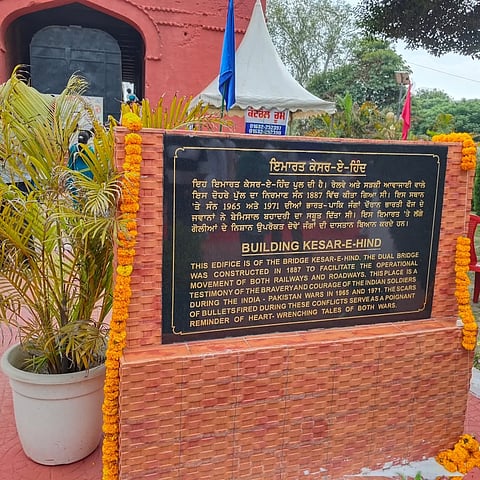
Today, the station serves as a key point for visitors paying respects at the Hussainiwala National Martyrs Memorial bhupinder_sidhu_13/Instagram
About Firozabad
Firozpur is a historic district in Punjab, India, situated on the banks of the Sutlej River and directly on the India-Pakistan border. Founded in the 14th century, it is known as the "Land of Martyrs" due to the Hussainiwala National Martyrs Memorial, where Bhagat Singh, Sukhdev, and Rajguru were cremated.
Advertisement
Historical Significance: Established by Firoz Shah Tughlaq, it was a crucial military base during the British era (1839) and the Anglo-Sikh Wars.
Border Location: It borders Pakistan and acts as a major, albeit quiet, border crossing point, famously holding a daily Beating Retreat ceremony.
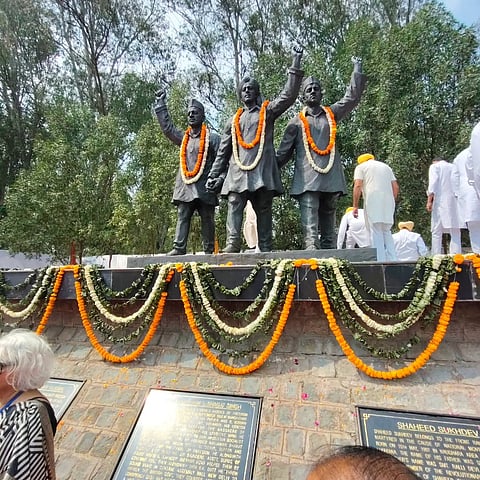
The National Martyrs Memorial at Hussainiwala is located on the border bhupinder_sidhu_13/Instagram
Martyrs Memorial: The National Martyrs Memorial at Hussainiwala, located on the border, is a significant site commemorating freedom fighters Bhagat Singh, Rajguru, Sukhdev, and also Bhagat Singh's mother.
Firozpur Cantonment: Established in 1839, it was one of the largest cantonments during British rule, though its commercial importance declined after the 1947 partition.
Other Stations With Their Own Rhythms

Denton is currently Britain’s least-used railway station Rept0n1x/Wiki Commons
Begunkodor Railway Station (India): Previously closed for 42 years due to rumours of being haunted, it was reopened in 2009 but still sees minimal daily usage compared to typical Indian stations.
Kyu-Shirataki (Japan): Formerly in Hokkaido, this station was kept open only to serve a single high school student, with trains stopping only twice daily until she graduated in 2016.
Advertisement
Denton (UK): Denton in Greater Manchester is currently Britain’s least-used railway station. Only two trains serve this station per week, running on Saturdays.
Sjisjka (Sweden): Located on the Malmbanan line, this stop is in a desolate, roadless landscape, serving mainly as a request stop.
Sanderson (USA): This is the least-used Amtrak station in the USA, handling just 247 passengers in 2023 (less than one per day). Located in West Texas, this unstaffed, historic 1880s stop features only a platform sign and shelter, serving the tri-weekly Sunset Limited and Texas Eagle trains.
FAQs
Where is Hussainiwala Railway Station located?
Near the India–Pakistan border in Firozpur district, Punjab, close to the Hussainiwala National Martyrs Memorial.
How often do trains run to Hussainiwala?
Only twice a year—on 23 March for Shaheedi Diwas and 13 April for Baisakhi.
What is the historical significance of the station?
Established in 1885, it was once part of a major rail link connecting Ferozepur with Kasur and Lahore (now in Pakistan).
Advertisement
Why is the station called a "ghost" or "martyr" station?
Because it remains empty most of the year and is closely linked to the Hussainiwala National Martyrs Memorial.
What else can visitors see in Firozpur?
Firozpur has historic sites, border areas, mustard fields, and is a gateway for those visiting the Hussainiwala Border and the Beating Retreat Ceremony.
Published At: