I remember my grandmother telling us stories about old Naga villages and how hornbills with their huge wings used to make rounds of those villages, protecting residents from evil spirits, making people feel protected and safe. Fast forward few years, I remember asking my mother when was the last time she saw a hornbill in the wild. Decades ago, was the sad answer. She once told me that hunting down a solo hornbill flying around or collecting food is same as committing a serious crime, a sin in fact. My grandmother's stories came to mind and I asked my mother if it was because of those folktales. She didn't indulge in storytelling but did tell me that a solo hornbill is usually out gathering food for his family since the female stays burried in the nest till she lays eggs and the young ones are old enough and this entire time she doesn't come out. So if a solo hornbill is hunted down it's as good as killing his entire family for they will perish eventually due to starvation. There are some things you hear that stays with you forever. The hornbill story is one such story that stayed with me. Stories such as these cemented my interest in wildlife, in birding especially. As a Naga, I've had my share of folktales and those tales, one way or the other, revolved around hornbill, tiger, fox, bear, and so many other birds and animals. Not saying that folktales are based on real life events but it's worth some thoughts for the sole reason that these animals were once a part of century-old cultures and traditions and they became a part of those tales. Always a figure that imparts wisdom and never a nuisance, that was the status these wild animals enjoyed in those old tales. In current times, some of these animals are critically endangered and are facing extinction. What went wrong
Bucketlist Become A Wildlife Warrior. Check
Here's how Pakke Tiger Reserve left us all behind to watch and learn how to ace wildlife conservation with their Hornbill Nest Adoption Programme

Advertisement
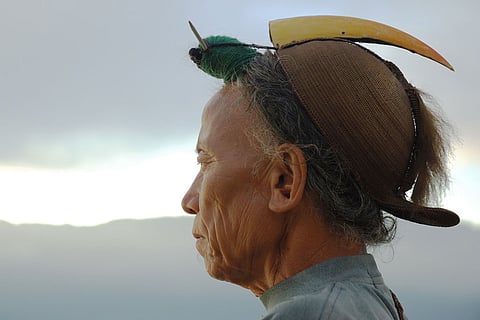
This is not going to be a story about Nagas but about a beautiful community in Arunachal Pradesh. Tucked away in East Kameng district of Arunachal Pradesh is Pakke Wildlife Sanctuary, also a tiger reserve. The forest is dense, the terrain hilly and wildlife aplenty. The reserve is one of the best places to see hornbills in India. Arunachal Pradesh is also that one place in India where you'll see men wearing the casque of hornbill as a head gear. It's safe to say that hornbills are a big part of Arunachali culture and tradition, the Nyishi community in particular. The journey of a hornbill from the wilderness to a head gear has now moved to the reserve winning India Biodiversity Award in 2016 for its Hornbill Nest Adoption Programme, a tremendous step towards conserving the species.
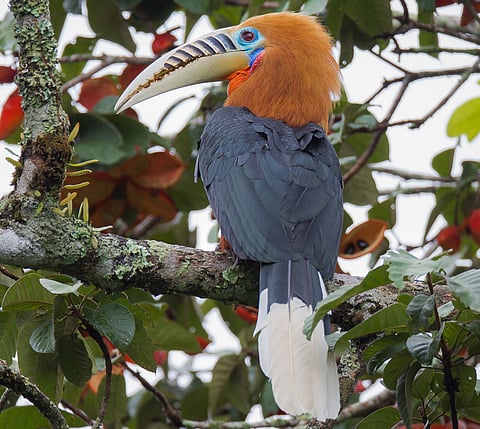
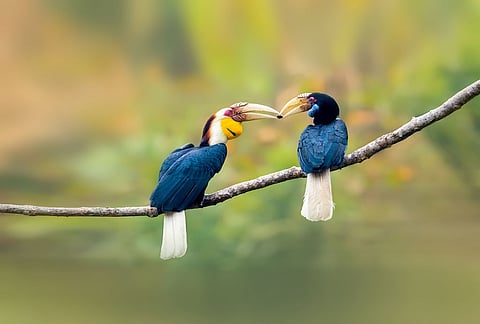
Close to 300 species of birds call Pakke Tiger Reserve a home. From the globally endangered white-winged wood duck to the rare Oriental bay owl to the magnificent great hornbill. Speaking of hornbills, Pakke has recorded four species so far--wreathed hornbill, Oriental pied hornbill, great hornbill and rufous-necked hornbill. Breeding is slow among hornbills and this, combined with deforestation and hunting for both casque and meat, had driven these beautiful birds' number to a dangerous low. The community realised this just in time and formed the Ghora Aabhe Society, a group of village chiefs, to put an end to the over exploitation of the precious forest and its denizens. With the help of the state forest department and Nature Conservation Foundation, the conservation of the forest and these birds was taken a notch higher in Pakke and adjoining Papum Reserve Forest. To curb the habitat loss and hunting, Hornbill Nest Adoption Programme was introduced to the already community-imposed ban on hunting. Thus started the monitoring and protection of these nests.
Advertisement
The locals are a tremendous help as they know the forest best and they locate a nest and inform the authorities. The members of Ghora Aabhe Society are ex-hunters and village headmen who are now nature protectors. Under the adoption programme, one can adopt one or multiple hornbill nests all contributions go to support the programme and as salaries to the nest protectors. From protecting the particular tree with a nest from being cut down to any form of disturbances, the programme takes care of it all.
How can you be of any help Well, you can adopt a nest to begin with, followed by volunteering if that interests you or you can visit Hornbills are beautiful birds, they've been around and have been a crucial part of many communities' culture and traditions. They deserve to have a good story about their existence.
Published At:
Tags