What comes to your mind with the idea of trying new food specialties on your travels Traveling introduces us to foods from a diverse range of locations. Every place has its own variety, different from what you know, and what you have eaten before. While most dishes float our boats easily, some appear so exotic that we might think twice before even daring to try them.
7 Less Familiar Delicacies From Around The World You Should Taste In Your Lifetime
From eggs preserved in clay to corn plant fungus, here's a list of food items from across the world that you must experience

Advertisement
Jellied Moose Nose, Canada
The bulb of the moose's nose includes both white and dark meat. The nose is skinned and then boiled and simmered with onions, garlic, and a variety of other spices, such as mustard seeds, allspice, cinnamon, and cloves. The meat is complemented with broth and solidified to attain the consistency of a jelly, which is served like a loaf and consumed in pieces.
Casu Marzu, Italy
The traditional Sardinian sheep milk cheese, Casu marzu carries live insect larvae. Piophila casei, the cheese skipper fly, typically lays its eggs in fiore sardo, the salty pecorino (cheese). As soon as the maggots hatch, they move through the cheesy whizz, digesting the protein in the process, and turning the mixture into a soft, and creamy textured cheese.
Locusts, Israel
When Israel witnessed a mass infestation of locusts, it came up with an innovative way to fight the insect attack. Coming up with a reverse strategy, the place decided to eliminate these pests by turning it into something extraordinaire. The Kosher snack from here uses locusts as its main ingredient which is cooked in spices and then deep-fried. Another variety is the pan-fried one with a mix of caramel and sprinkled meringue, a sweet delicacy.
Advertisement
Balut, Philippines
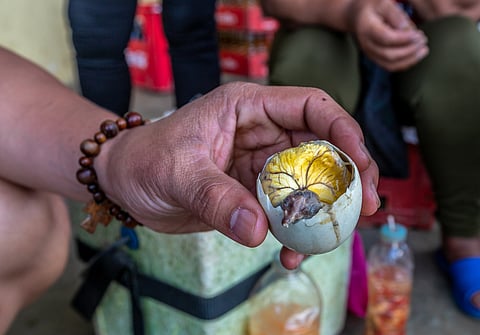
Balut is a Filipino delicacy made from a hard-boiled duck egg that is two to three weeks old. The partially grown duck embryo can have more or fewer identifiable features, including beak and feathers, depending on how developed it is. The egg is boiled alive and consumed directly from the shell, peppered with salt, chili, and vinegar. It is best served warm for the best taste.
Huitlacoche, Mexico
Huitlacoche is consumed widely in Mexico. It is created from the fungus Ustilago maydis, that infects specific corn plant strains. It might appear gross, but the item is utilized in a variety of cuisines and regarded as a native's favorite in Mexico. The woody-favored fungus can be found all around the place, including small food joints to big-shot restaurants.
Century Eggs, China
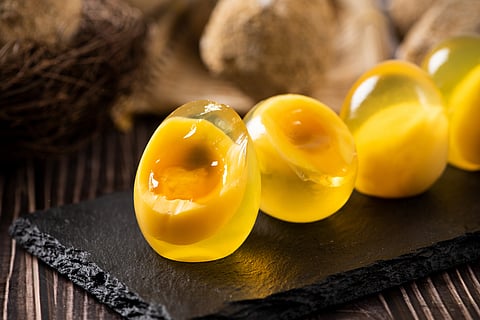
This classic Asian delicacy, preserves eggs for a long time in a mix of clay, quicklime, wood ash, and salt. Despite their black appearance, these eggs have a rich flavor and consumed widely by the population. When eaten, century eggs taste salty with a creamy, silky texture. They are frequently included in congee, a type of rice porridge, or served as an appetizer with soy sauce. Although it&rsquos a common misperception that century eggs are actually rotten, those properly prepared are completely safe to consume, and free of any bacteria or mould.
Advertisement
Cockroach Milk
Scientists have found a dairy-free substitute for the milk that we consume with four times as much protein. Cockroach milk is speculated to be the newest food product to enter the superfood league. As strange as it sounds, it is sure to intrigue some of the health enthusiasts out there. No wonder, if cockroach milk does become a big thing soon, and people start consuming it as a result of the discovered benefits it seemingly offers.
Published At:
Tags