World Heritage Day 2026| Back in 2019, when I was still in college, I got into the habit of exploring Kolkata. Its heritage buildings—some maintained, some almost in ruins and falling apart, yet still inhabited, and others with only the façade intact, the insides turned into office spaces or even shopping complexes.
World Heritage Day 2026: How Adaptive Reuse In India Is Rethinking Heritage Beyond Preservation
From Kolkata’s taverns and jails to a restored cemetery in Uttarakhand, adaptive reuse is reshaping how heritage survives—balancing preservation with new uses, and raising questions on how India treats its protected monuments

Advertisement
Take, for example, the prominent Metropolitan Building in Chowringhee, constructed in 1905. Once a premier shopping destination owned by Whiteaway, Laidlaw & Company, this Edwardian structure passed into the hands of the Metropolitan Life Insurance Co. after independence. Later, the Life Insurance Corporation acquired it, bringing in new tenancies and offices. This was probably my first brush with “adaptive reuse.”
Over time, I would learn about the Jorasanko Thakurbari, now housing Rabindra Bharati University; the Bengal Club on Russell Street, once the residence of Lord Thomas Babington Macaulay; the Metcalfe Hall, which earlier held the Calcutta Public Library and is now maintained by the Archaeological Survey of India (ASI) for exhibitions; the Alipore Jail Museum, a former penitentiary that had witnessed the execution of prominent freedom fighters; and the Police Training School established by CP Sir Frederick Halliday, originally a mental asylum for native Indians known as Dalanda House, and later used by former Commissioner of Police Charles Tegart for the interrogation of freedom fighters.
Advertisement
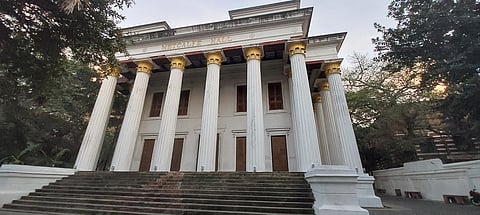
Metcalfe Hall, Kolkata Wikimedia Commons
But I’ll come back to those later. Recently, I came across a space in Uttarakhand called Sensorium Park, once a neglected, overgrown British-era cemetery dating back to the mid-1850s. I’m told that during the early stages of excavation, several graves were uncovered, possibly linked to the First World War, but without any identifiable archival records. Graves have a way of bringing large parts of history to the surface, and that’s what led me to look into it further.
The Establishment Of Sensorium Park, Uttarakhand
Spread across 7,050 square metres, Sensorium Park is located in Nainital, Uttarakhand. The site has now been cleared and reopened as a public space by Compartment S4, with a design approach that focused on retaining its history and existing landscape rather than altering it extensively.
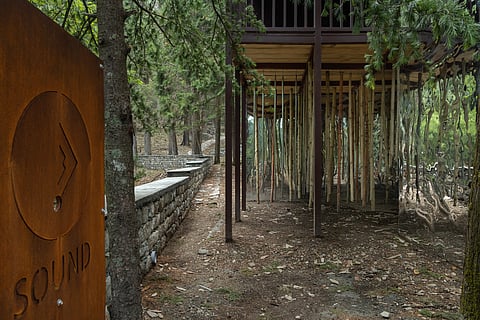
Inside Sensorium Park, Uttarakhand Supplied
Architect Monik Shah and urban designer Vedanti Agarwal spoke to Outlook Traveller about their approach, which was focused more on preservation than reconstruction.
Advertisement
“The graves are believed to belong to the First World War period as well as to victims of the floods in Nainital in the 1800s. Given the uncertainty of historical records, the methodology focused on preservation rather than restoration. Layers of overgrowth were gently cleared to reveal graves and remnants of built structures, allowing the site’s hidden history to slowly emerge. Each discovered element was then documented through mapping, photography, and a basic condition assessment before any intervention was considered. Broken or fragile elements were carefully cleaned, and the carvings on the graves were slowly scrubbed and washed to retain as much of the original material as possible,” they said.
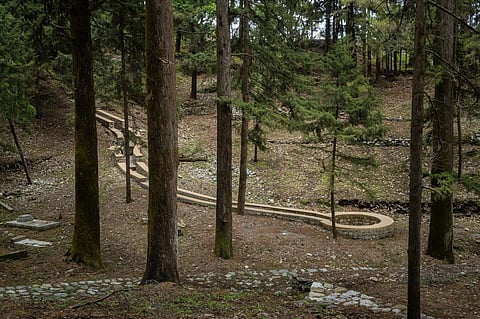
Inside Pines Cemetery, Uttarakhand Supplied
Keeping the process non-invasive, which is key to restoration, the heritage gate was also revived to its earlier form using a few old photographs sourced from available online material. All other interventions were deliberately kept light.
The project followed a low-impact and ecology-first approach from the beginning. The existing vegetation was retained completely, and no trees were removed during the intervention. “The pathways were developed along the natural terrain using dressed stone pitching in mud rather than concrete, ensuring that the soil condition and root systems remained undisturbed,” the architects established.
Advertisement
The construction footprint was restricted only to areas where the ground was already clear and free of vegetation. “Wherever possible, the work followed the existing terrain instead of altering it. The natural culvert within the site was strengthened using stone walls that guide surface runoff without disturbing the natural flow of water.”
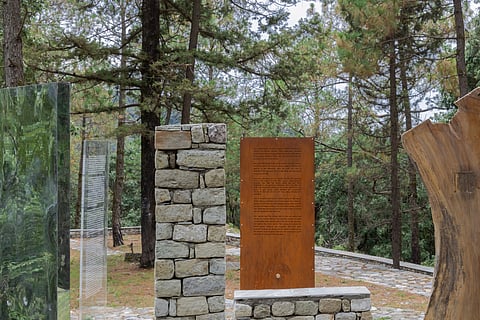
The restored Pines Cemetery is now called Sensorium Park Supplied
Pines Cemetery, as it was originally called, is picking up a distributed model through curated trails, given that large-scale tourism is difficult in mountain ecosystems. This reduces pressure on major centres and involves local communities. Sensorium Park supports slow tourism, local knowledge, and community initiatives. Similar small-scale interventions are being developed across Uttarakhand, including Pancheshwar, Bankatiya, Gunji, Kumati, Shyamlatal, Banasur, Nandaprayag, Rong Kong, and Kuti.
Visitor movement is regulated through a non-linear pathway that disperses footfall. Stone paths mark accessible areas and maintain distance from graves. The layout and setting discourage crowding and intrusive behaviour. Materials include stone, deodar wood, bamboo, corten steel, acrylic glass, acrylic mirror, and mild steel, used in small quantities. Local stone reduces transport and aligns with the landscape. Signage at the entrance represents the five senses and includes short narratives. Corten steel is used for durability.
Advertisement
The site is managed by a government body, with CCTV, controlled lighting, and a nominal entry fee for maintenance and visitor regulation. Seasonal changes remain part of the site. Ongoing maintenance is carried out with local authorities through regular monitoring and minimal intervention.
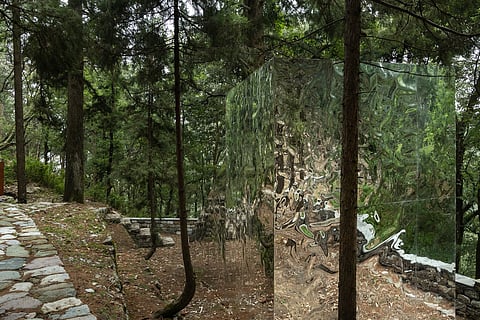
Acrylic glass at Sensorium Park Supplied
Principles Of Restoration
If there’s one principle most conservation architects agree on, it’s that restoration should remain minimal and non-invasive. The aim is to retain and, where possible, recover what existed, rather than introduce something entirely new.
To understand this approach, Outlook Traveller spoke to conservation architect Manish Chakraborti. He has led projects such as the restoration of St John’s Church in Kolkata, the Darjeeling residence of Sir Jagadish Chandra Bose, and the nomination dossier for Santiniketan as a UNESCO World Heritage Site. Head of the school of architecture and planning at Sister Nivedita University, Kolkata, he has also overseen the conservation of St Olav Church and The Denmark Tavern in Serampore.
Advertisement
The Denmark Tavern, Serampore
I visited The Denmark Tavern after its restoration. Set along the Hooghly River, the yellow structure with green-trimmed windows stands out, its name marked clearly on a plaque.
Before 2015, however, the site was a ruin at Nishan Ghat in Serampore. Much of the structure had collapsed, with only two columns of the original façade still standing, while the rest was overgrown. Its history had faded from public memory, even though its scale suggested significance. Located near the old Danish landing site—once marked by flagstaffs, cannons, and warehouses—the building drew the attention of researchers from the National Museum of Denmark. Their archival work in India and Denmark identified the remains as The Denmark Tavern and Hotel, dating to the late 18th century.
Built around 1786 by English innkeeper James Parr, the tavern was advertised in the Calcutta Gazette. The announcement read: “Gentlemen passing up and down the river may be accommodated with breakfast, dinner, supper, and lodging; also liquors sold by the single dozen and a good billiard table and coffee room with the newspapers”. Its Tuscan-style façade and open portico overlooked the Hooghly, and it functioned as a social space for Europeans in the region, with evenings centred around gatherings along the riverfront.
Advertisement
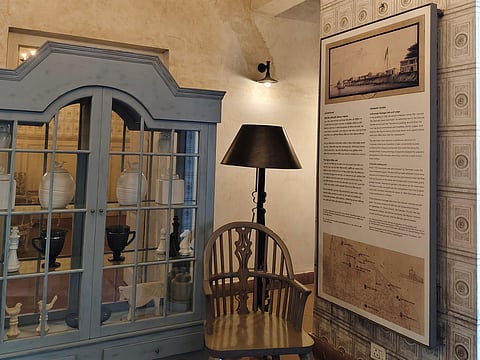
Interiors at The Denmark Tavern, Serampore Anwesha Santra
Manish Chakraborti explains that The Denmark Tavern project began as part of a larger initiative by the National Museum of Denmark to identify and restore structures linked to Serampore’s Danish past. “The tavern was in a far worse condition than the church we had restored earlier—most of the roof had collapsed, debris had piled up to nearly a floor’s height, and the original plan was no longer readable,” he says. Clearing the site, documenting what remained, and reconstructing a plausible plan through excavation and archival research became the starting point.
“The first step was to remove debris and understand the building—where the walls stood, what was original, and what came later,” he adds. The team relied on on-site evidence, old drawings, and even a photograph he had taken decades earlier. This helped resolve uncertainties, such as the location of a spiral staircase, which was eventually uncovered through excavation and retained as an exposed feature rather than rebuilt.
Advertisement
The restoration avoided conjecture. Missing elements like intermediate floors were not recreated without evidence; instead, spaces were left open or reinterpreted, such as a double-height central area used as a café. New additions, including a steel staircase, were introduced without attaching them to the original structure, keeping a clear visual and physical distinction between old and new.
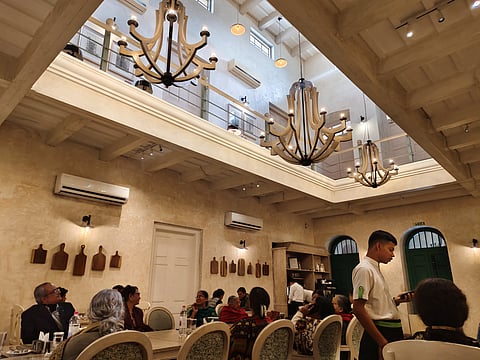
The cafe inside The Denmark Tavern Anwesha Santra
Chakraborti emphasises that adaptive reuse requires restraint and sensitivity. “The new must adapt to the old, not the other way around,” he says. Modern services and functions were integrated with minimal intervention, retaining proportions, materials, and openings. The project balanced historical accuracy with present-day use, while ensuring the building remained functional and structurally stable.
The Denmark Tavern is now operated by The Park Hotels, with a café on the ground floor. It also offers six suites for guests, with 18th-century Danish Hygge influences and contemporary amenities.
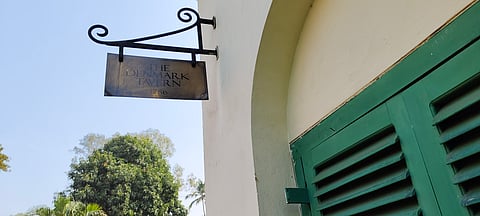
The Denmark Tavern, Serampore Anwesha Santra
How Kolkata’s Alipore Jail Became a Museum
Advertisement
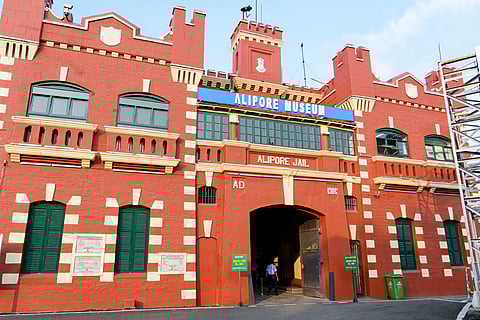
Alipore Jail Museum, Kolkata Shutterstock
Back in Kolkata, when the Alipore Jail Museum was first opened, I paid it a visit during the early days. Established in 1906, this penitentiary is spread across 15.2 acres.
Partha Ranjan Das, principal architect at Partha Das and Associates, conservation architect, urban designer, and member of the West Bengal Heritage Commission, served as the chief architect for this project. Das has also led several restoration projects, including Town Hall, the Treasury Building of AG Bengal, St Paul’s Cathedral. He is currently overseeing the restoration of the Writers’ Building.
When the administrative headquarters of South 24 Parganas shifted to Barasat, a 108-acre tract at Alipore became available. Das prepared a master plan for the site, proposing that the former correctional home be converted into a museum focused on the freedom struggle.
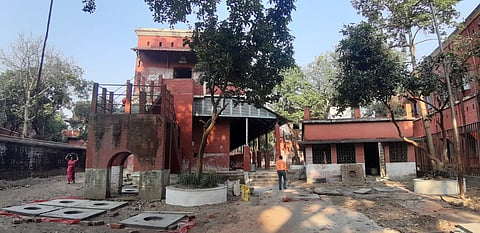
How Alipore Jail looked before it became a museum Partha Ranjan Das
“The structure wasn’t in bad shape, but to create a museum out of it, we needed to add things. A hundred-year-old building depends largely on its roof, so we strengthened it and addressed leakage first,” he says. The site originally separated political prisoners—largely Indian freedom fighters—from other inmates, including Europeans linked to port activities. Their quarters differed in size, ventilation, and layout, reflecting clear hierarchies.
Advertisement
“The arrangement of cells was designed to prevent interaction—stone beds were placed in alternating directions, and partitions limited each section to around fifty inmates,” Das explains. This spatial organisation, aligned with colonial prison design principles, enforced isolation and control, as articulated in the 1838 Macaulay Committee Report. The jail followed a radial layout inspired by London’s Pentonville Jail, with a central watchtower enabling surveillance across the cell blocks, based on Jeremy Bentham's panopticon concept.
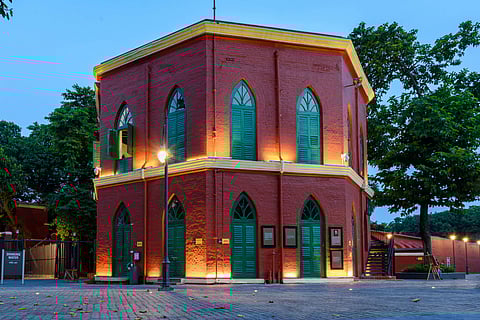
The central watch tower at Alipore Jail Museum Shutterstock
“All of this has been preserved to show how Indians were treated. Later additions like toilets were selectively removed to retain the original conditions—earlier, only wicker baskets were used,” he says. Several spaces have been repurposed: a former godown is now a seminar room, parts of the complex house museums, including a police museum, and areas once used by inmates to deposit belongings now function as a restaurant and souvenir spaces.
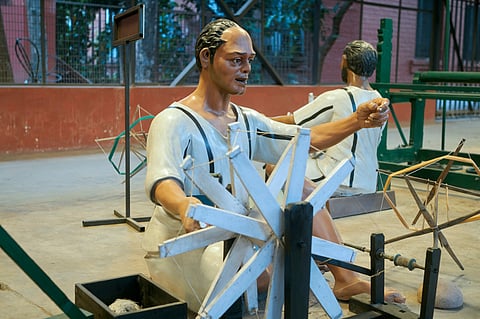
Inside Alipore Jail Museum Shutterstock
“To keep the structure, we do what is necessary—even if that means using new materials. Adaptive reuse requires strengthening and services like air conditioning and fire exits,” Das notes. Interventions such as metal sheeting were introduced where required. The gallows, where several freedom fighters were executed, remain in place, with the scaffold intact and the drop now enclosed in glass.
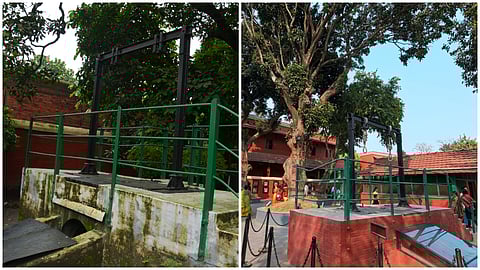
(L-R) Before and after restoration of the gallows at Alipore Jail Museum Partha Ranjan Das, Shutterstock
A Modern Outlook On Adaptive Reuse
From a conservation perspective, the first step to restoration is documentation—recording the site as it exists today. The second is understanding what it was, through drawings, records, or accounts. Then identify its values: historical, age, archaeological, architectural, functional, and cultural.
Based on these values, priorities are set. If enough evidence exists, restoration can aim to bring it back to its earlier state. If not, the focus is on preserving what remains. Materials used should be reversible, allowing future generations to modify or remove them during subsequent restoration. Any adaptive reuse requires interventions—adding services like toilets, electricity, or climate control—so the question becomes how much change is acceptable.
There are different approaches: preservation (no change), conservation, restoration, reconstruction, and adaptive reuse. The level of intervention depends on the condition, available evidence, intended use, and resources. Every project balances these factors before deciding how far to go.
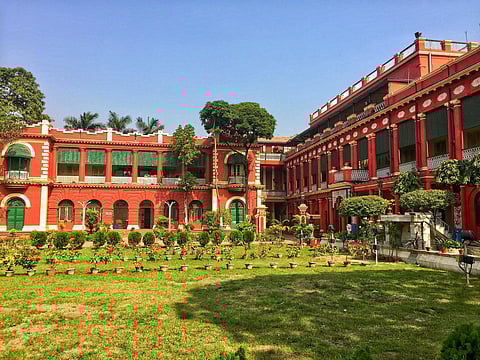
Jorasanko Thakurbari, Kolkata Wikimedia Commons
Conservation architect Navin Piplani, who co-authored the “Charter for the Conservation of Unprotected Architectural Heritage and Sites in India” with Professor AG Krishna Menon, spoke about the potential of using heritage buildings for educational purposes.
Piplani, director and dean at the School of Art and Architecture and dean of academics and research at Sushant University, has also been part of the committee for the protection of the Taj Mahal.
“They say we have thousands of havelis, mansions, forts, and palaces that can be reused—but all of that needs money. The bigger question is: what about protected monuments? There are around 3,000 under ASI, like Fatehpur Sikri, the Red Fort, Purana Qila—why can’t we use them as well?” questions Navin Piplani.
Globally, heritage structures are often put to active use—adapted into schools, cultural centres, and public spaces—so they remain part of everyday life. In India, however, protected monuments are largely preserved in their existing state, which limits how they can be experienced or used, says the conservation architect.
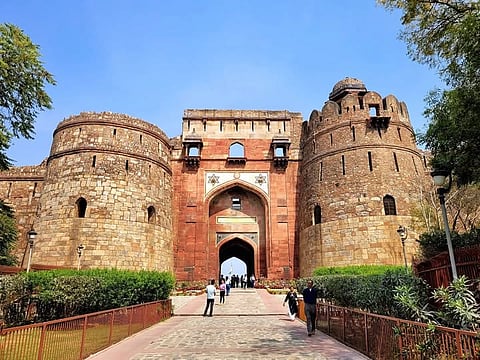
The Delhi Zoo sits along a heritage corridor, with Purana Qila, Khairul Manzil, and the Crafts Museum just a short walk away. Taarikhnama/Facebook
“In the south, many temples, forts, and palaces under ASI remain restricted in use. Take Mahabalipuram—the Shore Temple is preserved, but the surrounding context isn’t integrated. Nearby fishing villages and markets could be part of a larger reuse strategy. Why should it remain only a monument and not function as a living space? Even schemes like ‘Adopt a Monument’ don’t fully address this gap. Sites like Fatehpur Sikri could operate as living museums, but instead remain static.”
Piplani argues that adaptive reuse isn’t only about commercial conversion—it can also be educational. “In many countries, heritage sites are used for teaching. In India, we don’t see conservation programmes operating within monuments like the Red Fort or Purana Qila. Even the Indian Institute of Heritage has moved out of the Red Fort to a new campus in Greater Noida, which lacks that historical context.”
Keeping Heritage In Use
Across these projects and perspectives, what emerges is a common thread: heritage cannot survive as a static relic. Be it Kolkata’s restored taverns and repurposed jails, or the questions raised around protected monuments and lesser-known sites, the challenge lies in balancing preservation with relevance. Adaptive reuse, when done with restraint and clarity, allows buildings to retain their material and historical integrity while accommodating present needs—whether as museums, educational spaces, or public sites. As these examples show, the future of conservation in India may depend less on freezing structures in time and more on finding ways to keep them in use without erasing what they once were.
FAQs
1. What is adaptive reuse in heritage conservation?
Adaptive reuse is the process of repurposing old buildings for new uses while preserving their historical and architectural significance.
2. Why is adaptive reuse important in India?
It helps preserve heritage structures while keeping them functional, ensuring they remain relevant instead of falling into disrepair.
3. What are some examples of adaptive reuse in India?
Examples include the Alipore Jail Museum in Kolkata, Denmark Tavern in Serampore, and Sensorium Park in Nainital.
4. How is adaptive reuse different from restoration?
Restoration aims to return a structure to its original state, while adaptive reuse allows modifications to suit modern needs.
5. Can protected monuments in India be reused?
Most ASI-protected monuments have strict restrictions, limiting reuse, though experts argue for more flexible, educational and public uses.
Published At: