We arrive at the gates of Belgadia Palace in the early afternoon, after a four-hour drive out of Kolkata. The first detail that catches the eye is the lettering on the gate: the palace’s name rendered in elegant Art Deco, a small flourish that sets the tone for what lies beyond. A long driveway leads us to the entrance, where the palace reveals itself in a graceful façade washed in warm yellow and edged with crisp white trim, glowing softly in the afternoon light.
Royal Roots, Cultural Revival: The Chhau Festival In Belgadia Palace
The Great Eastern Epics Festival at Belgadia Palace in Odisha is more than a dance showcase—it’s an immersive journey through chhau, crafts, cuisine, and traditions, set against the backdrop of a restored royal palace

Advertisement
We are in this beautiful corner of Odisha—Baripada, in the Mayurbhanj district—for the Great Eastern Epics - Chhau Festival at Belgadia Palace, where the grounds come alive each year with the region’s celebrated masked dance tradition.
Chhau is a striking dance-drama from eastern India, where masks, martial movements, and mythological storytelling come together in a powerful, highly stylised performance. Practised across Odisha, Jharkhand, and West Bengal, the form is recognised by UNESCO as an Intangible Cultural Heritage and exists in three distinct styles—Seraikella, Purulia, and Mayurbhanj. The chhau festival at the palace brings all three traditions together in one place. Curated in partnership with Aadi Naad and RARE India, the festival offers a deeply immersive experience—revealing how the story of chhau extends far beyond the stage, into the lives of mask makers, sabai grass artisans, musicians, and craft communities who together form the living cultural network that sustains the tradition.
Advertisement
The Art of Movement
After the welcome and a slow, relaxed lunch, we wandered through the palace rooms as the light softened over the grounds. By evening, the first performance of Seraikela Chhau began.
The dance felt quietly intense. The masks hid the dancers’ faces, but their bodies spoke everything—sharp turns, sudden freezes, measured steps. The movements drew from old stories, epics, and the rhythms of nature, and watching it was like seeing a story come alive in front of you, each gesture deliberate yet full of life.
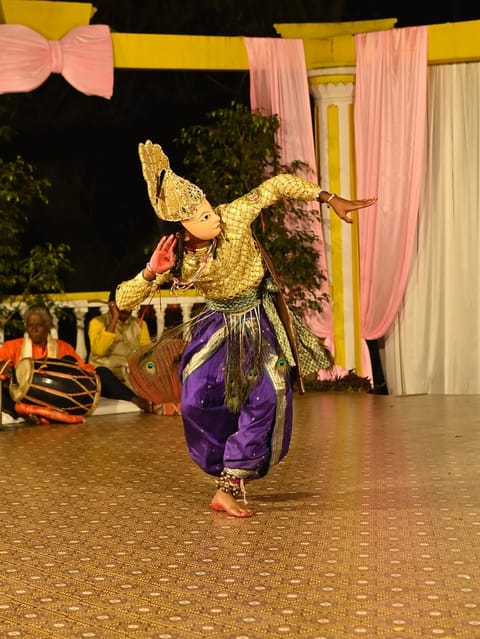
A Seraikela Chhau performance at the palace thegreateasternepicschhau/Instagram
As night settled over Belgadia Palace, guests were invited to savour traditional Odia thalis showcasing the richness of the region’s culinary heritage. But the festival’s celebration of food went beyond the table. Through hands-on workshops, visitors explored iconic dishes like Baunsa Poda Mansha, or bamboo chicken, where marinated meat is sealed in hollow bamboo stalks and roasted over an open fire.
The Chhau Festival at Belgadia Palace is not just a performance—it’s an immersion into the culture, craft, and traditions of Mayurbhanj. “The idea was to open the palace to the world—that would be our contribution to promoting the region in every possible way,” says Rashmi Rajyalaxmi Bhanj Deo, Maharani of Mayurbhanj. “We see ourselves as custodians of a legacy, and one of our goals is to keep Mayurbhanj in the forefront, sharing every aspect of its culture with the world. We focus on experiential tourism—taking our guests to sabai grass artisan villages, where they can watch and even try weaving, exploring the surrounding forests and villages, or experiencing the chhau dance, a tradition unique to Mayurbhanj.”
Advertisement
From Grass to Craft
The next morning, we explore Salasahi village, where the women are at work with the sabai grass. Their hands move fast and sure, twisting and weaving it into mats, baskets, and tiny decorations. We meet Sumitra Barik at Salasahi, a master trainer in sabai craft who is helping the women of Mayurbhanj earn a living from the grass, locally known as Bobei Ghasa. She runs the Maa Andharibudhi Sabai Producer Group and tells us that 220 women artisans are associated with her organisation. “The tourists who visit us often end up becoming long-term clients,” she says. “They place orders even after they return home.”
The Art of Chhau Masks
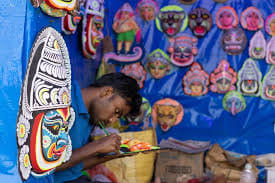
Crafting the masks of Purulia Chhau Shutterstock
That evening, we were treated to a stunning performance of Purulia Chhau. The dancers wear striking papier-mâché masks in vivid hues and dramatic expressions. Their movements are swift, with high jumps, sweeping turns, and acrobatic bursts. In Purulia Chhau, the stories are drawn from the Ramayana and the Mahabharata, unfolding without words. Behind them, the rhythm of the dhol and the sound of the dhamsa rise into the night, while the shehnai threads a sharp, haunting melody through the performance.
Advertisement
But the festival’s magic went beyond the stage, spilling into village performances and hands-on workshops. Experts led sessions explaining the craft behind the chhau masks. Chhau Guru Dashrath Mahato spoke about the GI-tagged paper-mâché and clay masks that are central to the Purulia and Seraikela Chhau dances of West Bengal and Jharkhand. Crafted primarily in Charida, Purulia, these masks carry a 150-year-old tradition, richly decorated with ornaments, feathers, and vibrant paints to bring Hindu deities, mythological heroes from the Ramayana and Mahabharata, and animals vividly to life.
Passing Down a Legacy
The next morning, we visit a nearby village and see young men and women rehearsing chhau long before it reaches the stage. They move through the steps and gestures of the dance with quiet focus. There are no masks yet, no swelling drums—just the energy, repetition, and discipline that form the foundation of the art. Every correction, every practiced turn, carries the weight of centuries of tradition, a living testament to the skill and dedication that keeps chhau alive from one generation to the next.
Advertisement
Watching the dancers rehearse, it became clear that chhau is never just about the performance—it exists within a wider ecosystem of craft and community. Akshita Bhanj Deo, co-owner of Belgadia Palace and Director of The Mayurbhanj Foundation, explained that their goal is to skill youth, especially from indigenous communities in Odisha and the Eastern region, using tourism as a sustainable vehicle for development. “Within the craft space, the reason why we still want to showcase craft during the Great Eastern Epics Festival is that, if you look at Indian handloom, handicrafts, and festivals in general, the art forms in eastern India don’t exist in a vacuum,” she said.
“There are communities who make the instruments, communities who create the attire and ornamentation, and communities who prepare the food for the dancers. So, when you discuss a dance form, you also have to consider the ecosystem that protects and promotes it.”
Advertisement
Royal sisters Akshita and Mrinalika are carrying forward the legacy of Mayurbhanj. As princesses of the royal family and directors of Belgadia Palace, they are at the heart of the Chhau Festival, championing the cultural revival of this UNESCO-listed dance form. Beyond the performances, the sisters have worked to promote local arts and crafts through a range of social impact initiatives, ensuring that the traditions of Mayurbhanj—from music and dance to handicrafts—continue to thrive and reach audiences far beyond the palace walls.
“I truly believe that it’s in regions like this—less known, less talked about—where the real diversity and rich culture of India truly shines, said Mrinalika Bhanj Deo. “This was the second edition of The Great Eastern Epics, and I think it will only grow bigger and better as our hotel expands and as new properties emerge around us. We are deeply passionate about this cause and the movement we started for ourselves—we want to keep Chhau alive as a living tradition. Over the next five years, I truly believe it will be far larger than it is today. Our role, as a family and through the foundation, is to promote and showcase this art form on as many platforms as possible.”
Advertisement
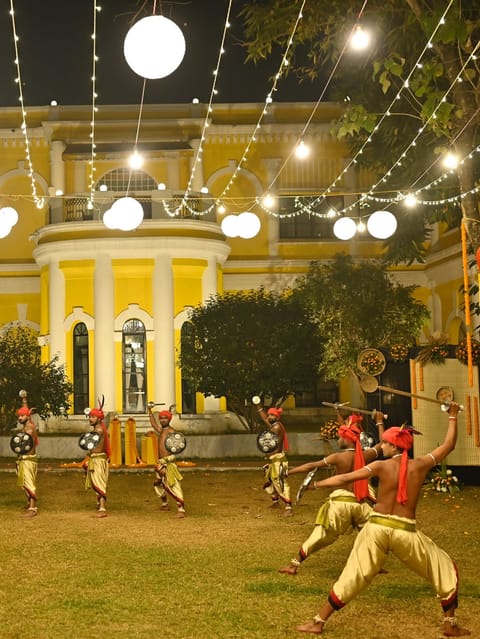
A performance of Mayurbhanj Chhau at the palace thegreateasternepicschhau/Instagram
That evening, Mayurbhanj Chhau filled the palace grounds. Without masks, every glance and expression of the dancers was visible, full of focus and energy. Their movements were sudden, fluid, and surprisingly lyrical—a mix of folk, tribal, and classical styles rooted in warrior training. The steady beat of the dhol and the sharp notes of the mahuri carried the stories of the Ramayana and Mahabharata across the hall.
The Palace as a Cultural Canvas
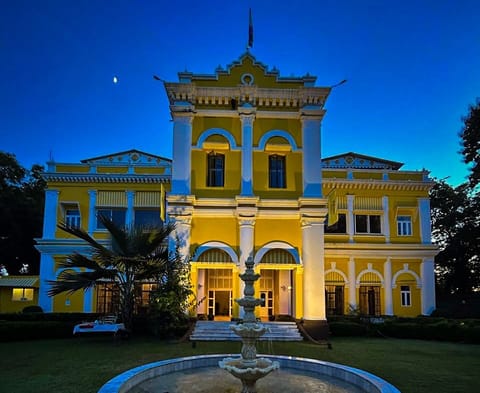
The 18th-century Victorian-Georgian palace has been restored into a boutique heritage hotel blackswanjourneys/Instagram
The festival feels inseparable from its setting. The palace itself, a two-century-old testament to Odisha’s royal heritage, provides not just a backdrop but a living stage for the dance, where history, architecture, and tradition converge.
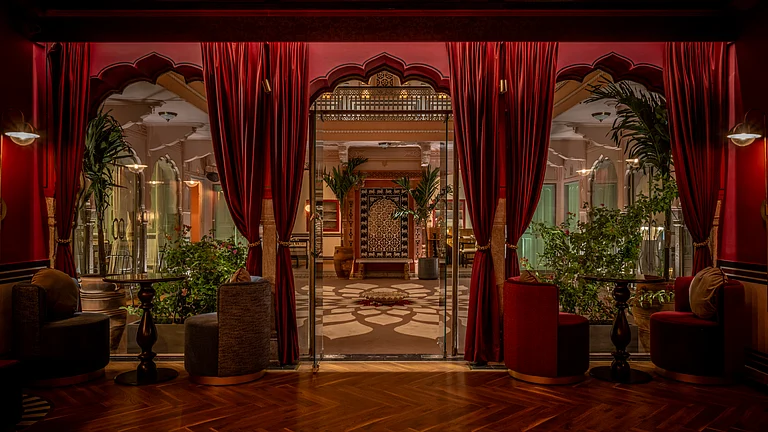
The princesses have painstakingly restored the 18th-century Victorian-Georgian palace into a boutique heritage hotel. Large sections of the 200-year-old residence had been closed for years, and many artefacts were in disrepair. Plumbing and electricity were overhauled, and the original 25 rooms redesigned for modern comfort. Today, the palace offers not just luxury, but a celebration of Odisha’s culture.
Advertisement
“When a traveller comes to our property, they experience the region through art, craft, culture, people, and cuisine,” says Mrinalika. Guests watch Mayurbhanj Chhau on the palace grounds, visit craft villages, and immerse themselves in local food traditions. “That’s how we reimagined the idea of a hotel,” she adds. In a country as diverse as India, Belgadia Palace is not just a stay—it’s a journey into the living heart of Mayurbhanj’s culture.
Mayurbhanj itself is starting to gain recognition beyond Odisha—“TIME magazine listed Mayurbhanj in 2023 as one of the 100 greatest places to travel,” says Ankita. “There were only two places from India—one was Ladakh, and the other was Mayurbhanj. It’s a district, and TIME rarely nominates a district, especially one that few people have heard of. At the time, what they highlighted were the ancient temples and the majestic tigers.” With Belgadia as a cultural hub, visitors now experience not just the landmarks, but the living traditions that make Mayurbhanj so extraordinary.
Advertisement
FAQs
What is the Chhau Festival?
The festival is an annual celebration of chhau, a traditional masked (Purulia, Seraikella) or unmasked (Mayurbhanj) dance-drama from eastern India. It combines martial movements, folklore, and storytelling from epics like the Ramayana and Mahabharata.
Where is it held?
The festival takes place at Belgadia Palace in Baripada, Mayurbhanj, Odisha.
What is Belgadia Palace?
Belgadia Palace is an 18th-century Victorian-Georgian heritage palace, restored by princesses Mrinalika and Akshita Bhanj Deo into a boutique hotel. It serves as the festival venue and a cultural hub, showcasing local arts, crafts, and cuisine.
Can visitors experience local culture beyond the festival?
Yes. Guests can visit craft villages, meet sabai grass artisans, watch mask-making, and experience traditional cuisine.
How is the festival linked to the local community?
The festival initiatives aim to benefit local artisans, musicians, and communities, preserving cultural traditions while promoting sustainable tourism.
Published At: