As much as we pride ourselves on upholding tradition, this institutional endorsement of handwoven textiles is not to be taken for granted. It’s the result of dedicated work on the part of a number of advocates, many of whom have worked behind the scenes to ensure that the rhythm of the loom doesn’t disappear.
Reviving Tradition: The Legacy Of India’s Great Textile Revivalists
The role of the great revivalists who gave India's textiles a new lease on life cannot be stated enough. We trace their celebrated legacy

Advertisement
Two foundational figures of post-Independent India paved the path: Kamaladevi Chattopadhyay and Pupul Jayakar. While Chattopadhyay was a staunch Gandhian, Jayakar was known as the "tsarina of culture." The former was appointed the head of the All India Handicraft Board in 1952, and the latter was simultaneously given the responsibility of the All India Handloom Board. They would work extensively within the bureaucracy, setting up and leading institutions to ensure that traditional weaving and other crafts were seen as valuable, sustainable enterprises. Jayakar’s legacy included the Weavers Service Centres, training grounds for countless artisans and revivalists, and the Handloom and Handicrafts Export Corporation of India (HHEC).
Under her tutelage at the HHEC in the 1970s, another eminent figure in Indian textile history found his footing—Martand Singh. Jayakar tasked Singh, or Mapu as he was known, with putting together the now seminal Vishwakarma textile exhibitions of the 1980s. An ambitious, decade-long project, it focused on the revival of traditional weaves —encompassing everything from patola and kanjivaram to tanchoi and block printing— and took Indian textiles to a global audience.
Advertisement

Rukmini Devi Arundale, founder of Kalakshetra Courtesy: TS Archives, Netherlands
Until he passed away in 2017, the scion of the royal family of Kapurthala worked tirelessly to bring a new dynamism to India’s textiles. “In the ’80s and ’90s, Martand Singh initiated multiple projects across textile clusters in India that explored the cross-pollination of traditional Indian textiles with contemporary design ideas. This was responsible for rejuvenating traditional Indian textiles and bringing a fresh perspective into the design lexicon. "Today, his legacy is visible everywhere,” says designer Rakesh Thakore.
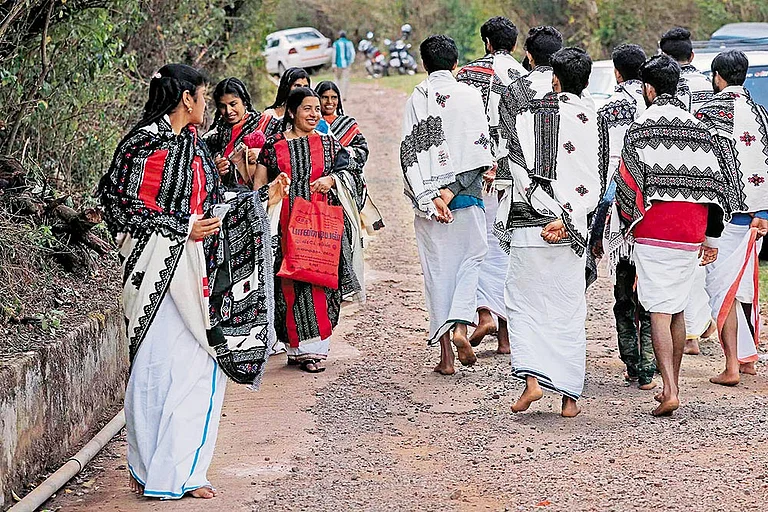
Mayank Mansingh Kaul, a New Delhi-based textile designer and curator, says, “He was able to pursue excellence in aesthetics and craftsmanship while managing large central institutions. Very few have also cultivated the next generation and empowered others as he did.”
For those working now, Mapu began decolonising in design thinking. He encouraged the development of a contemporary language of textiles, one that expressed a modern India.
Advertisement
Mapu’s collaborators in the Vishwakarma exhibitions and other projects have continued his vision in their work. Take, for instance, the grand damme of the sari, Rta Kapur Chishti. Author of "Saris of India: Tradition and Beyond," along with countless more books and lectures, Chishti has dedicated her life to writing and teaching about the life of the Indian weaver. Her label, Taanbaan, specialises in saris and home furnishings made from limited quantities of organic desi cotton or silk.
At The Sari School, set up in 2008, she teaches a new generation the countless playful ways textiles can be draped and worn. Rakesh Thakore was also a mentee of Mapu, and his Delhi-based label Abraham & Thakore reflects that influence.
While Mapu is the most renowned, there are countless others Jayakar inspired to further the cause of handloom. In the 1950s, Hyderabad-born Suraiya Hasan Bose worked at the HHEC. After two decades in Delhi, the khadi-wearing Cambridge graduate returned to her home city to start her handloom unit. Her work with master weaver Syed Omar resurrected himroo and mashru, two lustrous weaves nearly extinct in Andhra Pradesh.
Advertisement
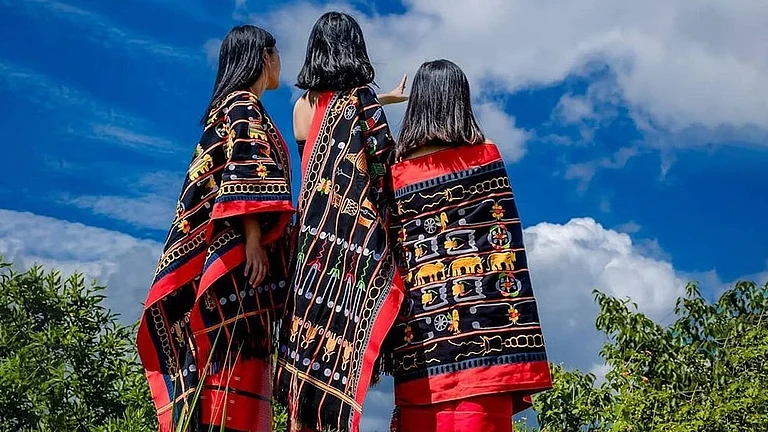
Another key figure was Bengaluru-based Chimy Nanjappa, who worked with Jayakar on the sari curations for the World’s Fair in New York and Montreal in the 1960s. The experience shaped Nanjappa’s passion for textiles. Together with her daughter Pavithra Muddaya, who trained at the Weavers Service Centres, she founded the brand Vimor in 1974. Dedicated to documenting and reviving traditional korvai handloom saris that they first discovered through temple auctions, the Vimor Foundation has since broadened its scope to include mentorship, employment generation, and skill development for its weavers.

Martand "Mapu" Singh was an Indian textile conservator, curator, and cultural historian Courtesy: INTACH
Two key figures who cannot be missed in any discussion of Indian handloom are Laila Tyabji and Jaya Jaitley. Both worked towards developing the urban market for traditional crafts, bridging the gap between artisan and consumer. Tyabji is one of the co-founders of Dastkar, an NGO whose annual bazaars across the country are a popular stalking ground for designers and shoppers alike. Jaitley, meanwhile, is the president of Dastkari Haat Samiti, a national association of craftspeople. One of the foundation’s key projects was Dilli Haat, the popular crafts market that opened in 1994 in New Delhi. It is even now the first stop on any tourist’s itinerary.
Advertisement
“The idea for Dilli Haat was conceived six years before its inauguration in 1994. It resulted from a realisation that the socio-cultural-economic system of village haats was a perfect ecosystem for craftspeople. They were stuck in their homes, not knowing the real value of their work, and, therefore, would get shortchanged by exporters retailing abroad," said Jaitley.
"I felt that their wonderful skills needed a place of dignity. And especially in 1990, when we advocated globalisation and talked about opening up markets for companies from the rest of the world, I thought it would be a good argument to say, 'Let's open the markets for our rural people in the cities where the purchasing power lies.'"
Empowering Women
The handloom revival movement was formed against the backdrop of women’s liberation. When given its true worth, weaving can empower countless people, particularly women, who are engaged in the process of creation. That understanding started Gujarat-based organisations like SEWA (Self Employed Women’s Association) and Shrujan, founded in 1972 and 1969. Driven by Ela Bhatt and Chandra Shroff, respectively, both women saw the possibility of changing livelihoods through weaving, embroidery, and applique. A little later, activist Monisha Behal was inspired by Bhatt to address issues such as domestic violence and abuse by helping women find independence through weaving at home. In 1994, she founded the North Eastern Network in Nagaland. The organisation has helped local communities develop contemporary designs woven on the waist strap or loin loom. Products made from natural fibres like nettle, which grows naturally in the lower ranges of the Himalayas, have also found fresh lease.
Advertisement

Jaipur's block printing was revived by Faith Singh Photo: Getty Images
Heirloom Naga is another brand from the region that focuses on providing employment opportunities for women. Founded in 1993 by Jesmina Zeliang, their loin loom-woven cushion covers, table runners, and bed throws in a black and white palette are sold worldwide at stores like Crate & Barrel and Anthropologie. Last year, Zeliang opened the doors to the Heirloom Naga Centre in Dimapur, which houses a design studio, classrooms, gallery, café and a guesthouse for visiting design students.
A journey around the country reveals other forces of fashionable change. In Madhya Pradesh, gossamer-like Maheshwari cotton was saved from extinction by the work of Sally Holkar. The Stanford graduate who married into the royal family of Holkar founded the Rehwa Society in 1978 and, over four decades, went on to establish the WomenWeave Charitable Trust in 2003 and The Handloom School in 2013. Another American who set up a base in India was Judy Frater, who spent more than 30 years documenting the textiles of the nomadic Rabari people of Kutch. Her research led her to found the Somaiya Kala Vidya, a unique design school for artisans, in 2014.
Advertisement
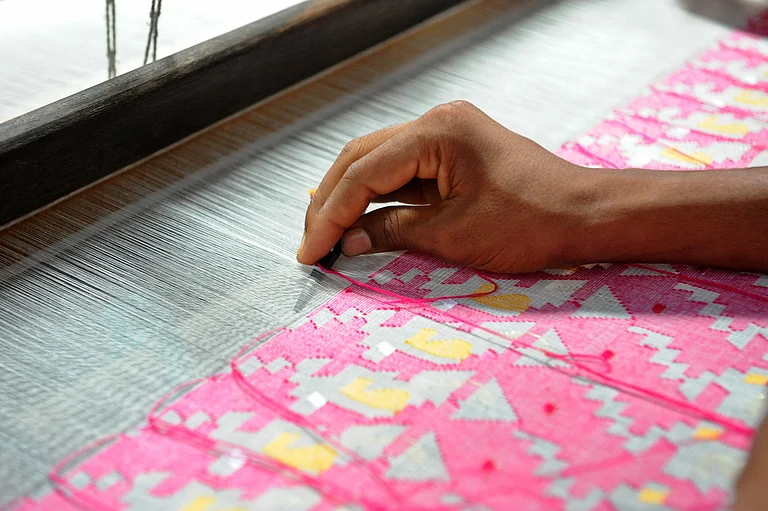
If you travel east to Andhra Pradesh, textile crusader Uzramma has worked with weavers for over 35 years. Her cause was to bring the cotton production process back into the hands of the people doing the work—the farmers, ginners, dyers and weavers rather than the middlemen.
One of the notable results of her work to make handloom an accessible, everyday fabric is the creation of malka. This versatile, hot-weather-ready textile combines mulmul and khadi. Further North, Ruby Palchoudhuri, President of the Crafts Council of West Bengal, was encouraged by Chattopadhyay to visit craft centres across Bengal. One of her key successes was nurturing the finest Jamdani cloth with master weaver Jyotish Debnath and his family.
Along with the initiatives already mentioned, it was also when legacy brands like Anokhi and Fabindia were founded. The first was the work of John and Faith Singh, who, in 1970, dedicated themselves to reviving Jaipur’s dwindling block printing industry. The second was founded in 1975 by American textile buyer John Bissell, who opened his first Fabindia store in Greater Kailash, New Delhi. Bissell, famously spartan in his style and generous with knowledge, introduced a generation of designers and manufacturers to a wider global market. People like Suraiya Hasan Bose, Sally Holkar, and Jesmina Zeliang found their first audiences through Fabindia stores.
Advertisement

Jaya Jaitly, founder of Dastkari Haat Samiti, has been at the forefront of crafts revival in India Photo: Getty Images
Designing A Legacy
The work of designer-revivalists also deserves special mention. For example, Ritu Kumar has created couture-level designs by harnessing the power of handloom, Rahul Jain's work with silk weaving pushes the boundaries of what is possible in textile art, and in the new guard, names like Sanjay Garg or Gaurang Shah, who have built aspirational brands based entirely on the magic of handloom.
As one of the first voices to nudge the Indian fashion industry to consider indigenous crafts, Jaitly takes pride in how far we’ve come and believes there are more miles to cover. “When we were trying to follow the West, I believed we had to turn to the craft sector to define our identity. And today, it has happened. Sustainability should involve the craftspeople's culture, lifestyle, rituals and daily living practices. I read very nice stories of young people renewing and recycling, making beautiful designs and building in a value system, which is what sustainability is. While challenges regarding adequate funding persist, in my 40 years, there has been increased confidence, self-reliance and pride among artisans about their craft,” said Jaitly.
Advertisement
'When we were trying to follow the west, I believed we had to turn to the craft sector to define our identity. and today, it has happened'
The Curators
In the last few years, a flurry of exhibitions in the textile ecosphere has brought the work of revivalists firmly into the spotlight. Take, for instance, "Sutr Santati: Then. Now. Next," by curator Lavina Baldota, that’s travelled to Mumbai, Delhi, and Melbourne. Another show on the textile lovers’ calendar was "Red Lilies, Water Birds," an exhibition that was held first at Anegundi, Hampi, in 2022 and then at Bengaluru in 2023. The 108 textiles included rare patolas from Kerala, exquisite khadi cotton shot with metallic thread and sumptuous brocades of the Deccan.
What makes the New Guard particularly unique is their willingness to take their shows beyond the major urban hubs to a new audience. In the last few years, designer, curator, and researcher Mayank Mansingh Kaul has helmed shows on ikat (New Delhi), paithani (Paithan, Maharashtra), and khadi (Chirala, Andhra Pradesh and Coimbatore). His key approach has been “to take exhibitions and archives to the actual weaving centres. These can then become libraries for the craftspeople themselves. This is important because often the next generation doesn’t have access to the archives of their forefathers whose work might have gone into the closets of people miles away.”
Advertisement
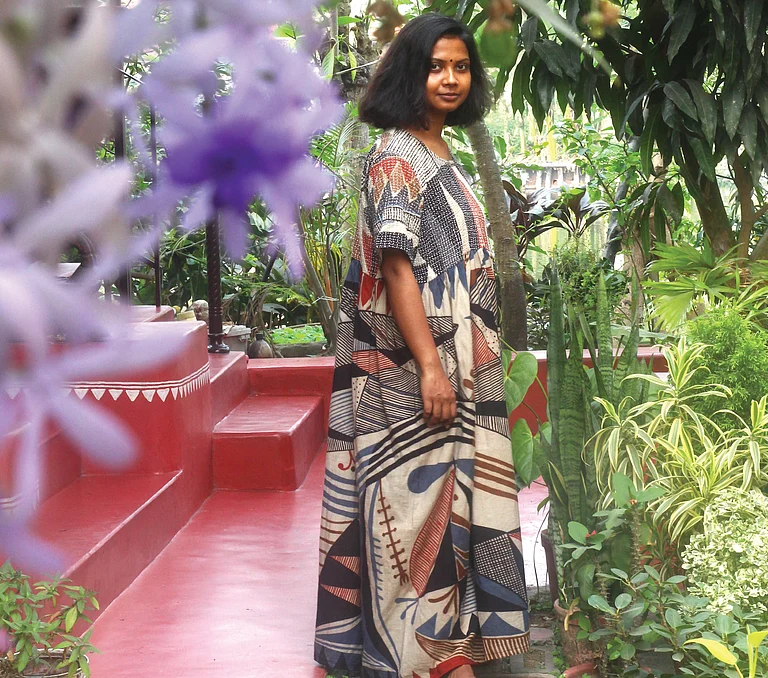
Any discussion of textile art is incomplete if it doesn’t mention the weavers. Figures like Rahul Salvi and his family have kept the craft of Patan Patola sari weaving alive. The Debnath family from West Bengal did the same for jamdani. B. Krishnamoorthy, a fourth-generation Kanjivaram weaver, has meticulously documented the numerous designs, patterns and motifs inherent to the craft. Gajam Govardhan from Telangana, a master weaver in ikat textiles and Padma Shri awardee, is a frequent collaborator with Abraham & Thakore, whose exquisite works have found a permanent home in the Victoria & Albert Museum.
The names mentioned here are just a few of the proactive, passionate individuals who have set the foundation for much of the work happening today. It does not include the educators, museum owners, private patrons and countless grassroots-level workers who are all part of the warp and weft of this textile ecology.
Butool Jamal is senior fashion journalist. She is currently fashion editor at The Nod
Published At:
Tags