Bandhavgarh leaves an impression before it offers an explanation. The road winds through farmland and sal forest, past villages where children wave at passing jeeps, and then suddenly the land opens into meadows that look as if they have been waiting centuries for someone to notice. It is a park known for its tigers, yes, but that is never the full story. The forest has a certain temperament: cautious at first light, then busy, then utterly still in the midday heat. Birds erupt from bushes without warning. Langurs sound their alarms. Somewhere in the understorey, something moves and the whole forest seems to lean in.
Here's Your Complete Guide To Tiger Spotting And Wildlife Adventures In Bandhavgarh
From roaring Bengal tigers to hidden ruins, Bandhavgarh is a wildlife adventure steeped in history and myth

Advertisement
What makes Bandhavgarh compelling isn’t just the possibility of seeing a tiger. It is the interplay of the wild and the historical—a fortress on a plateau, carved statues half-swallowed by roots, and a landscape that carries myth-like sediment. You find yourself imagining ancient sentries on the same ridges where deer now graze. The wild has reclaimed everything, and that reclamation feels oddly hopeful.
For travellers planning 2026 and beyond, Bandhavgarh offers both romance and reality. The romance is obvious: misty mornings, forests steeped in story, the electric hush before a predator emerges. The reality is just as important: seasonal constraints, varied zones, the need for permits, and the reminder that the forest does not work to human schedules. Come prepared, ask questions, and give the wild room to surprise you.
Safari Experiences And Wildlife Sightings In Bandhavgarh
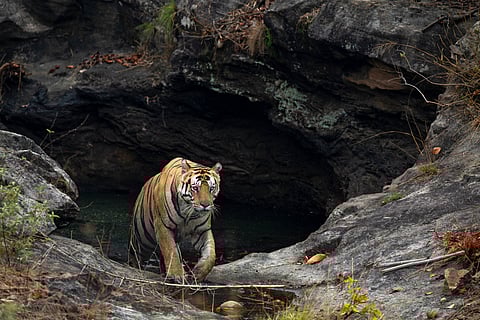
A tiger emerges from the rocks in Bandhavgarh Tiger Reserve Shutterstock
Bandhavgarh’s star residents are its Bengal tigers, and the reserve has long enjoyed a reputation for exceptionally good sightings thanks to a combination of compact terrain, established territories and experienced naturalists. Legendary individuals like Charger and Sita helped cement the park’s international reputation, and today visitors still whisper about the big cats that have taken over those territories. Yet the forest offers more than stripes. Leopards, sloth bears, wild dogs, gaur, sambar and chital all occupy the reserve, while over 250 recorded bird species make safaris rewarding even when predators remain elusive. Naturalists often advise listening as much as looking—alarm calls from langurs or deer, sudden silences in bird chatter and movement in meadows often reveal more about the forest’s mood than the eye can initially catch.
Advertisement
Best Time To Visit Bandhavgarh National Park
Your experience of Bandhavgarh depends heavily on the season. Summer, from March to June, is the most productive period for sightings. As temperatures climb, vegetation thins, water sources shrink and animals congregate near the few remaining pools, many of which lie close to safari routes. It is not the most comfortable time to be outdoors, but it offers the highest statistical probability of seeing tigers and other predators.
Winter, from October to February, delivers the opposite experience: dramatic scenery, cold mornings, mist hanging low over meadows and a forest that feels far greener and calmer. Tigers are harder to spot than in peak summer, but sightings still happen regularly, and birdlife thrives during this period. Monsoon brings a seasonal pause to the core zones, which usually remain closed from July to September, although buffer zones may stay open depending on forest regulations.
Understanding Bandhavgarh’s Landscape And History
Advertisement

Bandhavgarh’s high tiger density and ancient ruins create an exciting backdrop for young adventurers Shutterstock
The reserve is located in eastern Madhya Pradesh spanning the districts across Umaria, Shahdol and Katni. Its terrain features a mix of sal forest, grasslands, cliffs and streams, with the historic Bandhavgarh Fort sitting high above. The name itself is rooted in mythology, local folklore suggests that Lord Ram constructed the fort for his brother Lakshman, leading to the area it s name (“bandhav” meaning brother and “garh” meaning fort). Within the forest are archaeological remnants including temples, inscriptions and the reclining statue of Vishnu at Shesh Shaiya, making the park as compelling for history enthusiasts as it is for wildlife watchers.
Bandhavgarh Safari Zones: Buffer Zones And Sighting Strategy
Bandhavgarh functions through core and buffer zones, and understanding the distinction aids in managing expectations. Tala, Magadhi and Khitauli represent the core, with Tala regarded as the most picturesque and historically significant. Its rugged cliffs, meadows and proximity to natural water sources make it particularly photogenic, especially in winter when the Charan Ganga river reflects the early sun. Magadhi offers open meadows and frequent activity around its water bodies, while Khitauli tends to be quieter, drawing travellers who want fewer vehicles and slower safaris.
Advertisement
The buffer zones, including Panpatha, Dhamokhar and Johila, provide additional safari routes when core permits run out. While habitats are healthy, occasional human activity and forestry usage mean sightings can be less consistent than in the core, though they remain rewarding for birdwatchers and those interested in forest landscapes rather than chase-the-tiger narratives.
Safari Permits And Practical Travel Tips
Core safaris usually operate from October 1 to June 30, with morning and afternoon slots that change based on sunrise and sunset. The morning drive is favoured by naturalists for its longer duration and gentler light. Night drives are allowed only in buffer zones and offer atmosphere rather than guaranteed sightings, with visibility limited to vehicle headlights.
Permits should be booked online through Madhya Pradesh’s forest department portal, ideally several months in advance, as the number of vehicles per shift is tightly capped. Once inside the reserve, safari jeeps and forest guides are mandatory; the system functions efficiently, and most lodges will manage bookings for guests who prefer not to coordinate logistics themselves.
Advertisement
Where To Stay In Bandhavgarh: Resorts And Homestays

The call of the wild awaits at Bandhavgarh National Park Shutterstock
Accommodation around the reserve has improved dramatically in recent years, with options ranging from organic farmstays to serious safari lodges. Properties near Tala zone offer proximity to both the gate and the archaeological sites, while those near Magadhi and Khitauli often prioritise privacy, wilderness views and birdlife. The atmosphere varies by lodge, but good naturalists are worth their weight in gold here, they influence what you learn, how you see, and whether the forest reveals itself beyond stripes and statistics.
Culture, Connectivity And Expectations
This corner of Madhya Pradesh remains rural, and that is part of its charm. Network connectivity fluctuates, so securing a local SIM is helpful but not foolproof. Days revolve around safari timings, with long midday breaks when animals hide from the heat and travellers linger over lunch or visit the Baghel Museum for a dose of regional history. Village visits and nature walks offer insight into the Baiga and Gond communities, medicinal plant use, and the forest’s role beyond tourism.
Advertisement
At its core, Bandhavgarh rewards curiosity rather than checklist tourism. Tigers are never guaranteed, no matter how dense the population, and the magic of the place lies in the wait, in following alarm calls, scanning meadow lines and driving back through the forest as the light fades. It is a reminder that the wild operates on its own timeline, and that the best safaris are defined not only by what you see but by everything that led to the moment of seeing.
The Information
How to reach?
Bandhavgarh National Park is most easily accessed via Jabalpur, about 200 kilometres away, which has regular flights from Delhi and Mumbai. Trains to Umaria (37 km), Katni (100 km) and Jabalpur (180 km) also connect the park to major Indian cities, followed by a short drive to the reserve. Road travel from any of these points is straightforward, with well-maintained routes winding through countryside and forest.
Places to Visit near Bandhavgarh
Baghel Museum – Explore royal heritage and wildlife history, including exhibits on the Maharaja of Rewa and the first white tiger spotted in the park.
Bandhavgarh Fort – Perched atop a hill within the park, this ancient fort offers panoramic forest views, historic temples, and the striking reclining Vishnu statue.
Khajuraho – Around three hours away, the UNESCO-listed temples showcase medieval art and sculpture, famed for their intricate carvings celebrating love and devotion.
Panna National Park – Known for waterfalls, rivers, and wildlife, this nearby park makes for a serene day trip or extension of a tiger-centric itinerary.
Advertisement
FAQs
1. When is the best time to visit Bandhavgarh?
Winter (October–February) offers lush scenery and pleasant safaris, while summer (March–June) increases chances of tiger sightings near waterholes. The park remains closed during the monsoon (July–September).
2. How can I reach Bandhavgarh?
The nearest airport is Jabalpur (around 200 km), and the closest railway stations are Umaria (37 km) and Katni (100 km). From there, it’s a drive or taxi to the park.
3. What are the core safari zones?
Tala, Magadhi, and Khitauli are the three core zones, each offering unique landscapes, wildlife, and tiger-spotting opportunities.
4. How do I book a safari?
Permits are best booked online through the Madhya Pradesh Forest Department. Jeeps and guides are assigned by the department, with most hotels offering booking assistance.
5. Which wildlife can I expect to see?
Apart from the Royal Bengal Tiger, Bandhavgarh is home to leopards, sloth bears, sambar and spotted deer, wild dogs, elephants, and over 250 species of birds.
Advertisement

Published At: