It is March 3, 2026. I write this sitting at Queen Alia International Airport in Amman, mildly enjoying a leisurely meal at the Royal Jordanian business class lounge. My bags have been packed for the third time. The departure board is a mosaic of delays and cancellations, with only the national carrier Royal Jordanian operating through revised routes via Cairo and Muscat. Outside, the sky that was supposed to carry me home has, over these past three days, carried other things instead—sirens, the low booming sonic thunder of fighter jets, and the eerie silence that settles in between them.
What A Week in Jordan Taught Me About Travelling In Uncertain Times
A week in Jordan during escalating regional tensions becomes a lesson in resilience, preparedness, and the new realities of travelling in an unpredictable world

Advertisement
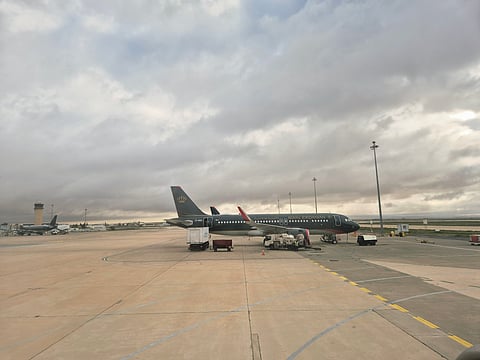
A parked Royal Jordanian aircraft at Amman airport Chandreyi Bandyopadhyay
What began as a trip to document Jordan's extraordinary heritage, its ancient rose-red cities and aromatic kitchens, took an entirely different turn. I will not dwell on the geopolitics. However, what I will say is that the learnings have been profound, and they feel urgent enough to share right now, from this departure hall, before the memory softens.
A New World Of Travel
What we are witnessing in the Middle East is the most acute aviation shock since the global pandemic. Over 37,000 flights were cancelled in the first nine days of March 2026, including roughly 5,500 by Indian and foreign carriers combined, following the escalation of regional hostilities. Major transit hubs went dark with little warning on the evening of February 28, and many of them still remain so. Jordanian airspace has remained open, but with the caveat that it may close on short notice—governments around the world including the Indian Embassy in Amman urged travellers to consider departing while commercial options still exist.
Advertisement
In 2026, having a backup travel plan seems the most prudent way to plan any cross-border travels. Climate disruptions, sudden airspace closures, and geopolitical shifts have made travel disruptions a routine rather than a rare exception. That sentence would have felt like alarmism two years ago. Today, sitting in this airport, it simply feels true.
Calm Is A Strategy

Dead Sea, Jordan Chandreyi Bandyopadhyay
When disruption hits, panic feels natural. Let me note here that it is also quite useless. The first reaction to a cancelled or delayed flight is usually frustration, but panic only makes things harder. Instead of rushing from counter to counter, take a moment to collect yourself and focus on gathering accurate details.
In practice, this means resisting the instinct to sprint to the check-in desk. The single most counterproductive thing most stranded travellers do is rush to the airline service desk at the airport to seek remediations the moment a disruption is announced. That queue will have hundreds of people ahead of you, most of whom are asking the same questions and receiving the same answers. Use those first minutes instead to open your airline's app, check flight tracking tools like FlightAware or Flightradar24, and simultaneously contact the airline through their customer service line. Working multiple channels at once dramatically improves your chances, while you stay put in your accommodation until plans form.
Advertisement
Your Embassy Is Not An Afterthought
Once you are in a safe place, start monitoring official alerts from the destination country’s State Department or your own country's foreign affairs ministry. Staying in touch with the nearest embassy is key, as consular teams can advise on shelter-in-place guidance, documentation issues, or evacuation options.
Numerous countries and airlines have already organised repatriation flights for stranded citizens during this crisis—the UK, Australia, and several EU member states all chartered evacuation flights within days of its beginning. Those who were registered with their embassy's alert programmes received real-time instructions, like myself. They provide real-time, destination-specific updates and make it easier to contact you in case of an emergency. Register before you travel. Every time.
Know What You Are Owed
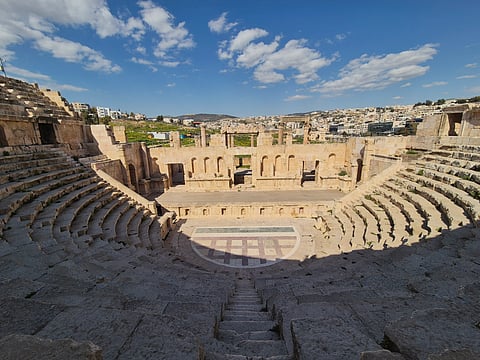
South Roman theatre, Jerash Chandreyi Bandyopadhyay
Travel disruptions of this magnitude also raise questions of rights and recourse. If your flight is cancelled and you choose not to travel, you are entitled to a refund regardless of the reason for the disruption—passengers on international flights delayed by six hours or more are entitled to automatic refunds if they do not accept alternative transport.
Advertisement
Equally important is to check the fine print of your travel insurance carefully. Standard policies often contain an "Act of War" exclusion clause, meaning they will not cover costs related to geopolitical conflict, like mine did. Travellers should consider Cancel For Any Reason (CFAR) coverage when travelling to volatile regions. This is a lesson I will not need to learn twice.
Jordan, Still

A view of Wadi Rum Chandreyi Bandyopadhyay
None of this is a verdict on Jordan itself. The Jordanian people including my hosts, hotel staff, drivers and strangers who offered tea during a long uncertain afternoon—have shown a lesson in grace under pressure. Major tourist sites remained accessible, hotels and tours continued to operate, and authorities maintained strong security measures and transparent communication on public channels, throughout. The country's resilience is real.
But resilience, as I learnt last week, is also what every long-haul traveller must carry within themselves as a practical toolkit. Be sure to get registered with your embassy in the destination country upon arrival, be insured properly, have the airline app downloaded, power bank charged, local currency in your pocket, and the ability, above all, to stay calm while others are not.
Advertisement
In my case, my flight to Mumbai finally took off as the sun kissed the horizon, bringing yet another night of skies lit up by fire, and closure of the airspace as regulated by civil aviation authorities of the country. We breathed a sigh of relief at 30,000 feet, relieved to be one of the privileged passengers to have a seat on the journey back home.
If You’re In The Region: Dos And Don’ts
Dos
Keep travel documents current and easily accessible. Maintain a supply of food, water, and essential medications. Find a secure location within your residence or a safe building.
Enrol in your government's traveller alert programme (USA: STEP at step.state.gov) to receive real-time safety updates from your nearest embassy.
Keep your phone charged and pre-programmed with emergency numbers. Follow the State Department's Security Updates channels for live guidance.
Only travel to the airport if you hold a confirmed ticket and have been specifically advised by your airline to do so — access to some airports is currently restricted to confirmed travellers only.
Check airline apps and FlightAware / Flightradar24 simultaneously before moving anywhere.
Advertisement
Don'ts
Do not share, publish, or reshare footage of drone or missile incidents on social media — in the UAE this is illegal and can result in prosecution, fines, or imprisonment.
Don't rush to airport counters the moment a disruption is announced — queues will be unmanageable and information unreliable.
Don't rely on a single information source. Cross-check your airline, your embassy, and credible news outlets.
The author was in Amman on a press trip with the Jordan Tourism Board when regional hostilities escalated.
Published At: