Small but mighty, that was my first thought as we landed. How could this tiny Mediterranean island hold so many landscapes, centuries of heritage, and a blend of European and Middle Eastern influences? You can drive from one end of the country to the other in under an hour, yet everywhere you look, history is etched into limestone walls and even the sea beyond, as the island reveals a tapestry of culture, architecture, and natural charisma.
The Map That Leads To Malta
From Popeye Village to Gozo’s crimson shores, Malta proves that size has nothing to do with wonder

Advertisement
I remember the evening sun warming my face as we made our way from the airport toward Mellieħa Bay in our rental car, the island unfolding with every turn. Over the week, I realised Malta was a melting pot of cultures, evident in its architecture. Across the island, Roman and medieval foundations shape its cities - from the fortified walls of Mdina to the Baroque grandeur of Valletta, alongside the neoclassical and Victorian touches introduced during British rule.
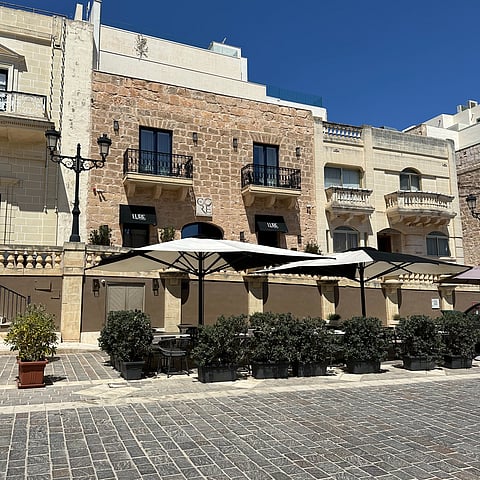
Lure Hotel & Spa, Mellieħa Lure Hotel & Spa in Mellieħa, framed by honey-coloured limestone Sanjna Thakeria
Each landmark, street, and lookout tells a story, reflecting centuries of layered heritage that have shaped the nation.
Our exploration began in the north and gradually moved south, weaving through the islands of Gozo and Comino. It was this blend of timeless tales and Mediterranean summer ease that made it feel like stepping into a comforting, yet thrilling sojourn. We arrived at Lure Hotel & Spa at sunset, greeted by panoramic views of the parish church and an endless stretch of sea. This boutique hotel blends understated luxury with Maltese charm, and our evenings quickly became a ritual, sushi on the terrace, dips in the private pool, and rooftop swims beneath a tangerine sky.
Advertisement
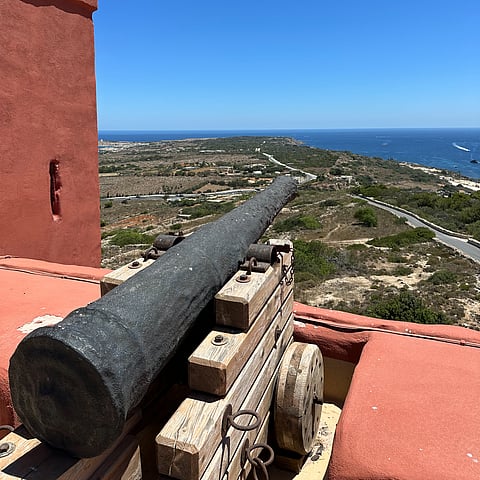
St. Agatha’s Tower, Mellieħa St. Agatha’s Tower above Mellieħa Bay Sanjna Thakeria
The North
Mornings began at St. Agatha’s Tower, perched atop Marfa Ridge. From this 17th-century fort, Mellieħa Bay stretched south, Gozo’s cliffs rose to the northwest, and on clear days, Sicily shimmered faintly on the horizon, a perfect spot for reflection amid sweeping history.
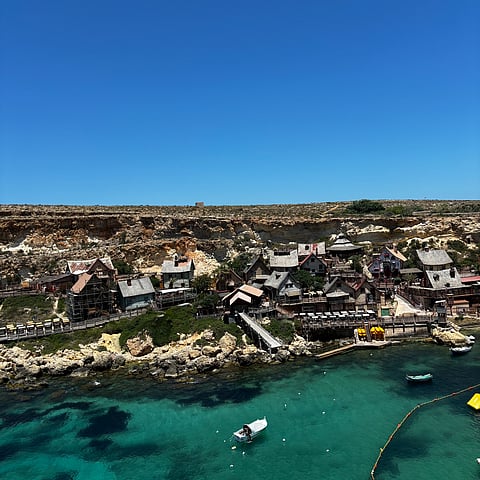
Popeye Village, Anchor Bay Popeye Village overlooking Anchor Bay’s turquoise waters Sanjna Thakeria
Afternoons drifted into whimsy at Popeye Village, a colourful movie-set world. We lounged on the water trampolines, feeling like kids alongside Olive Oyl and our favourite sailor. Summer afternoons meant exploring Malta’s beaches, Singita Beach, a quiet cove painted in bursts of orange and lined with straw interiors and pop-up shops, and Għadira Bay, Malta’s largest sandy beach, vibrant yet soothing, awarded Blue Flag status for its pristine waters. We paused at Munchies, a seaside bistro, savouring fresh local flavours between dips.
Evenings on the north coast felt effortless. Lanes lined with cafés and beach clubs offered Aperol spritzes paired with slices of diavola, while strolls along the shoreline revealed Blu Beach Club and quaint cafés where locals lingered over coffee or cocktails. The combination of beaches, scenic cliffs, and sensory indulgences made each day feel like a seamless blend of adventure and ease.
Advertisement
Valletta: Malta In Stone
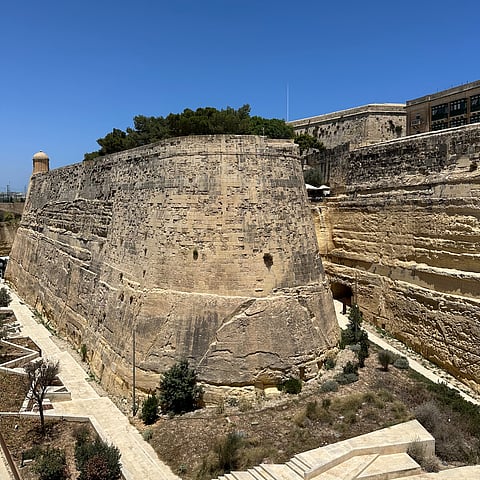
Valletta City Gate, the limestone bastions guarding Valletta’s entrance Sanjna Thakeria
Leaving the tranquil north behind, we made our way toward Valletta, Malta’s capital - a city shaped by the Knights of St. John and designated a UNESCO World Heritage Site in 1980. Honey-coloured streets twist past Baroque façades, where centuries of Ottoman sieges, Arab influence, British rule, and World War II coexist in quiet layers.
Wandering through Valletta felt like tracing centuries etched into limestone. Balconies in muted greens and blues leaned over narrow lanes, while sunlight slipped between limestone buildings and pooled in small squares. The Grand Harbour shimmered beyond the bastions, anchoring the city to the Mediterranean in every direction.
Valletta’s cultural landscape includes landmarks such as St. John’s Co-Cathedral, home to Caravaggio’s The Beheading of St. John the Baptist, alongside contemporary spaces like Blitz, MUŻA, and MICAS that bring a modern artistic pulse to the city. Its cinematic appeal is unmistakable, its streets and squares have appeared in films like Gladiator, yet the city never feels staged. It feels lived-in, the kind of city that invites wandering without agenda.
Advertisement
Boutique hotels tuck into restored townhouses, rooftop terraces open onto sweeping harbour views, and restaurants reinterpret Maltese classics with measured restraint.
St. Julian’s: Malta’s Modern Pulse
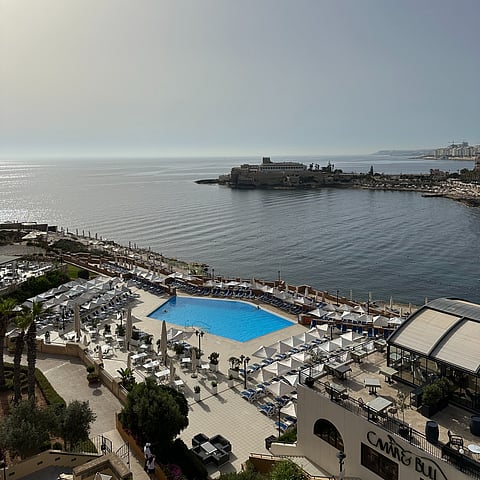
Corinthia St. George’s Bay Corinthia St. George’s Bay at sunset Sanjna Thakeria
Heading further south, we arrived in St. Julian’s, Malta’s cosmopolitan heartbeat. The shift in energy was instant, promenades lined with cafés, bustling bar streets, and the sea as a constant backdrop gave the area a distinctly lively, contemporary aesthetic.
We called Corinthia St. George’s Bay home during our stay, waking each morning to sunlight spilling across the bay and ending our days with quiet swims as the sky turned rose gold. Days drifted between waterfront strolls, boutique shopping, and leisurely lunches at seaside bistros. As evening fell, the promenade came alive with conversation and laughter spilling from tucked-away cocktail bars, the rhythm of waves blending with the city’s pulse.
The contrast between the serene north and the vibrant south captured Malta’s charm in miniature, an island of many moods.
Advertisement
Island Escapes: Gozo & Comino
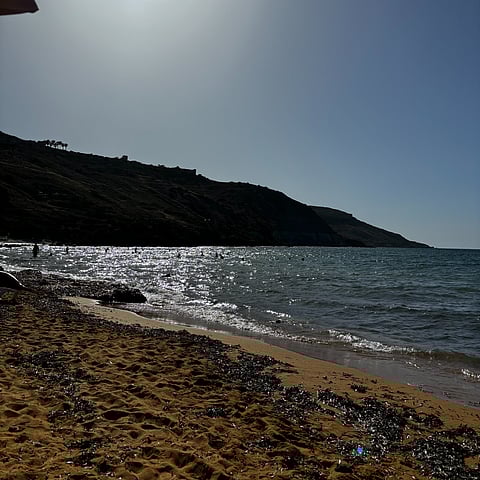
Ramla Bay, Gozo Ramla Bay’s rust-hued sands against Gozo’s northern shore Sanjna Thakeria
Malta’s smaller islets were where the sea took center stage. We glided past Gozo’s cliffs toward Mgarr ix-Xini, a hidden cove with impossibly clear waters, perfect for a morning swim. Then came Ramla Bay, where I perched on the red sand, gelato in hand and a Jenny Han novel by my side, lost in what I can only call a summer dream.
Crossing to Comino, the legendary Blue Lagoon revealed itself in all its crystalline glory, while Santa Maria Cave offered a secluded, almost mythical retreat. Sitting on deck, watching sunlight dance on the water, I couldn’t take my eyes off the bluest sea I had ever seen. By the time we reached Paradise Bay, with its glassy waters stretching to the horizon, the day felt like the perfect finale, a serene punctuation to Malta’s layered charms.
The Essence Of Malta
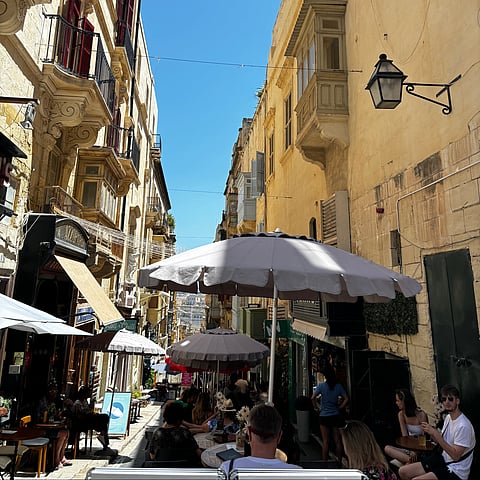
Valletta lanes unfolding toward the harbour Sanjna Thakeria
In the span of a week, we had crossed a country in an hour yet wandered through centuries of history, sunlit beaches, and vibrant promenades. Malta is small on the map, yet expansive in memory - cinematic without spectacle, historic without stagnation, and summer-y without surrendering to crowds.
Advertisement
For now, it remains one of Europe’s rare escapes that hasn’t been overexplained or overrun. The best time to experience it is while it still feels this unhurried.
Malta lingers long after the journey ends, in layers of light, sound, and colour: the serenity of Mellieħa, the honeyed stone of Valletta, the turquoise lagoons of Comino, and the lively rhythm of St. Julian’s. Each corner, each cove, each sunset is a story waiting to be experienced.
When You Go
Getting There: Fly into Malta International Airport; rent a car or hop on the efficient public buses. Ferries connect Gozo and Comino.
Stay: Lure Hotel & Spa for northern calm; Corinthia St. George’s Bay for southern energy.
Things To Do: Wander the historic lanes of Valletta, explore Singita Beach, soak in the Blue Lagoon, and sample imqaret along the way.
Tip: Sunrise and golden hour are pure magic for quiet streets and photographs.
Advertisement
FAQs
1. What is the best time to visit Malta?
The best time to visit Malta is between April and June or September and October, when the weather is warm, the Mediterranean waters are ideal for swimming, and the crowds are smaller than in peak summer.
2. How many days are enough to explore Malta?
A five to seven day trip allows travellers to explore Malta’s historic cities like Valletta and Mdina, relax on beaches in Mellieħa, and take boat trips to nearby islands such as Gozo and Comino.
3. What are the must-visit places in Malta?
Some of the most popular places to visit in Malta include Valletta, the medieval city of Mdina, Mellieħa Bay, St. Julian’s, Ramla Bay in Gozo, and the Blue Lagoon on the island of Comino.
4. Is Malta good for beach holidays?
Yes, Malta is known for its clear Mediterranean waters, scenic coves, and sandy beaches such as Għadira Bay and Ramla Bay. The islands of Gozo and Comino are especially popular for swimming and snorkelling.
Advertisement
5. How do you travel between Malta, Gozo and Comino?
Regular ferries connect Malta with Gozo and Comino. Travellers can take a short ferry ride from Ċirkewwa to Gozo, while boat tours and smaller ferries operate routes to the Blue Lagoon on Comino.
Published At: