Eid al-Fitr follows Ramzan, a month of fasting from dawn to sunset, along with extra prayer and reflection. In 2026, it is likely to fall on either Friday, March 20 or Saturday, March 21. The date is not fixed in advance, since it depends on when the new moon is spotted, and the Shawwal crescent is visible after sunset.
When Is Eid In 2026? How The Date Is Determined Across Countries
In 2026, Eid al-Fitr is expected on either March 20 or 21. The date changes based on when the new crescent moon is spotted, marking the end of Ramzan. Different countries may confirm the festival on slightly different days

Advertisement
The Dates
Eid al-Fitr in 2026 won’t be observed on a single fixed date everywhere. Its timing comes down to when the thin new crescent moon — the Shawwal moon — is actually seen after Ramzan, either on the 29th night or, if not visible, after the 30th day. If the moon is spotted, Eid is marked the following day. If it isn’t, Ramzan simply runs to a full 30 days before Eid begins.
In parts of the Gulf, including Saudi Arabia, the UAE and Qatar, the crescent is expected to be checked on the evening of March 20.
In India, Pakistan and much of South Asia, the sighting is usually checked a little later than in the Gulf. Local moon-sighting committees will be looking for the Shawwal crescent on the evening of March 19, which is the 29th day of Ramzan. If the sky is clear and the crescent is seen, Eid will be celebrated on March 20. If not, Ramzan will be completed the next day and Eid will move to March 21.
Advertisement

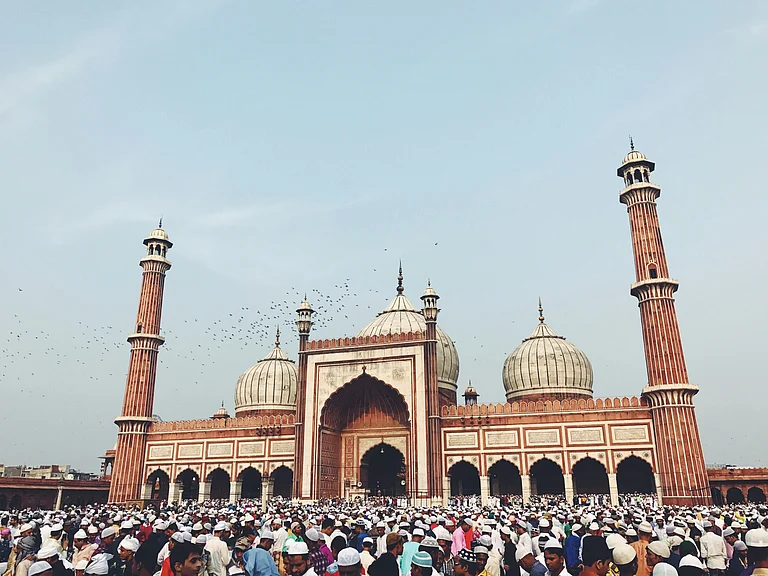
The festival marks the end of Ramzan and begins with large congregational Eid prayers worldwide Unsplash
How Is Eid Decided?
The date of Eid is not fixed on the Gregorian calendar because it follows the Islamic Hijri Lunar Calendar, which depends on moon phases.
Moon Sighting (Chand Raat): On the 29th day of Ramzan, committees (like the Ruyat-e-Hilal Committee in India) or individuals look for the new, thin crescent moon after sunset (Maghrib).
29 or 30 Days: If the crescent moon is spotted on the 29th evening, Ramzan ends, and Eid starts the next day. If it is not visible due to clouds, hazy weather, or if it hasn't appeared yet, Ramzan continues for a 30th day, making Eid the day after that.
Regional Variation: Because the moon becomes visible at different times in different parts of the world, Eid may be celebrated a day apart between Saudi Arabia and South Asia
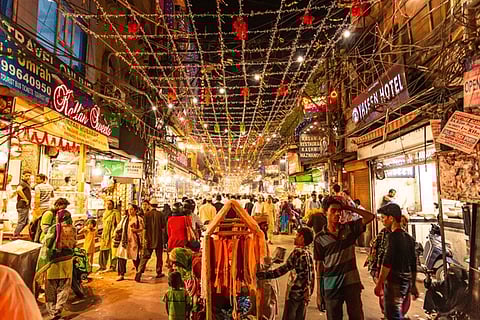
The vibrant streets of Chandni Chowk in Delhi during Ramzan Shutterstock
Eid al-Fitr is a major festival that marks the end of Ramzan, the month of fasting from dawn to sunset. It is also known as the “Festival of Breaking the Fast”. It falls at the start of Shawwal, the 10th month in the Islamic calendar. The festival begins once the new crescent moon is sighted. It usually lasts one to three days, depending on the country and tradition. The day begins with a special congregational prayer called Salat al-Eid. Muslims give a compulsory charity called Zakat al-Fitr before the prayer, helping those in need.
Advertisement
FAQs
What does Eid al-Fitr mean?
It means the “Festival of Breaking the Fast”, marking the end of Ramadan.
How is the date of Eid decided?
It depends on the sighting of the new crescent moon. If the moon is seen after Ramadan’s 29th day, Eid is the next day. If not, Ramadan completes 30 days.
Why do different countries sometimes celebrate Eid on different days?
Moon sighting varies by location, weather, and interpretation, so the crescent may be seen on different evenings in different regions.
How long does Eid last?
It is usually celebrated for one to three days, depending on the country and cultural practice.
Can Eid dates be different within the same country?
Yes, in some cases. Even within one country, different local moon-sighting committees or regions may announce Eid based on whether the crescent moon is seen in their area, so celebrations can occasionally vary by a day.
Published At: