Ladakh doesn’t usually come to mind for soft, pastel landscapes, but that changes for a brief window each summer. In 2026, as apricot trees begin to flower across its villages, the region will mark the season with the Apricot Blossom Festival—locally known as Chuli Mendok—bringing a burst of colour and community life to its otherwise stark terrain.
Ladakh’s Apricot Season 2026: A Festival Across Blooming Valleys
The Apricot Blossom Festival 2026 in Ladakh marks the arrival of spring, when apricot orchards across Leh and Kargil burst into bloom. Villages come alive with music, dance, and food, offering a glimpse into local culture and traditions

Advertisement
The Places And Dates
The Apricot Blossom Festival will be held from April 8 to 16 in 2026, around the time the trees begin to flower. It’s not centred in one place. Different villages in Leh and Kargil mark the occasion in their own way, on different days. There’s music, some traditional dancing, and plenty of local food. It’s fairly low-key, and that’s part of the appeal—you get to see how people celebrate it within their own communities rather than as a large, staged event.
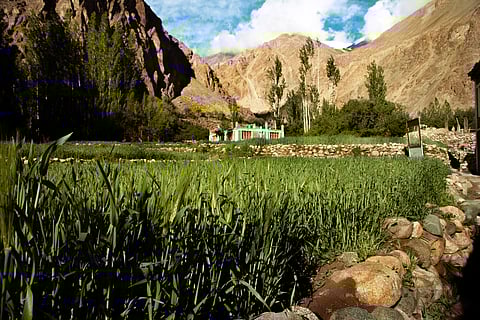
Turtuk in Ladakh Shutterstock
Here are the key dates and locations for the 2026 Apricot Blossom Festival. The celebrations move from village to village, with each place hosting the event on a different day as the blossoms peak across the region.
It begins on April 8 in Garkone (Kargil), followed by Dha Bema (Leh) on April 9. On April 10, the festival moves to Darchiks in Kargil, then Skurbuchan in Leh on April 11. Karkitchoo (Kargil) hosts on April 12, while Turtuk (Leh) follows on April 13 and Tyakshi (Leh) on April 14. The celebrations continue in Minjee (Kargil) on April 15, and finally conclude on April 16 in Tyger (Leh).
Advertisement
About The Apricot Trees
The Ladakh apricot tree (Prunus armeniaca) sits at the heart of life in the region. In April, its pale pink and white blossoms briefly soften the stark mountain landscape before giving way to fruit that ripens between June and August.
Grown at high altitudes, the apricots are naturally sweet and form an important part of local livelihoods, both for consumption and small-scale trade. The flowering period usually stretches from late March into early May, depending on weather conditions.
Ladakh is home to over 30 varieties of apricot trees. Raktsey Karpo (white-seeded) is unique to the region, known for its extreme sweetness, while Halman is the primary commercial variety.
The Apricot Blossom Festival is centred around this seasonal change, bringing attention to villages where apricot farming is a key part of everyday life. Places such as Garkone, Darchiks, Yulgar, Alchi, Domkhar, Sumoor, Wanla and Tar, scattered along the Indus Valley, take part in the celebrations. Alongside cultural programmes, the event also reflects a growing focus on community-led and environmentally conscious tourism in the region.
Advertisement
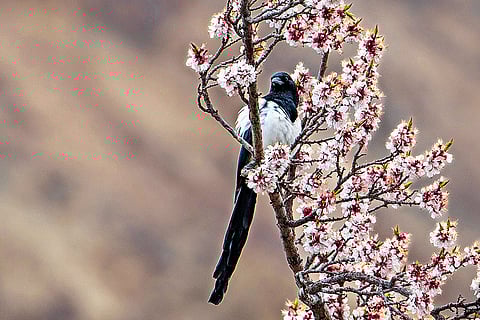
A black-billed magpie perched on an apricot tree Avijit Sharma
About The Festival
The apricot blossom season lasts for several weeks and signals the arrival of spring in this high-altitude region, known for its distinctive apricot varieties. Across Leh and Kargil, orchards come into flower and villages take on a softer appearance as the trees bloom.
The Apricot Blossom Festival is held during this period, drawing visitors to lesser-known parts of Ladakh and encouraging exploration beyond the usual routes. With orchards in full bloom, the landscape is filled with pale pink tones that often draw comparisons with cherry blossoms. Travellers come for the scenery, but also for the chance to experience local life more closely, with traditional hospitality and small cultural gatherings in different villages.
First introduced in 2023, the festival has gradually expanded, with more villages joining each year as part of efforts to support community-based tourism and highlight the region’s natural and cultural heritage.
During the festival, there are small cultural programmes with folk music, dance, and local displays that reflect everyday Ladakhi traditions. Artisans set up stalls with handwoven textiles, jewellery, and simple handmade items that visitors can browse. Food is a big part of the experience too, with apricots used in different ways—dried fruit, jams, and home-style dishes prepared in villages during the season.
Advertisement
People also spend time walking through the orchards, often with local guides who explain how the trees are grown and looked after. The whole period feels closely tied to the land and the farming cycle, with celebrations that come directly from the communities who live and work there.
The Information
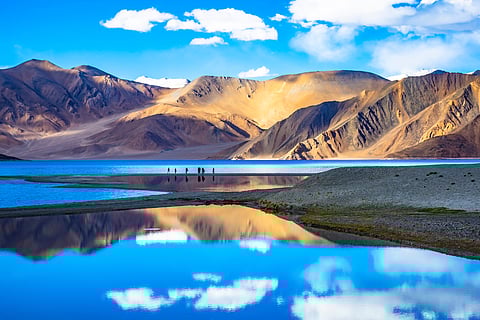
Pangong Tso in Ladakh Chris Piason/Shutterstock
How to Reach
The nearest airport is Kushok Bakula Rimpochee Airport in Leh, located around 42 km away, with regular flights connecting it to major Indian cities. The closest railway option is Tawi Railway Station, about 670 km away, from where travellers usually continue by road. Leh is also the nearest major city, roughly 65 km from the festival villages, and serves as the main base for road travel across the region.
What To Pack
Ladakh’s weather can shift quickly, so dressing in layers is the easiest way to stay comfortable. Start with thermals, then add a fleece or woollen jumper, and keep a thick windproof jacket handy for early mornings and evenings. For the lower half, trekking trousers or even regular jeans are fine, as long as they’re comfortable to move in. A solid pair of walking shoes helps, especially if you’re moving between villages or orchards. Small things make a big difference too. Gloves, a warm cap and a scarf are useful when the wind picks up. The sun is strong at this altitude, so sunglasses, sunscreen and moisturiser are just as important as warm clothing. Some travellers also carry altitude sickness tablets after speaking to a doctor.
Advertisement
Where To Stay And Eat
Ladakh offers stay options suited to different travel styles, from comfortable hotels in Leh to simple village homestays closer to the festival locations. Check here for suggestions for stays and things to do in Ladakh. Food options are just as varied. In Leh, you’ll find cafés and restaurants serving everything from Indian and Tibetan dishes to continental meals.
FAQs
When is the Apricot Blossom Festival held?
It takes place from April 8 to 16, during the short blooming season of apricot trees in Ladakh.
Where does the festival happen?
The celebrations are spread across villages in the Leh and Kargil districts, with different locations hosting events on different days.
What can visitors expect at the festival?
Visitors can see apricot orchards in bloom along with small cultural programmes, folk music, traditional dance, and local food.
Is Leh the best base for the festival?
Yes, Leh is commonly used as a base as it has better connectivity and accommodation, with most villages reachable by road from there.
Advertisement
What is the main highlight of the festival?
The blooming apricot orchards are the main attraction, along with the chance to experience village life and local traditions.

Published At:
Tags