I remember, not so long ago, someone asked me where I was from. When I said Manipur, there came the familiar pause. “Oh… that’s far.”
From The Latest Issue: From Margins To Map
Once seen as distant and difficult to access, the Northeast is now part of India’s mainstream travel imagination. But visibility brings both opportunity and pressure

Advertisement
The distance, then as now, was only a three-and-a-half-hour flight from Delhi, roughly the same as flying to Kochi, or about the same time it takes to reach Chennai. That expression of “so far” was never really about geography. It lived in the mind. For the longest time, India’s Northeast occupied that space too: vaguely placed, rarely understood, and often treated as though it sat at the edge of the country.
Today, friends call to ask whether they should go to Shillong or Gangtok for a summer break. They want to see Nathula Pass and the Living Root Bridges of Meghalaya. Some ask about cafés in Shillong, biking routes in Arunachal Pradesh or festivals in Nagaland. Earlier, people travelled to the Northeast mostly if they had family there, or if someone they knew was posted in the armed forces. Otherwise, it remained distant.
Over the last decade, that distance has narrowed. Flights now land in places once defined by long road journeys. Better roads, expanded air routes and digital visibility have all played a role. According to the Ministry of Tourism, around 12.78 million domestic tourists visited the Northeast in recent years, almost double the numbers seen around 2013. The region is no longer spoken about only as an “offbeat” destination. It is increasingly part of mainstream travel conversations.
Advertisement
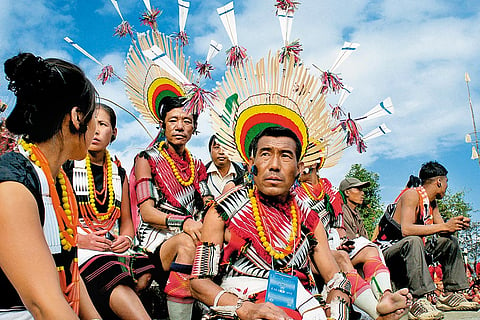
Nagaland's Hornbill Festival is a colourful cultural gathering of different tribes. Shutterstock
A New Travel Economy
The change is visible on the ground. Meghalaya, for instance, has seen major hotel brands enter the state, while homestays have expanded across villages and towns. For travellers, this has created more options for staying. For local families, it has opened new income streams.
Across the region, tourism is no longer limited to hotels and large operators. Cafés have opened in towns that once had few public social spaces. Local guides lead village walks, food trails, birding trips and cultural experiences. Young entrepreneurs are building bakeries, bike rental services, music venues and curated stays. Travellers are planning food-led journeys across Assam, Meghalaya, and Nagaland, seeking rice beer traditions, smoked meats, indigenous ingredients and regional cuisines instead of generic hotel buffets.
In Shillong, spaces like Rynsan reflect this change. Helmed by Hammarsing Kharhmar, a musician who has brought his artistic sensibility into hospitality, Rynsan feels less like a conventional restaurant and more like a place where food carries memory. Meghalaya’s ingredients, flavours and stories sit at the centre of the experience. Places like this show how tourism in the Northeast is increasingly being shaped by people from within the region.
Advertisement
Younger travellers are also approaching the Northeast differently. Earlier itineraries often revolved around a few familiar sights. Now people look for cafés in Shillong, biking routes through Arunachal Pradesh, indie music gigs in Kohima, textile workshops in Nagaland, village stays in Meghalaya and riverside camps in Assam. Social media has brought more attention to the region and its landscape, but it has also sparked curiosity about everyday life and culture.
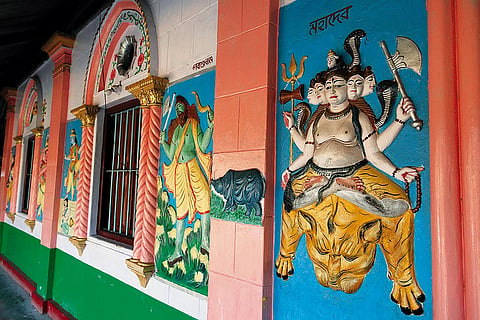
A Hindu temple in Majuli | Photo: Shutterstock
Festivals And New Routes
I recently spoke with Oken Tayeng, a tourism entrepreneur-turned-MLA from Arunachal Pradesh’s Mebo constituency, who has spent years helping place the state on India’s travel map. I asked him whether Ziro’s growing popularity had changed the region in any significant way. He said the valley had always been known and had long been part of older travel circuits, only without the visibility it enjoys today. People would notice the Apatani women, their nose plugs and facial tattoos, he said, but beyond that, it was simply the beauty of the valley itself that stayed with them.
Advertisement
Part of the shift also comes down to accessibility. With better roads, direct flight connections and the airport in Itanagar, travelling to Arunachal Pradesh has become much easier.
He also pointed to the role music festivals have played. The Ziro Festival of Music brought a different kind of attention to the valley and drew in a younger crowd of travellers. Festivals, he added, are always a mixed experience: three days of energy, noise and crowds. Some people love them, others find them overwhelming. But there is no denying that they increased visibility.
That is true across the Northeast. Festivals are no longer only cultural gatherings. They shape travel calendars, seasonal economies and itineraries. Ziro has become closely linked with music tourism in the hills. Nagaland’s Hornbill Festival draws travellers from India and abroad each December. The Shillong Cherry Blossom Festival has given Shillong a sharper identity as a music and lifestyle destination. Majuli and Dambuk have also created newer circuits around music, landscape, adventure and community.
Advertisement
The economic impact is clear. Homestay owners are adding to household incomes. Drivers and guides have more consistent work. Musicians now perform for visitors who travel specifically for festivals and gigs. Artisans sell handwoven textiles and crafts directly to travellers. Café owners, food entrepreneurs and independent curators are finding new markets. In several parts of the Northeast, tourism is tied to aspiration, especially among young people looking for alternatives to leaving the region for work.
Connectivity will deepen these changes. The Bairabi-Sairang railway line in Mizoram marks an important moment for a state long seen as difficult to access. The 51.38-km broad-gauge project, inaugurated by PM Narendra Modi in September 2025, connects Aizawl to the national railway network via Sairang. A rail link changes not just mobility, but imagination. It makes Mizoram easier to place on a travel map and opens up new possibilities around Aizawl and beyond. It also raises questions. Is infrastructure ready for increased visitor flows? How will tourism grow in ways that remain sensitive to local ecology and culture?
Advertisement
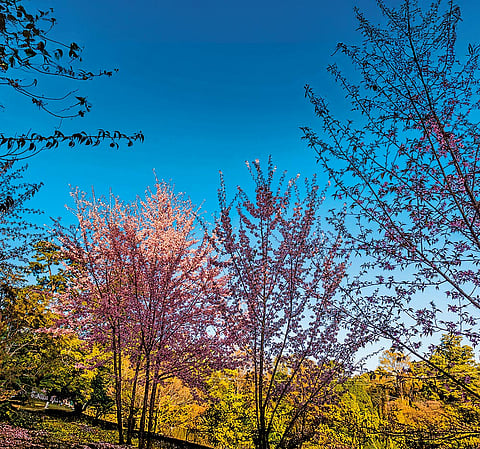
Shillong's Cherry Blossom Festival has poised the city as a top travel destination Shutterstock
The Pressure Of Being Seen
More attention has brought new concerns. Shillong regularly faces severe traffic congestion during holiday seasons. Sohra, or Cherrapunji, is seeing pressure from crowding, construction and waste around popular viewpoints. Dawki, once known for its clear river, struggles with seasonal surges. Ziro comes under strain during festival periods, when visitor numbers exceed the valley's capacity to comfortably accommodate them. Tawang faces overcrowding during peak travel months. Kaziranga must balance wildlife conservation with tourism infrastructure. Parts of Sikkim are also dealing with waste, water stress and over-construction.
This is not an argument against tourism. The question is how destinations can welcome travellers without being overwhelmed by them. Can tourism remain community-led rather than extractive? Can carrying capacity be incorporated into planning before damage becomes difficult to reverse? Can local communities retain control over how their landscapes are experienced and marketed?
The question is how destinations can welcome travellers without overwhelming them. Can tourism be community-led rather than extractive?
Advertisement
There is another question beneath all this movement. People are travelling to the Northeast not only for landscapes, but increasingly for its music, food, cultures, literature and ways of life. That curiosity matters because, for decades, the region was often reduced to stereotypes or viewed through a narrow mainland lens.
At the same time, incidents like the recent racial abuse reported in Delhi’s Malviya Nagar, or the killing of Anjel Chakma, a 24-year-old from Tripura who was reportedly attacked on racial grounds last year, remind us how uneven understanding still remains. Which brings us back to travel itself. Are travellers arriving only to see and consume the Northeast as another destination, or are they beginning to engage with its histories, identities and people?
Perhaps the region is no longer being viewed as distant. There is, slowly, a greater willingness to listen, ask questions and look beyond the standard image. People from the region are also telling their own stories through music, food, festivals, homestays and conversations shared across tables.
Advertisement
Maybe that is what this change really is: not just from margin to map, but from being spoken about to speaking for ourselves.
The challenge now is to ensure that this new attention does not flatten the Northeast into another checklist.
Looking for more such exciting and meaningful stories? Grab our latest issue on Amazon.
Published At: