Goa has long been celebrated as a sanctuary for global travellers. Its famous beaches are among India’s top coastal destinations that attracts both Indian and international tourists. However, beach safety agency Drishti Marine reported several alleged harassment incidents involving women tourists in the past week.
Women Facing Harassment At Goa Beaches: How To Stay Safe While Travelling
Tourist safety concerns rise as Goa beaches report multiple harassment cases, with beach marshals deployed across high-footfall zones

Advertisement
The incidents occurred at prominent beaches in North and South Goa, such as Baga, Colva, and Patnem. Along with harassment complaints, the agency recorded other safety cases, including medical emergencies and a lost-and-found, highlighting the diverse challenges beach safety staff manage daily.
These events arise as Goa remains a high-traffic tourism hub. With beaches often packed, especially during peak season, authorities rely on vigilant monitoring and swift response to address safety concerns.
Russian Tourists Harassed On Baga Beach
One of the cases mentioned in Drishti Marine’s release involved Russian women tourists who were allegedly harassed by a group of men on Baga beach in North Goa. Officials stated that swift intervention by a beach marshal and a lifesaver prevented escalation. The men involved, identified as domestic tourists, were warned and permitted to leave.
Baga is one of Goa’s busiest beaches, known for its beautiful shoreline, shacks, and constant visitor flow. Like much of North Goa, it experiences heavy crowding during holidays, making surveillance and rapid response important when complaints arise.
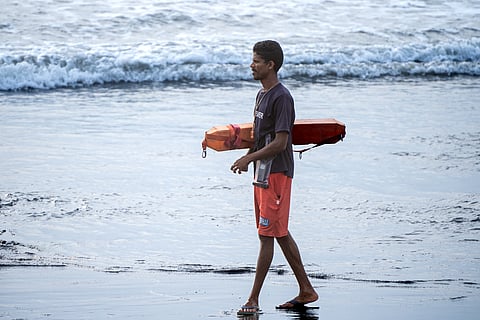
A lifeguard on duty at a Goa beach Shutterstock
Four Harassment Cases Reported In One Week
Advertisement
Drishti Marine reported a total of four cases involving the alleged harassment of women tourists from Russia during the past week. While the release did not specify details of each complaint, the reported cases followed similar patterns: tourists were filmed or photographed without consent or persistently approached despite refusal.
Authorities and safety personnel have, in recent months, increasingly emphasised that consent is not optional in public spaces.
Three medical emergencies and one lost-and-found case were also recorded, reflecting how beach safety agencies assist tourists not just with water rescue but also with health, lost property, and unsafe behaviour.
What Visitors Must Understand About Consent
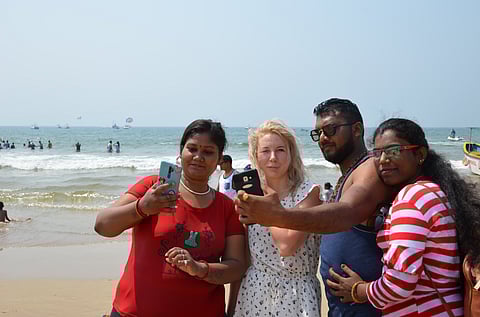
Tourists posing for a photo on a North Goa beach (Representative Image) Shutterstock
Drishti Marine reported multiple incidents in South Goa where tourists were accused of harassing visitors and filming people without consent.
In one case, two male tourists from Telangana were allegedly drunk and harassed a foreign woman near the shoreline after she refused to take a selfie. Officials said one of the men tried to put his arm around her and kiss her. Both were taken to a police station.
Advertisement
At Colva beach, lifesavers reportedly stopped a group of seven to eight tourists from Karnataka who were allegedly filming and photographing foreign women without permission and handed them over to the Goa Police.
A similar incident was also reported at Patnem beach, where five tourists from Bihar were allegedly harassing and filming a couple from Pune. Lifesavers escorted the couple to safety and informed the police.
Officials reiterated that all interactions, including selfies, conversations, and filming, must be consensual, and refusal must be respected.
70 Beach Marshals Deployed Across Five High-Footfall Beaches
Drishti Marine has around 70 marshals across five popular beaches in Goa: Baga, Calangute, Candolim, Colva, and Benaulim.
Marshals, part of the wider beach safety system, work with lifesavers and police, handling crowd behaviour, emergencies, and coordination beyond water incidents.
In crowded tourist areas, marshals are often the first visible authority. Their presence helps tourists report complaints and serves as a preventive measure against misconduct.
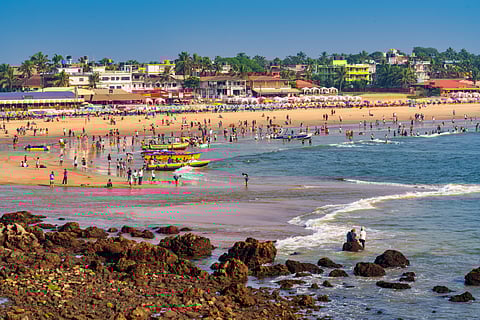
Baga Beach in North Goa Shutterstock
Safety Tips For Tourists
While the incidents reported from Goa relate specifically to beaches, the broader safety lesson applies across tourist destinations in India. Here are a few travel-friendly safety precautions visitors can take:
Advertisement
Treat consent as non-negotiable, and expect the same from others. If someone pressures you for a selfie, a conversation, or any interaction, you do not owe them politeness beyond a clear refusal. A firm 'No' is enough.
Move toward staff, families, or well-lit public areas if uncomfortable. On beaches, approach lifeguard towers or marshal points, whereas in cities, head to security desks or busy shops.
Save emergency numbers before you step out. In India, the national emergency number is 112. Keep it saved. It also helps to know the local police station number in the area you’re staying.
Avoid walking alone at night in unfamiliar areas. Even in tourist zones, stick to well-populated routes and avoid isolated shortcuts after dark.
Whenever possible, choose trackable transport, such as app-based taxis or hotel cabs. Share your live location if travelling solo.
Report incidents early. If someone films you without consent, alert staff immediately to prevent escalation.
Be mindful around alcohol-heavy environments. If you’re in party zones, watch your surroundings and avoid engaging with strangers who appear intoxicated or aggressive.
Advertisement
Bottomline
The incidents reported by Drishti Marine highlight the ongoing need for stronger behavioural accountability and safety measures on Goa's beaches. Ensuring respect, consent, and rapid intervention is essential to maintaining safe public spaces for all.
Looking ahead to the busy season, collaboration among beach marshals, lifeguards, and police will be key to protecting tourists. Their visible presence and consistent intervention are central to upholding safety and respect on Goa's popular beaches.
(With inputs from various sources.)
FAQs
1. What incidents were reported on Goa beaches this week?
Drishti Marine reported multiple alleged harassment complaints involving women tourists, along with medical emergencies and a lost-and-found case.
2. Which Goa beaches were mentioned in the reports?
The incidents were reported at beaches including Baga, Colva and Patnem, among other high-footfall locations.
3. What kind of harassment was reported?
Reported complaints included filming or photographing tourists without consent and persistent unwanted interaction despite refusal.
4. Who responds to safety incidents on Goa beaches?
Beach safety response involves marshals and lifesavers working alongside the Goa Police when incidents require legal action.
Advertisement
5. How many beach marshals are deployed in Goa?
Drishti Marine has around 70 marshals deployed across five major beaches, including Baga, Calangute, Candolim, Colva and Benaulim.

Published At: