There’s a particular kind of excitement reserved for hotel breakfasts. You walk in slightly hungry, slightly disoriented from travel, and then you see it—an entire room transformed into a landscape of food. Counters stretch endlessly: eggs in six styles, breads you can’t pronounce, fruit carved into elaborate shapes, pancakes waiting beneath silver domes, and a row of local dishes you feel obliged to try because you’re travelling. So you do what everyone does—you take a little of everything. But somewhere between the second and third bite, the flavours blur. What once looked indulgent begins to feel overwhelming. And behind that theatre of abundance lies a less visible reality: the breakfast buffet has quietly become one of the biggest sources of food waste in hotels.
The End Of The Endless Buffet? Hotels Are Changing Breakfast
Do we really need 100 dishes at breakfast? Hotels are rethinking buffets to cut waste while keeping the indulgence

When Abundance Turns Into Waste
At the end of breakfast service, the scale of the problem becomes clear. Plates return half-eaten. Bread baskets remain untouched. Entire trays of eggs, meats, and pastries are cleared away—not because they spoiled, but because buffets must look full until the last guest leaves.
Globally, the numbers are staggering. According to the UN Environment Programme’s Food Waste Index, the world generates more than 1 billion tonnes of food waste annually, roughly 19 per cent of all food available to consumers. The food service sector—including restaurants and hotels—accounts for a significant share. In hospitality, buffets are often the biggest culprit. Research by the World Resources Institute (WRI) analysing 42 hotels across 15 countries found that a large portion of food waste occurs before food even reaches the guest’s plate, largely due to overproduction and display requirements.
“Food waste is not just an operational issue—it’s a moral one,” says Vikram Cotah, CEO of GRT Hotels & Resorts, who has been outspoken about the subject within the industry. Cotah argues the roots of buffet excess are partly cultural. In India, celebration has long been linked with abundance.
“That thinking comes from where we come from as an agricultural society,” he says. “For generations, putting a lot of food on the table meant you had something to share.” Modern buffets inherited that symbolism—but scaled it up dramatically.
From Excess To Intelligence

Hotels are now beginning to rethink that model. Rather than eliminating buffets altogether, many operators are redesigning them to reduce overproduction. Cotah describes the shift as moving from abundance to intelligence.
“The philosophy earlier was ‘more on the table,'” he says. “Today it’s about giving more meaning on the plate.” One solution gaining traction is the hybrid breakfast format—a smaller buffet combined with live kitchens and made-to-order dishes.
The logic is operational. Hot dishes placed on buffets have limited shelf life and often cannot be reused. Cooking closer to the moment of consumption drastically reduces that risk. “When you move to a hybrid buffet, almost 80 per cent of wastage can be controlled,” Cotah says.
Luxury hotels are also adapting this approach. At Taj Palace, New Delhi, the breakfast spread at Capital Kitchen remains expansive, but the kitchen increasingly relies on smaller batch cooking and continuous replenishment rather than large static displays. “Guests arrive with varied preferences, so the spread continues to offer multiple cuisines and formats,” says Chef Nitin Mathur, Executive Chef at Taj Palace. “The shift is in how we execute that abundance. Cooking in smaller batches and preparing dishes closer to service helps maintain freshness while significantly reducing waste.”
This approach also addresses another problem: choice overload. While massive spreads create visual impact, they can dilute the actual eating experience.
The Rise Of The Hybrid Breakfast
Global hotel brands are increasingly embracing this shift. At Hyatt hotels across India and Southwest Asia, the traditional breakfast buffet is being gradually redesigned to prioritise freshness and intentionality.
“At Hyatt, we are evolving the traditional buffet from one defined by sheer volume to one guided by quality, intentionality and freshness,” says Thomas Angerer, Director of Food & Beverage for India and Southwest Asia.
Instead of massive trays prepared hours in advance, many Hyatt kitchens now rely on smaller batch cooking and live preparation formats. Chefs prepare dishes closer to the point of consumption, allowing kitchens to align production with actual demand. The change also reflects evolving traveller expectations. “Today’s guests increasingly value flexibility and personalisation,” Angerer says. “They appreciate being able to customise their meals through live cooking stations or made-to-order options.” Breakfast is slowly becoming less of a static display and more of an interactive experience.
Designing Buffets That Reduce Waste
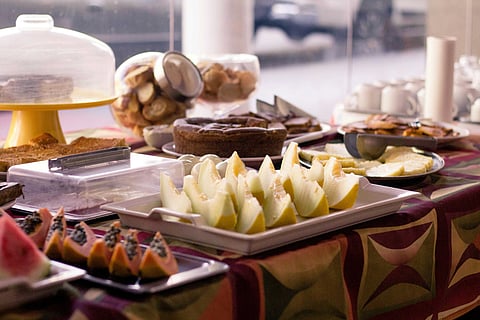
Much of the change is happening through subtle design choices rather than radical overhauls. Smaller serving vessels, frequent replenishment, and clearly structured buffet zones can significantly influence how guests serve themselves. “Thoughtful design allows guests to make more mindful choices without reducing the sense of indulgence,” Angerer explains.
Mathur notes that guest behaviour itself is also evolving. “We see guests choosing more deliberately, often engaging with live stations and opting for freshly prepared portions rather than loading their plates at once,” he says. Wellness counters featuring detox waters, sprouts, berries and lighter egg preparations are also seeing strong uptake, suggesting that indulgence is increasingly paired with more conscious eating habits.
Technology is also playing a growing role. Waste-tracking systems allow kitchens to measure which dishes consistently return untouched, helping chefs adjust menus and forecast demand more accurately.
According to WRI research, hotels that invest in food waste reduction programmes typically see strong financial returns. Across the 42 hotels studied, nearly every property achieved a positive return on investment, with the average site generating seven times the value of its initial investment.
In other words, sustainability increasingly makes economic sense. Several hotel groups have already begun implementing measurable food waste initiatives. Hyatt’s sustainability programme, World of Care, includes food waste monitoring technology across multiple properties. In Indonesia, four hotels—Andaz Bali, Hyatt Regency Bali, Alila Seminyak Bali, and Grand Hyatt Bali—worked with third-party certification body The PLEDGE on Food Waste to overhaul their food waste management systems. The results were significant.
Together, the hotels reduced waste by 98,621 kilograms of food, equivalent to over 1,97,000 meals, while preventing more than 2,46,000 kilograms of CO₂ emissions and saving approximately USD 340,000 in costs.
Why Buffets Won’t Disappear
Despite growing criticism, buffets are unlikely to disappear entirely. Large hotels may serve hundreds of guests within a narrow breakfast window, making buffets operationally efficient. But they also play a psychological role in how people experience food. According to Cotah, eating is a deeply sensory activity involving sight, smell, sound, touch and taste. The visual abundance of a buffet stimulates appetite even before the first bite. The challenge today is preserving that sensory excitement while eliminating unnecessary excess. “The idea is not to remove buffets,” Cotah says. “It’s to make them more intelligent.”
The Breakfast Of The Future
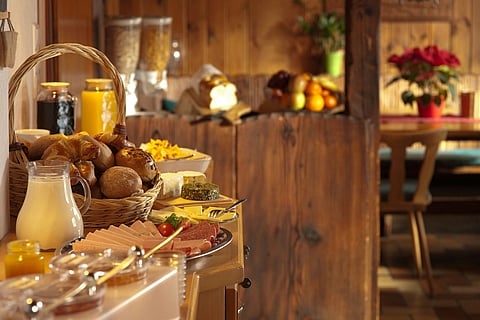
Looking ahead, the breakfast buffet is likely to continue evolving. Cotah believes three trends will shape the next decade: hyperlocal sourcing, circular food systems and predictive technology. Hotels are increasingly prioritising ingredients sourced within a limited geographical radius, supporting local farmers while reducing environmental impact. Seasonal produce and indigenous grains are gradually returning to breakfast menus, replacing the once-standardised global spreads with dishes that better reflect the destination.
Technology will also play a growing role. AI-driven forecasting tools can analyse booking patterns, guest profiles and historical consumption data to estimate demand more accurately. Waste-tracking systems are also becoming more common in hotel kitchens, helping chefs identify which dishes consistently go uneaten and refine menus accordingly.
For hotel operators, the shift is not just environmental—it’s economic. As waste measurement and smarter forecasting become more widespread across the industry, hotels are increasingly discovering that reducing food waste also leads to significant operational savings. The breakfast buffet of the future may therefore look smaller, but smarter.
And perhaps the biggest change is philosophical. For decades, luxury in hospitality was measured in scale—longer counters, larger spreads, endless variety. Today, the definition is quietly shifting. Freshness, craftsmanship and thoughtful sourcing are beginning to matter more than sheer volume. The most memorable breakfasts are often the ones where dishes arrive freshly prepared, flavours remain distinct, and the food reflects the place you are visiting. In that sense, the reinvention of the breakfast buffet does not signal the end of indulgence. It simply suggests that true luxury might lie not in how much food is served, but in how thoughtfully it is prepared—and enjoyed.
FAQs
1. Why do hotel breakfast buffets create so much food waste?
Buffets must appear fully stocked until service ends, leading hotels to overproduce food that often goes uneaten or unused.
2. What is a hybrid breakfast buffet?
A hybrid format combines a smaller buffet with live cooking stations and made-to-order dishes to reduce overproduction.
3. How are hotels reducing food waste at breakfast?
Hotels are using smaller batches, live kitchens, waste-tracking systems, and demand forecasting technology.
4. Are hotel breakfast buffets disappearing?
No. Most hotels are redesigning buffets rather than eliminating them to balance efficiency, experience, and sustainability.
5. How does reducing food waste benefit hotels?
Cutting waste lowers operational costs, reduces environmental impact, and improves food freshness for guests.