A Supreme Court Bench of Chief Justice of India Surya Kant and Justices Joymalya Bagchi and V Mohana has permitted the Uttar Pradesh government to proceed with its night safari and zoological park in the Kukrail Reserve Forest in Lucknow, disposing of a long-pending petition that had challenged the project.
Supreme Court Clears Kukrail Night Safari: What To Know About India’s First Urban Night Safari
The Supreme Court has given Uttar Pradesh the final go-ahead for its INR 1,500-crore Kukrail Night Safari, clearing the last legal hurdle for a project that will become India's first urban night safari and put Lucknow on the nocturnal-tourism map

Advertisement
The court's order came after it noted that the Central Zoo Authority (CZA), the Ministry of Environment, Forest and Climate Change (MoEFCC), and the Central Empowered Committee (CEC) had all already examined and recommended the proposal. Since the domain regulators had cleared it, the Bench said there was no reason to withhold approval, and allowed the state to move ahead subject to strict compliance with every condition laid down by these three bodies. To keep a check on execution, the court has directed a CEC member to periodically inspect the site and file compliance reports with the court, the first one due within three months.
Petitioners, represented by advocates arguing on behalf of retired forest officials, had contended that the entire reserve forest would be disturbed by the construction and vehicular movement. The CJI reportedly pushed back on the objection, remarking that zoos are an old concept and that domain experts exist precisely to assess such projects. Uttar Pradesh's counsel told the bench the state government was in complete agreement with the CEC's report, and the Additional Solicitor General noted that private parties should not be permitted to keep objecting once a formal regulatory clearance is in place.
Advertisement
Notably, while approving the broader project, the CEC had earlier rejected a linked proposal to shift the 72-acre Lucknow Zoo into the Kukrail forest, instead asking the state to expand the existing zoo separately, meaning the Kukrail site itself will be developed as a distinct night safari and biological park rather than a relocated zoo.
Inside India's First Urban Night Safari: Scale, Cost, And Timeline
The Kukrail Reserve Forest is a notified forest area spread over roughly 2,027 hectares on the edge of Lucknow, and the night safari will occupy a designated 855 hectares (about 34.59 lakh square metres) within it. Billed by the state government as India's first urban night safari, the project is being built in two phases at a combined estimated cost of more than INR 1,500 crore.
Phase 1 alone carries a price tag of around INR 631 crore and is expected to take roughly 24 months to complete once construction is in full swing. It will cover about 65,254 square metres and include a recreational activity zone, an administrative block, a 7D theatre, an art gallery, a grand entrance gate, a cafeteria, an animal hospital, and residential quarters for staff, along with roads, footpaths, parking and drainage infrastructure. A dedicated tram network—likely using low-noise electric or CNG vehicles, similar to designs proposed for other Indian night safaris—will ferry visitors through the park after dark.
Advertisement
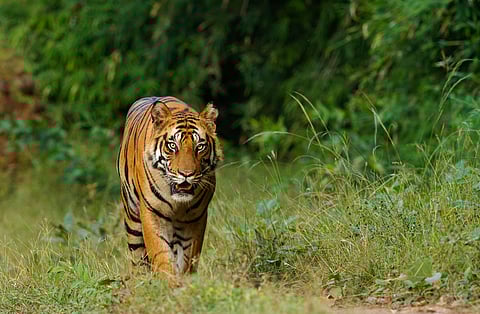
A Royal Bengal Tiger Deposit Photos
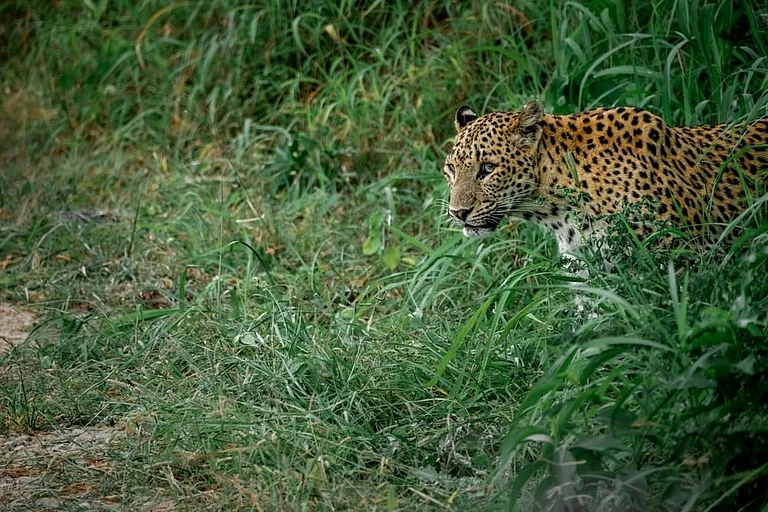
Once complete, the safari is planned to house 38 animal enclosures with Asiatic lions, Bengal tigers, leopards, bears, deer, reptiles, and birds, with species such as giraffes and chimpanzees expected to be added as Phase 2 progresses. Planners have said the design draws on lessons from Singapore's Night Safari, using zoned habitats—an African savanna, an arid-India zone, and Indian wetlands among them—with subdued, moonlight-style lighting instead of conventional cages.
Kukrail already has ecological significance as the site of India's oldest gharial breeding centre, and officials have said the new development will be confined to underused parts of the forest to protect this legacy. The project was first conceived back in 2005 and has moved in fits and starts since, making the Supreme Court's clearance a significant milestone toward an anticipated opening in 2026–27.

A young gharial in the breeding centre at Kukrail Reserve Forest Wikimedia Commons
Night Safaris Around The World: Where The Concept Began And Where It Thrives Today
The night safari concept traces back to Singapore, home to the world's first dedicated nocturnal zoo. The Night Safari opened to the public on May 3, 1994, and was officially inaugurated by then Prime Minister Goh Chok Tong later that month, after emerging from experimental evening tours run by the Singapore Zoo in the 1980s. Spread across 35 hectares of secondary rainforest in Mandai, it houses more than 900 animals from around 100 species, using carefully engineered lighting that mimics moonlight so nocturnal creatures such as Malayan tapirs, clouded leopards and pangolins behave naturally while remaining visible to visitors travelling by tram and on foot.
Advertisement
The park proved immensely popular from day one, drawing over 760,000 visitors in its first year against an anticipated 180,000, and it remains one of Singapore's most celebrated tourism icons, now part of the larger Mandai Wildlife Reserve alongside the Singapore Zoo, River Wonders, and Bird Paradise.

White tigers in Singapore Unsplash
Since Singapore's pioneering venture, several countries have built their own after-dark wildlife parks:
Thailand: The Chiang Mai Night Safari, spread over a large campus in Hang Dong near Chiang Mai, is often described as the largest night safari in the world, with 400-plus animals including white tigers, jaguars, leopards, and rhinos across a Predator Prowl Zone and a Savanna Safari Zone, alongside a lake, resort accommodation and cultural shows.
UAE: Dubai Safari Park, built as a large-scale replacement for the city's older zoo, spans about 120 hectares and is divided into African, Asian, and Arabian sections along with an open safari area, though it operates primarily as a broader wildlife park rather than an exclusively nocturnal one.
India: Bengaluru's Bannerghatta Biological Park received court clearance for a night safari component more than a decade ago, and Greater Noida has also proposed a night safari project, though neither has been developed at the scale now planned for Kukrail. This makes Lucknow's project the first true urban night safari to advance to construction on Indian soil.
Advertisement
With the Supreme Court's conditional clearance now in hand, Uttar Pradesh's Kukrail Night Safari is positioned to join this small, elite global list of after-dark wildlife destinations, with monitoring by the country's apex court ensuring its promised environmental safeguards are not left in the shade.
(With inputs from various sources)
FAQs
1. What is the Kukrail Night Safari?
The Kukrail Night Safari is a proposed wildlife park in Lucknow that will become India's first urban night safari, featuring nocturnal wildlife experiences, tram rides and themed habitats.
2. Has the Supreme Court approved the Kukrail Night Safari?
Yes. The Supreme Court has cleared the project after noting approvals from the Central Zoo Authority, the Ministry of Environment, Forest and Climate Change, and the Central Empowered Committee.
3. Where is the Kukrail Night Safari located?
The project is being developed within the Kukrail Reserve Forest on the outskirts of Lucknow, Uttar Pradesh.
4. When will the Kukrail Night Safari open?
Construction is expected to take around 24 months for Phase 1, with the project targeted to open during 2026–27, subject to construction progress and regulatory compliance.
Advertisement
5. Why is the Kukrail Night Safari significant?
It will be India's first urban night safari and is designed to offer a Singapore-inspired nocturnal wildlife experience while operating under strict environmental safeguards.
Published At: