Jawai has long existed in a category of its own. Unlike the tightly controlled safari circuits of India’s national parks, this rugged landscape in Rajasthan’s Pali district evolved into a rare model where leopards, Rabari communities, granite hills, luxury camps, and independent safari operators all shared the same terrain with relatively little formal structure. Travellers came for the thrill of spotting leopards emerging from ancient caves at dusk, often just minutes away from village settlements and grazing livestock. But that freewheeling ecosystem is now set for a dramatic overhaul.
Rajasthan Cracks Down On Unregulated Leopard Tourism In Jawai
New SOPs, GPS tracking, and safari restrictions could reshape how travellers experience Rajasthan’s Jawai landscape

Advertisement
Following mounting concerns around unregulated tourism, habitat degradation, overcrowding near leopard caves, and unsafe safari practices, the Rajasthan Forest Department has drafted a new Standard Operating Procedure (SOP) to regulate tourism activities across the Jawai leopard landscape. The move comes in the wake of a significant Rajasthan High Court order that called for stricter oversight of tourism and conservation practices in the region.
The High Court, while hearing a public interest litigation on ecological pressures in Jawai, directed authorities to immediately implement the draft SOP and bring tourism activity under a more structured framework. The court also reinforced earlier restrictions on night safaris and drone usage, while putting tighter controls on construction activities and commercial expansion in leopard habitats.
Tourism Under Lens
For years, Jawai’s popularity grew faster than its regulations. Safari vehicles often crowded around leopard caves during sightings, with reports of noise disturbances, unsafe driving, off-road movement, and increasing pressure on sensitive habitats. The new SOP attempts to address exactly that.
Advertisement
Under the proposed framework, only safari vehicles registered with the newly proposed Jawai Safari & Eco Tourism Coordination Committee (JSECC) will be permitted to operate in the landscape. Every registered vehicle will also need to install GPS tracking devices approved by the forest department. Authorities say this will help monitor vehicle movement, identify entry into restricted zones, and prevent overcrowding around wildlife habitats.
The SOP identifies several activities as serious violations, including night safaris, wildlife baiting, use of drones near leopard caves, repeated noise disturbance, blocking animal movement routes, and provoking wildlife using sound playback. Vehicles found violating regulations could face suspension, blacklisting, or financial penalties.
The proposed regulations extend across Jawai Bandh Leopard Conservation Reserve I and II, covering villages such as Bera, Doodni, Sena, Jeevda, Velar, Kothar, Mori, and Bisalpur. Importantly, the rules will apply not only to forest land, but also to adjoining revenue land, private properties, and community grazing areas that overlap with leopard movement corridors.
Advertisement
Court Steps In
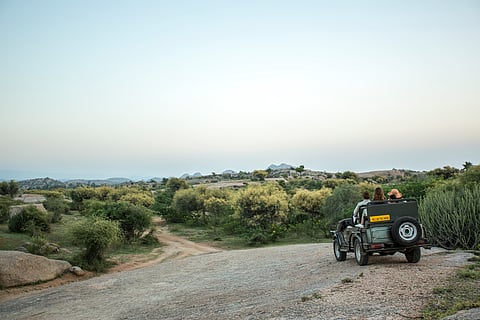
Jawai’s safari ecosystem is entering a new era of regulation and conservation oversight Hajra Ahmad
The Rajasthan High Court’s intervention has significantly raised the stakes. In its recent order, the bench emphasised that wildlife protection and ecological balance are deeply tied to the constitutional right to life under Article 21. The court noted that unchecked tourism and infrastructure growth could threaten the long-term survival of wildlife in the region.
As part of its directives, the court ordered that no new construction should take place in leopard habitats, hills, foothills, or movement corridors without judicial permission. Existing land-use changes in core leopard zones are also barred from further alteration. The order additionally halts mining activity in the region and prohibits fencing or compartmentalisation that may obstruct animal movement.
Tourism infrastructure has also come under scrutiny. No fresh tourism licences will be issued to hotels, resorts, homestays, or similar hospitality ventures until further orders. Authorities have been instructed to maintain status quo across the region while implementing the SOP.
Advertisement
Another major development is the state government being asked to examine whether the Jawai landscape should eventually be declared a sanctuary. If pursued, that could fundamentally alter how tourism, conservation, and local livelihoods operate in the area going forward.
Communities And Conservation
The transition, however, is unlikely to be friction-free. Jawai’s tourism economy supports safari operators, local guides, drivers, lodge owners, and village communities that depend heavily on seasonal tourism income. Many smaller operators are expected to feel the pressure of compliance costs, stricter vehicle controls, and tighter operational oversight.
At the same time, conservationists argue that some form of regulation had become inevitable. Jawai’s growing global popularity brought rising tourist numbers, increasing resort development, and mounting ecological stress on an already sensitive landscape known for its unusually high leopard visibility.
The draft SOP also proposes scientific mapping of leopard caves and habitat zones, categorising them into breeding caves, maternal caves, resting sites, and occasional-use shelters based on camera-trap evidence and field observations. Special buffer rules are expected around breeding and high-use caves, including restrictions on vehicle proximity and prolonged parking during sightings.
Advertisement
For travellers, the Jawai experience may soon feel more structured and less improvisational than before. But many believe that tighter regulation could ultimately protect what made the landscape special in the first place: the fragile coexistence between wildlife and people that turned Jawai into one of India’s most fascinating conservation stories.
(With inputs from various sources)
FAQs
1. Why are new rules being introduced for Jawai safaris?
The regulations aim to control unregulated tourism, reduce wildlife disturbance, and protect leopard habitats.
2. What changes will safari operators need to follow?
Operators must register vehicles, install GPS trackers, and comply with stricter wildlife viewing rules.
3. Are night safaris allowed in Jawai?
No. The Rajasthan High Court has already prohibited safari activities beyond designated daytime hours.
4. Will new hotels or resorts be allowed in Jawai?
At present, the court has restrained the issuance of new tourism licences in the region.
Advertisement
5. Could Jawai become a protected sanctuary?
The Rajasthan government has been asked to explore the feasibility of declaring the area a sanctuary.

Published At: