Arunachal Pradesh is looking to expand its adventure tourism map with Op Arunoday, a new initiative to open and develop the trekking route between Thingbu and Bajrang Peak, also known as Point 5583. The expedition was flagged off on Monday, June 29, by the Chief Minister of Arunachal Pradesh from the Jaswantgarh War Memorial.
New Arunachal Trekking Route To Link Adventure Tourism With Border Development
Flagged off from Jaswantgarh War Memorial, Op Arunoday will develop the Thingbu to Bajrang Peak route and promote responsible adventure tourism in Arunachal Pradesh’s border areas

Advertisement
The initiative is a collaboration between the Gajraj Corps and the National Institute of Mountaineering and Adventure Sports, NIMAS. It aims to develop trekking infrastructure in one of the state’s remote frontier regions while strengthening military-civil cooperation and creating livelihood opportunities for local communities.
The programme began with tributes at the Jaswantgarh War Memorial, which honours soldiers who died in the service of the country. The Chief Minister later interacted with the expedition team and local residents before formally flagging off Op Arunoday.
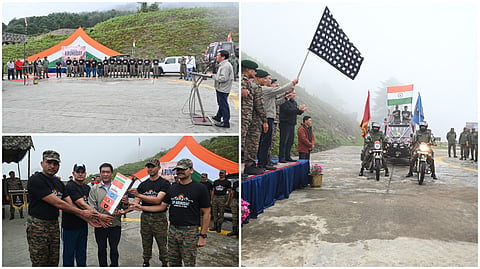
Op Arunoday being flagged off from Jaswantgarh War Memorial in Arunachal Pradesh, marking the start of an initiative to develop the Thingbu-Bajrang Peak trekking route X.com/@GajrajCorps_IA
A New Route In Arunachal’s Frontier Landscape
For Arunachal Pradesh, the project is significant because it brings together three linked priorities: adventure tourism, border-area development and local economic participation. The state has large stretches of high-altitude terrain, forested valleys, rivers and mountain routes that remain outside mainstream trekking circuits. Op Arunoday is expected to help bring one such route into a more organised tourism framework.
Colonel Ranveer Singh Jamwal, Director of the National Institute of Mountaineering and Adventure Sports (NIMAS) in Dirang and one of India's most experienced Army mountaineers, said the Thingbu–Bajrang Peak route is distinguished by its remote location and challenging terrain. "This route is unique as it combines pristine Himalayan wilderness with high-altitude mountaineering opportunities, while offering the rare experience of traversing one of India's most remote frontier landscapes," he said.
Advertisement
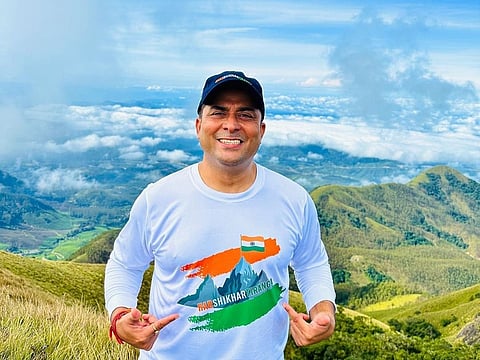
Colonel Ranveer Jamwal iamranveerjamwal/Instagram
He added that the route differs from more commercial trekking destinations. “Unlike commercial trekking destinations, this region remains largely untouched, offering trekkers an authentic wilderness experience. At the same time, opening such routes responsibly also strengthens the emotional and economic connection between border communities and the rest of the country.”
The military-civil model is central to the project. Officials have described Op Arunoday as a first-of-its-kind partnership aimed at improving tourism infrastructure, connectivity and socio-economic opportunities in border districts. According to Jamwal, such collaborations can help bring technical preparedness to remote trekking routes.
“The Armed Forces possess unmatched experience in operating in difficult mountain terrain, while civil agencies bring tourism expertise and community participation. Together, they can create trekking routes that are not only accessible but also safe, environmentally responsible and professionally managed,” he said.
He pointed to route reconnaissance, emergency response planning, communication networks, rescue protocols, local capacity building and infrastructure development as areas where such partnerships can play a role.
Advertisement
Safety, Livelihoods And Local Participation
The initiative is also expected to create new income streams for local communities. Border villages can benefit from demand for guides, homestays, transport, food services, equipment support, handicrafts and local produce. Jamwal said adventure tourism has “one of the highest local economic multipliers” because most services are community-based.
“Local youth can be trained as trek leaders, mountain guides, rescue volunteers, naturalists and cultural interpreters,” he said. “If managed well, the income generated remains within the local economy, making conservation economically rewarding.”
Safety will be a key concern as the route develops. High-altitude treks in remote Himalayan regions require planning from the start, especially when access, weather and communication can be challenging. Jamwal said safety should be “integrated into the route from day one rather than added later.”
He listed mandatory acclimatisation schedules, qualified guides, GPS-based route mapping, emergency communication systems, medical screening, first-aid availability, and registration and tracking of trekking groups as essential measures. “In the Himalayas, prevention is always better than rescue,” he said.
Advertisement
The project also reflects Arunachal Pradesh’s broader push to position itself as a serious adventure tourism destination. The state offers mountains, forests, rivers, glaciers, biodiversity and tribal cultures with relatively low tourist pressure. Jamwal said this gives Arunachal an advantage.
“Unlike many Himalayan destinations that have become crowded, Arunachal still offers genuine exploration,” he said. “With good planning and responsible infrastructure, it has the potential to become one of India’s premier adventure tourism destinations.”
Op Arunoday is expected to be watched closely as a model for developing trekking routes in sensitive border regions. If executed with local participation, safety systems and environmental safeguards, the Thingbu to Bajrang Peak route could become an important addition to India’s frontier adventure tourism circuit.
FAQs
1. What is Op Arunoday?
Op Arunoday is a joint initiative by the Gajraj Corps and the National Institute of Mountaineering and Adventure Sports (NIMAS) to develop the Thingbu–Bajrang Peak trekking route in Arunachal Pradesh.
Advertisement
2. Where is the Thingbu–Bajrang Peak trekking route?
The route is located in Arunachal Pradesh's remote frontier region, connecting Thingbu with Bajrang Peak (Point 5583).
3. Why is the new Arunachal trekking route important?
It aims to promote responsible adventure tourism, improve border-area infrastructure, create local employment and strengthen military-civil cooperation.
4. Who is developing the trekking route?
The project is being developed through a collaboration between the Gajraj Corps, NIMAS and the Government of Arunachal Pradesh.
5. How will local communities benefit from Op Arunoday?
The initiative is expected to generate livelihood opportunities through homestays, guiding, transport, food services, handicrafts and adventure tourism-related employment.
Published At: