India is experiencing contrasting weather conditions this week, with flash floods and heavy rain disrupting life in the Himalayan and northeastern states even as parts of north India continue to reel under an intense heatwave.
Himachal Flash Floods Leave Villages Cut Off; More Heavy Rain Likely, Says IMD
Flash floods have cut off villages in Himachal Pradesh and closed the Manali-Leh Highway as the IMD predicts more heavy rainfall across the Northeast and Himalayan region. Here's the latest weather forecast

Advertisement
The India Meteorological Department (IMD) has forecast more heavy to very heavy rainfall across the Northeast and parts of the Himalayan region over the next few days. At the same time, heatwave conditions are expected to persist across several northern states before monsoon activity strengthens later this week.
Flash Floods Disrupt Life In Himachal Pradesh
Flash floods triggered by rising water levels have severely affected normal life in Himachal Pradesh's Lahaul and Spiti district, forcing the closure of the strategic Manali-Leh highway and cutting off access to around a dozen villages.
One of the major flash floods occurred near Jispa, while another at Jhalma nallah disrupted connectivity to several remote settlements. Floodwaters carrying large amounts of debris blocked the road leading to the district headquarters at Keylong. The Jobrang bridge, an important link connecting remote villages, was also submerged.
Residents said the flooding was caused by rapidly melting snow in the surrounding mountains, which led to a sudden rise in the water level of Jhalma nallah. Videos shared on social media showed powerful torrents of water rushing through the valley, carrying rocks and debris downstream.
Advertisement
Restoration Work Underway
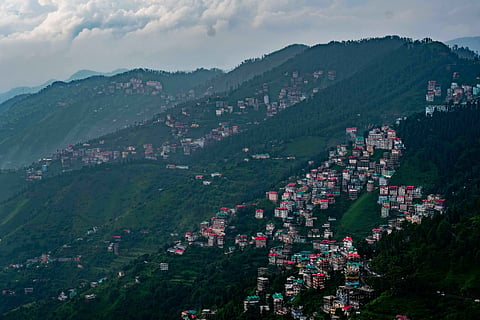
Tourist destinations such as Mashobra received 38mm of rainfall Pranav Kukreja/Shutterstock
The Border Roads Organisation (BRO) has begun restoration work to reopen the affected roads. Its 70 Road Construction Company (RCC) has deployed three heavy machines that have been working through the night to remove debris from the highway.
Officials said around a dozen stranded vehicles had earlier been moved to safer locations. However, the continuous flow of floodwater and fresh debris has slowed down clearance operations. Authorities said efforts are ongoing and the highway will be reopened once conditions become safe.
The Manali-Leh highway is one of the most important road links connecting Himachal Pradesh with Ladakh, especially during the summer months when it remains open to tourists, defence vehicles and local traffic.
Heavy Rain Continues Across Northeast
The Northeast is also witnessing widespread rainfall, with Arunachal Pradesh and Assam among the worst-affected states. Heavy rain has led to swollen rivers, landslides, damaged roads and disruptions to daily life in several districts.
Advertisement
The situation prompted Union Home Minister Amit Shah to speak with the chief ministers of both Arunachal Pradesh and Assam. He assured them of the Centre's full support in dealing with the impact of the floods and heavy rainfall.
Authorities in the region continue to monitor vulnerable areas as more rain is expected over the coming days.
IMD Warns Of More Rain Ahead
According to the IMD, heavy to very heavy rainfall is likely to continue across the northeastern states and parts of the western Himalayan region over the next few days.
The weather department has also indicated a fresh spell of rain across Himachal Pradesh until July 4. A western disturbance is expected to affect northwest India from July 2, strengthening monsoon activity over several northern states. As the system moves in, rainfall is likely to increase across parts of north India, bringing some relief from the prevailing heatwave conditions.
Advertisement
Heatwave Persists In Northern States
While several parts of the country are dealing with flooding, many areas across northern India continue to experience high temperatures and heatwave conditions. The IMD has said these conditions are likely to continue in some regions over the next couple of days before the advancing monsoon and incoming western disturbance bring cooler weather.
With heavy rain expected to continue in the hills and the Northeast, authorities have advised residents and travellers to stay updated on weather forecasts and avoid venturing into flood-prone or landslide-prone areas until conditions improve.
(With inputs from various sources)
FAQs
Q1. Which areas are affected by the flash floods in Himachal Pradesh?
The worst-affected areas are in Lahaul and Spiti district, including Jispa, Jhalma nallah, Keylong and nearby villages.
Q2. Is the Manali-Leh Highway open?
No. Sections of the Manali-Leh Highway have been closed due to flash floods and debris. Restoration work is underway.
Advertisement
Q3. Why did the flash floods occur?
Officials say the floods were triggered by rapidly melting snow, which caused water levels in mountain streams to rise suddenly.
Q4. Which states are expected to receive more rainfall?
According to the IMD, heavy to very heavy rainfall is likely across Arunachal Pradesh, Assam, other northeastern states, and parts of the western Himalayan region, including Himachal Pradesh.
Q5. Is the IMD expecting more rain in Himachal Pradesh?
Yes. The IMD has forecast another spell of rainfall in Himachal Pradesh until July 4, with monsoon activity expected to strengthen.
Q6. Are heatwave conditions continuing in India?
Yes. Parts of northern India continue to experience heatwave conditions, although temperatures are expected to ease as monsoon activity increases.
Published At: