The high-altitude plateau of Ladakh in northern India is also known as Maryul in local lingo, which means 'red land' or 'low land,' to distinguish it from the higher Tibetan plateau. Ladakh's current name is a transliteration of La-Tags — 'Land of the High Mountain Passes' — the impossibly high passes over treacherous mountains that trans-Himalayan travellers, monks, and mountain people have climbed with tenacity for millennia. Their influences, Tibetan Vajrayana Buddhism, the palaces and politics of its royal lineages, and the extremely long harsh winters of a high altitude mountain desert have all shaped Ladakh. Among other things, Ladakh is known for being home to the world’s highest observatory, at 14,820 ft, located in the village of Hanle, deep inside Changthang Sanctuary.
Foreign Tourists Can Now Stay Overnight At Hanle Village
Hanle was closed to international tourists until September 15th of this year. It is known for its monastery and is home to the world’s highest observatory located at 14,820 ft

Good News For International Tourists
An official from the Union Ministry of Home Affairs announced on Friday, September 29, that international tourists can now stay overnight in Hanle, a remote high-altitude village on Ladakh's Changthang plateau. “The Ministry of Home Affairs, Government of India has granted permission for the night stays of foreign tourists in Hanle," said the Commissioner-Secretary of Tourism Ladakh, Kacho Mehboob. "This decision will rejuvenate the tourism sector in the Changthang region and broaden the scope of tourist destinations in the union territory”.
Hanle was closed to international tourists until September 15th, this year. The high-altitude town, which houses the Hanle observatory, was only open to domestic tourists. With a variety of planned activities, India is currently experiencing a surge in astrotourism. According to officials, this decision is in line with the growing interest in 'Dark Sky' tourism.
Hanle is located in Ladakh's chilly desert region, distant from any human disturbance and surrounded by nature at its best. Clear skies and dry weather, which nearly always occur throughout the year, make Hanle one of the best destinations for astronomical observations and sky-gazing.
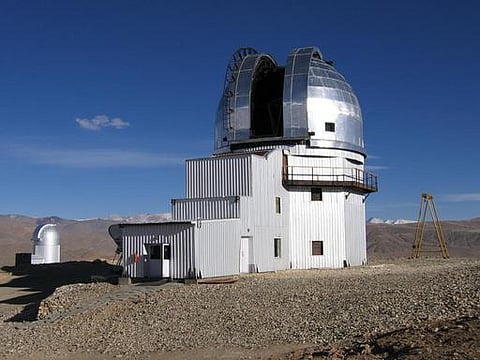
The Hanle Observatory
The observatory at Hanle is one of the world’s highest-located sites for optical, infrared, and gamma-ray telescopes. The first Dark Sky Reserve in India was established at Hanle in 2022. The site seeks to provide activities that will support and promote local tourism and the local economy through science. The Department of tourists will also open up Martsemik and Sko Valley in Ladakh for tourism, particularly adventure tourism.