India will witness its first total lunar eclipse of the year on March 3, 2026. Locally, it is called Chandra Grahan. You can watch it with your own eyes—no instruments needed. Just step outside, find a clear patch of sky, and look up. The moon will slowly change colour as the night goes on.
Blood Moon To Light Up the Northeast: India’s First Lunar Eclipse Of The Year
The first total lunar eclipse of 2026 will light up the skies on March 3. The Moon may turn a deep red. Most of India will see a partial eclipse, while the Northeast can catch full totality

Advertisement
Understanding A Lunar Eclipse
A lunar eclipse takes place when the Earth moves straight between the sun and the moon. Its shadow falls on the moon, cutting out the direct sunlight. This only happens during a full moon. The moon can look much darker than usual, and sometimes it even turns a reddish colour. This is what people often call a “Blood Moon.” You can watch it safely with the naked eye. Lunar eclipses happen several times a year, but not every one can be seen from India. That’s why this event is a rare treat for sky-watchers here.
Places And Timings
Based on information from Time and Date, the lunar eclipse will unfold in India at the following times (IST):
Penumbral phase begins: 4:58 pm
Total eclipse begins: 5:58 pm
Total eclipse ends: 6:32 pm
Penumbral phase ends: 7:53 pm
Astronomy buffs in India will see only part of the eclipse as the moon rises, but in some cities in the Northeast, the moon will be completely hidden by the Earth’s shadow. Places such as Dibrugarh, Dispur, Guwahati, Itanagar and Shillong are expected to witness the full eclipse. In these regions, the total phase will begin in the afternoon and continue into the evening, with the moon fully covered at its peak, which should happen between around 5:10 pm and 5:25 pm IST, depending on the city.
Advertisement
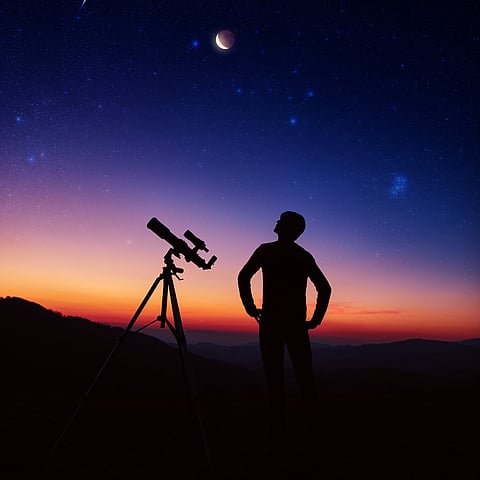
In most parts of India, the moon will be just rising when the eclipse is already in progress Shutterstock
In most parts of India, the moon will be just rising when the eclipse is already in progress. That means people will only see the final stages. The most striking changes are likely to happen around sunset, and the portion of the eclipse that’s clearly visible will last for about 20 minutes.
Types And How To Watch
In a total lunar eclipse, the moon slips completely into the darkest part of Earth’s shadow, called the umbra. It often turns a deep red or orange, which is why people call it a “blood moon.”
A partial lunar eclipse happens when Earth gets between the sun and the moon, but not perfectly. Part of the moon stays lit, while the rest goes into shadow.
Then there’s the penumbral eclipse. The moon moves through the faint outer shadow of Earth, known as the penumbra, so it only looks a little dimmer than usual.
Lunar eclipses aren’t like solar ones. They happen at the same time no matter where you are. You don’t need any special glasses to watch. NASA mentions that binoculars or a small telescope can make it look nicer, but even with your eyes alone, it’s easy to see what’s happening. Try to get somewhere dark, away from bright city lights, and you’ll catch it better.
Advertisement
FAQs
What exactly is a lunar eclipse?
A lunar eclipse happens when the Earth comes between the Sun and the Moon. The Earth’s shadow falls on the Moon, making it look darker or even red.
What is a “blood moon”?
That’s just what people call the Moon when it turns red or orange during a total lunar eclipse.
Do I need any special equipment to watch it?
Nope. You can see it with your eyes. NASA says binoculars or a small telescope can make it look nicer, but they aren’t necessary.
Will everyone in India see the same thing?
Not quite. Most of India will see only part of the eclipse as the Moon rises. But some cities in the Northeast, like Guwahati, Dibrugarh, and Shillong, will get to see the Moon fully covered.
Is it safe to watch?
Yes. Unlike solar eclipses, lunar eclipses are safe to watch without any glasses.
What’s the best way to watch it?
Find a dark spot away from streetlights. Let your eyes adjust to the dark, and you’ll catch the changes in colour and brightness more clearly.
Advertisement

Published At:
Tags