A powerful magnitude 7.5 earthquake struck off the north-eastern coast of Japan late on Monday (Dec 8) night, injuring at least 30 people and prompting evacuation orders for more than 1,00,000 residents across several prefectures.
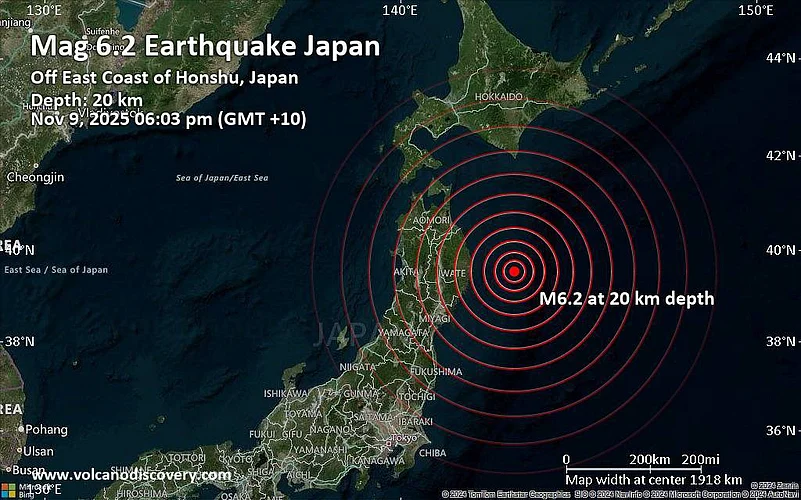
The quake hit at 11:15 pm local time, or 14:15 GMT, with its epicentre about 80 km off the coast of Aomori Prefecture in northern Honshu. The Japan Meteorological Agency said the tremor originated at a depth of around 54 km beneath the Pacific seabed.
On Japan’s seismic intensity scale of 0 to 7, the shaking reached “upper 6” in the city of Hachinohe in Aomori. This level of intensity is strong enough to make it difficult for people to stand and can cause heavy furniture to topple and damage to buildings. Strong tremors were also felt across a wide area, including Hokkaido and parts of the Tohoku region, and were reported as far away as Tokyo, more than 600 km to the south.
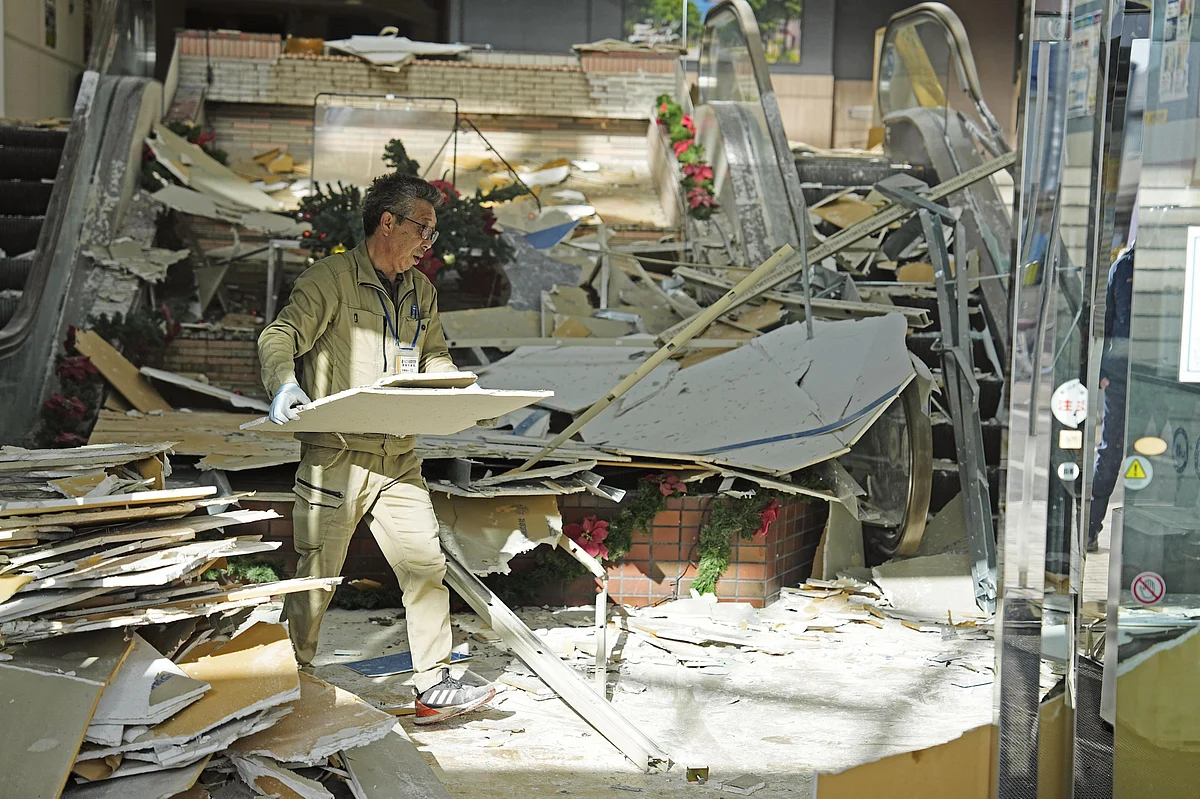
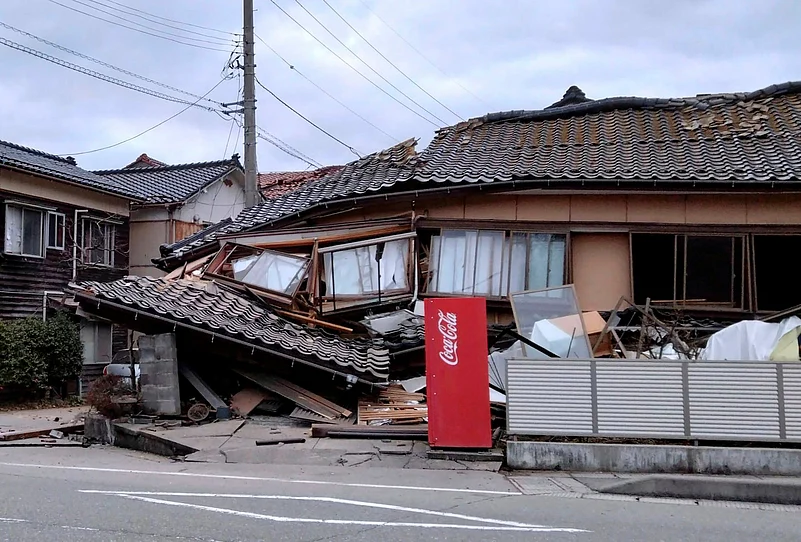
Local authorities and Japan’s Fire and Disaster Management Agency reported more than two dozen injuries by Tuesday morning (Dec 9), including people hurt by falls or falling objects inside homes and commercial buildings. There were also reports of building damage and fires in parts of Aomori.
Tsunami Warnings And A Rare Megaquake Alert
Soon after the quake, the Japan Meteorological Agency issued tsunami warnings for coastal areas of Hokkaido, Aomori and Iwate. The agency initially estimated that waves of up to three metres could hit parts of the north-eastern coastline.
Observed tsunami heights were lower than feared. A wave of approximately 70 cm was recorded at Kuji Port in Iwate Prefecture, around 50 cm in Urakawa Town, Hokkaido, and about 40 cm at Mutsuogawara Port in Aomori. Even at these heights, authorities urged residents to stay away from the shore and ports.
Within a few hours, the warnings were downgraded to tsunami advisories, indicating a lower risk of coastal inundation. All advisories for the Pacific coastline of northern Japan were lifted at 6:20 am on Tuesday.

Alongside the tsunami alerts, the meteorological agency issued an advisory for a potential “megaquake” [an earthquake of exceptional destructive power] in the wider region, covering the Pacific coast from Hokkaido down to Chiba Prefecture east of Tokyo.
The agency put the estimated probability at around one per cent but stressed that residents should take precautions as if a major event were possible. People in the advisory zone have been urged to review evacuation routes, secure furniture, prepare emergency kits and ensure access to food, water and portable toilets.
Transport Disruption And Power Cuts
Monday’s earthquake affected transport and power infrastructure across parts of northern Japan. East Japan Railway suspended operations on sections of the Tohoku Shinkansen line between Morioka and Shin Aomori while it checked tracks and equipment for damage. High-speed train services between Fukushima and Aomori were also temporarily halted, and some expressway sections in the region were closed.
By Tuesday, the railway operator said it aimed to resume Shinkansen services after safety inspections were complete. Major airlines, including All Nippon Airways and Japan Airlines, reported that flight operations were continuing largely as normal.
In Aomori and its neighbouring prefecture of Iwate, thousands of homes initially lost electricity after the quake. Tohoku Electric Power later revised the figure downward to several hundred households as supply was restored. Local governments continued to operate evacuation centres for residents who had left coastal and low-lying areas following the tsunami warnings.
Authorities also reported “long-period ground motions” in some locations, particularly in the village of Rokkasho in Aomori. These slow, large-amplitude seismic waves are known to affect high-rise buildings, causing prolonged swaying that can make it difficult for occupants to remain standing and can increase the risk of interior damage.
Nuclear Plants Checked, Government On Alert
Power companies and regulators said there were no signs of abnormalities at nuclear facilities in the affected areas. Tohoku Electric reported that its Higashidori plant in Aomori and Onagawa plant in Miyagi were operating normally. Hokkaido Electric stated that its Tomari nuclear plant showed no issues.
Tokyo Electric Power Company, which operates the Fukushima Daiichi and Daini plants further south, reported no irregularities. As a precaution, it temporarily halted the controlled release of treated and diluted water from Fukushima Daiichi and ordered some staff to evacuate designated areas, in line with existing procedures. There were no reports of injuries at nuclear sites.
The central government set up a task force in the prime minister’s crisis management centre minutes after the quake struck. As per reports, Prime Minister Sanae Takaichi arrived at the office shortly before midnight and instructed ministries and agencies to coordinate closely with local authorities, provide timely information on tsunami risks and evacuation orders, and prioritise rescue and relief operations.
A Region Used To Major Earthquakes
Japan experiences frequent seismic activity because it lies along the Ring of Fire, a zone of active faults, trenches and volcanoes that surrounds much of the Pacific Ocean. The country accounts for roughly one-fifth of the world’s earthquakes of magnitude 6.0 or greater and records some level of tremor every few minutes.
The north-eastern region in particular has vivid memories of the 2011 Tohoku earthquake and tsunami, which left more than 18,000 people dead or missing and caused meltdowns at the Fukushima Daiichi nuclear plant. Reports quote experts and officials who say that experience has driven significant changes in early warning systems, evacuation planning and public awareness.
With the latest quake, authorities are again urging residents in northern and eastern Japan to remain vigilant over the coming days, follow official guidance, and treat preparedness as an essential part of daily life in an earthquake-prone country.
(With inputs from multiple news reports)
FAQs
1. Where did the 7.5 earthquake strike in Japan?
The quake struck off the north-eastern coast near Aomori Prefecture, about 80 km offshore and 54 km deep.
2. How strong was the Japan earthquake on the intensity scale?
It registered an “upper 6” on Japan’s seismic intensity scale—strong enough to topple furniture and damage buildings.
3. Was there a tsunami after the Japan earthquake?
Yes, tsunami warnings were issued, and waves between 40–70 cm were observed in Aomori, Iwate and Hokkaido before advisories were lifted.
4. What is the megaquake advisory issued by Japan?
Authorities warned there is a small (around 1 per cent) chance of a magnitude 8+ quake in the coming week based on historical patterns.
5. Were there any casualties or injuries?
Over 30 people were reported injured due to falls, collapsing objects, and structural damage.
6. Did the earthquake affect transport and power?
Shinkansen lines were halted for inspections, expressways closed, and thousands of homes briefly lost electricity.
7. Were nuclear plants affected?
No abnormalities were reported at nearby nuclear facilities. Fukushima Daiichi temporarily halted treated water release as a precaution.
8. Is Japan prone to major earthquakes?
Yes. Japan lies on the Ring of Fire and experiences nearly 20 per cent of the world’s major earthquakes annually.