

If you thought school textbooks had already mapped out the full story of human evolution, think again. New discoveries keep being made that add a layer to our existing knowledge. Ancient human bones uncovered in a cave near Casablanca, Morocco, are now reshaping scientists’ understanding of human evolution. The findings were published on Wednesday, 7 January, in the journal Nature, where a team of Moroccan and French researchers outlined their analysis of a small collection of fossilised bones.
Clues To A Shared Ancestor
Researchers say the fossils could help fill long-standing gaps in the evolutionary record, offering new clues about the emergence of Homo sapiens in Africa. The scientists believe the remains may represent the last common ancestor shared by modern humans (Homo sapiens), Neanderthals and Denisovans. If confirmed, the discovery would provide rare physical evidence of a pivotal transitional population, offering fresh insight into the evolutionary split that eventually gave rise to several human lineages.
Anchoring Human Origins In Africa


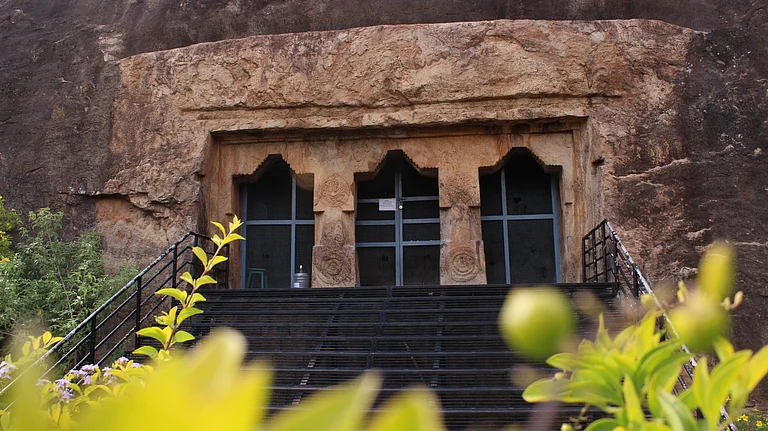
The remains were recovered from Grotte à Hominidés, a cave in Casablanca, where researchers identified fragments from at least three individuals, including two adults and a young child. The collection includes jaw fragments, teeth and parts of the skeleton, among them a thigh bone bearing marks consistent with animal bites. This has led scientists to conclude that the cave was once used by large predators, possibly hyenas. Analysis suggests the fossils belong to a later form of Homo erectus, showing a blend of older and more advanced human features. The find helps close a long-standing gap in Africa’s hominin record between one million and 600,000 years ago.
According to reports, anthropologist Shara Bailey of New York University noted that the teeth recovered from Grotte à Hominidés show many primitive characteristics in their shape and other non-metric features. She said they do not display the traits typically associated with Neanderthals, a distinction that supports the view that the fossils belong to an earlier and more archaic human population.
A Mosaic Of Traits

According to reports, paleoanthropologist Jean-Jacques Hublin of the Collège de France and the Max Planck Institute for Evolutionary Anthropology, lead author of the study, urged caution in describing the fossils as the last common ancestor of modern humans and their closest relatives. He said the remains were nevertheless likely closely related to the populations from which Homo sapiens in Africa and Neanderthal and Denisovan lineages in Eurasia later emerged. Hublin added that the fossils exhibit a mixture of primitive and more advanced traits, suggesting that evolutionary divergence was already underway while reinforcing the deep African ancestry of modern humans.
(With inputs from various sources.)
FAQs
What was discovered?
Ancient human bones, including jawbones, teeth, a thigh bone and vertebrae, were found in Grotte à Hominidés, a cave near Casablanca, Morocco. They belong to archaic humans showing a mix of primitive and more modern traits.
How old are the fossils?
The remains date to between roughly one million and 600,000 years ago, filling a key gap in Africa’s human evolutionary record.
Why are they important?
They provide clues about populations that may have given rise to Homo sapiens in Africa and Neanderthals and Denisovans in Eurasia, highlighting early evolutionary divergence.
What does the cave tell us?
The cave appears to have been a predator den, with bite marks on some bones suggesting individuals may have been scavenged by animals, offering insight into the dangers early humans faced.