Sponsored Content
In a year when the global spirits industry has been taking stock of shifting traditions and new contenders, an unexpected headline arrived from London: an Indian rum has claimed the title of “Rum Brand of the Year” at The Spirits Business Awards 2025. Camikara, a pure cane-juice aged rum made in India, has not only taken home a major honour but has also nudged its way into a space long dominated by the Caribbean, Latin America, and other well-known rum regions. For many travellers who seek out stories of local craftsmanship and regional identity through food and drink, this moment is worth pausing over.
The win is more than a medal. It signals a change in how India is perceived within the world of premium spirits. What was once considered an outsider to the rum conversation has stepped directly into its centre, carrying with it centuries of relationship with sugarcane and a quieter legacy of cane-based fermentations that predates much of what the world today recognises as rum.
A Long, Often Forgotten Lineage
Rum in India is hardly a novelty. Long before whisky surged in popularity under colonial influence, cane spirits were part of daily life in many pockets of the subcontinent. Sugarcane grew — and still grows — almost everywhere, from the Himalayan foothills to the southern coasts. The Rigveda’s references to sidhu, an early sugarcane-based fermentation, reminds us that India’s engagement with cane spirits is older than many modern rum-making traditions elsewhere.
Over time, however, the country’s taste shifted. Whisky became the marker of aspiration, while rum was pushed into a mass-market corner, appreciated but rarely celebrated. Yet the roots of the craft never fully disappeared. They remained in local knowledge, regional practices, and an understanding of cane that was simply waiting for the right moment to re-emerge.
That moment seems to have arrived. Across India, a new generation of distillers is approaching rum with a renewed sense of purpose. They are drawing from the country’s varied climates — humid coasts, hot plains, cool hills — and from an agricultural wealth that has always existed. Instead of chasing foreign styles, they are letting India’s conditions shape the spirit. Camikara is part of this shift.
A Rum Shaped By Place

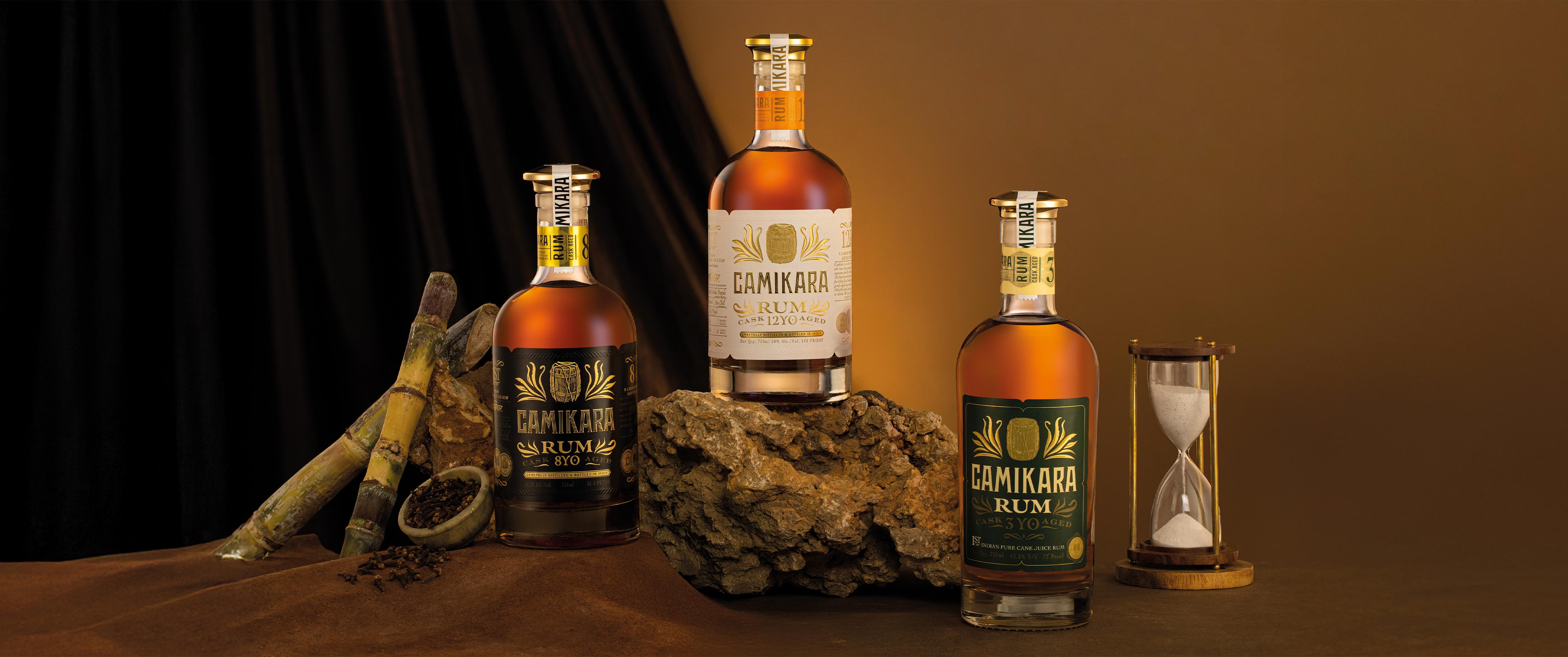
Produced from pure cane juice, Camikara leans heavily on the idea of terroir — not in the romanticised sense but in the pragmatic reality that cane grown in Haryana, Karnataka, or Goa carries its own character. It is aged, shaped by climate, and released without fuss. What seems to have impressed the judging panel in London, who described the brand as a “pioneer in its category,” is this willingness to present an Indian rum without apology or imitation.
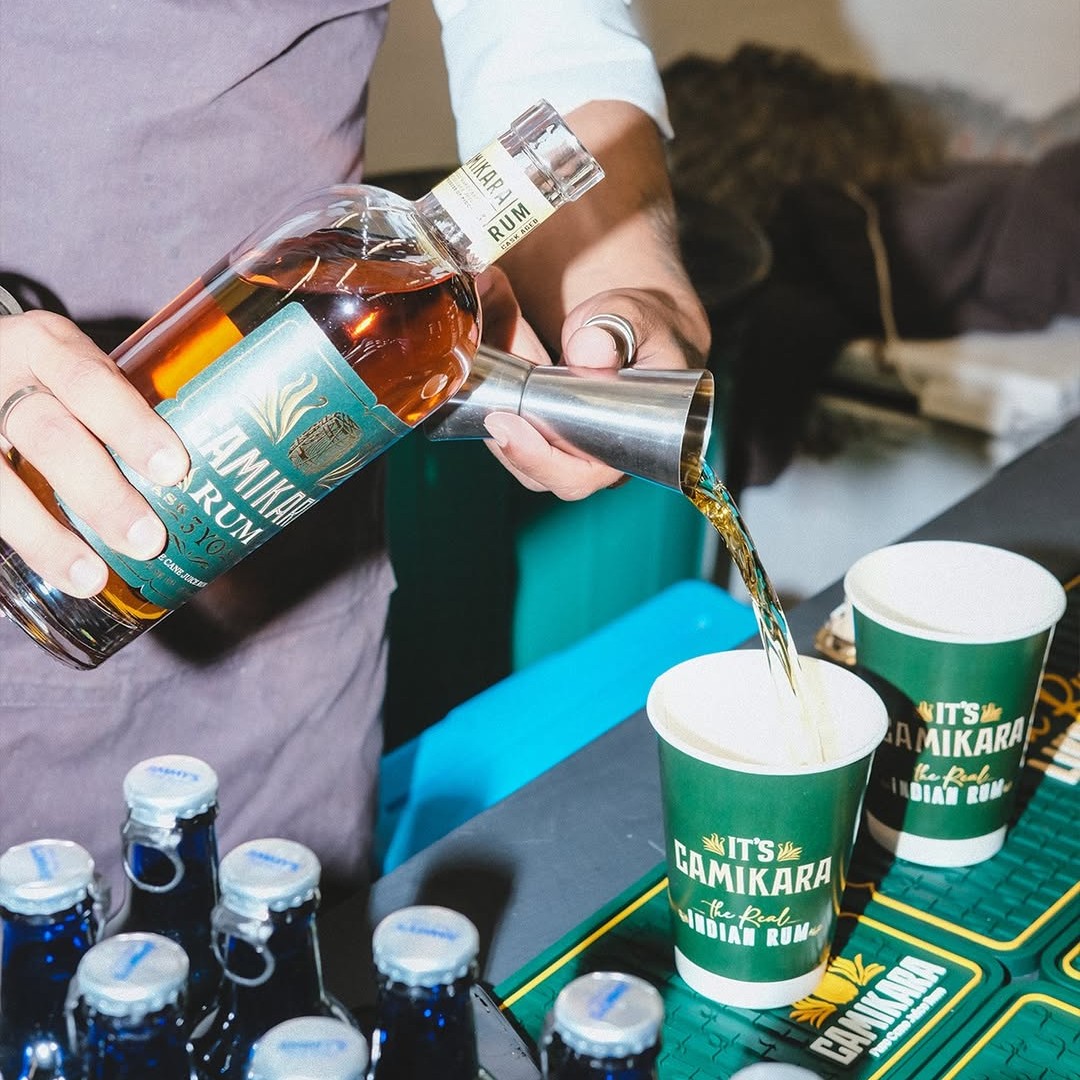
Camikara calls itself a “bartender-first” rum, a phrase that simply suggests it has been made with an eye on the people who work most closely with spirits. In India’s evolving cocktail scene, bartenders often become interpreters of place. A rum that reflects its landscape gives them another vocabulary to work with. According to The Spirits Business, Camikara’s rise is not a gimmick but the result of consistent quality, something reflected in its growing list of awards.
Shalini Sharma, who leads marketing at Piccadily Agro Industries Limited, offered a straightforward reading of the win: Indian rum is no longer something to overlook. It has begun to participate in global conversations not as a curiosity but as a serious presence.
A Wider Shift In Global Perception
The Spirits Business Awards are among the industry’s major markers of credibility, drawing entries from the world’s most established producers. For Camikara to emerge at the top in 2025 is, in many ways, a symbolic reshuffling of old hierarchies. Travel, at its core, is about witnessing moments when a place quietly changes its reputation. This recognition for an Indian rum reflects exactly that.
For travellers who map destinations through food and drink, India’s spirits landscape has become a space worth exploring. Its rum story is no longer confined to winter bottles shared around bonfires or the nostalgia of college days. It is growing into something more confident — a craft that is trying to reclaim its own history while stepping into a global arena.
Camikara’s win does not claim that Indian rum is now the world’s best. What it does say, firmly and without exaggeration, is that the world is finally paying attention. And sometimes, attention is the most meaningful shift of all.
FAQs
1. What is Camikara and where is it made?
Camikara is a premium Indian rum produced from pure cane juice. It is made by Piccadily Agro Industries Limited, which draws from India’s varied cane-growing regions to craft a terroir-driven rum with a distinctly Indian identity.
2. Why is Camikara’s 2025 award significant?
Camikara winning Rum Brand of the Year at The Spirits Business Awards 2025 is a watershed moment because it challenges long-held global perceptions that premium rum comes only from the Caribbean or Latin America. It places Indian rum firmly within international conversations about quality craft spirits.
3. How is Camikara different from traditional Indian rum?
Unlike many mass-market molasses-based rums, Camikara is made from pure cane juice, allowing the flavour of the cane and climate to come through. Its production style aligns more closely with agricole and terroir-driven rums found in select regions worldwide.
4. Does India have a heritage of cane spirits?
Yes. India’s relationship with sugarcane is ancient, with early references to fermented cane beverages — such as sidhu — found in the Rigveda. Although later overshadowed by whisky, cane spirits were historically part of many regional traditions.
5. Why are Indian craft spirits gaining global attention?
India’s climate, agricultural diversity, and growing community of independent distillers have created a landscape ripe for experimentation. Global judges and bartenders are increasingly recognising the quality, originality, and terroir-driven approach emerging from Indian spirit producers.
6. Where can travellers experience India’s rum culture?
Travellers can explore India’s evolving cocktail scene in major cities like Delhi, Bengaluru, Mumbai, and Goa, where bartenders increasingly use Indian craft rums. Some distilleries also offer tours, tastings, and workshops that delve into the country’s cane-spirit heritage.